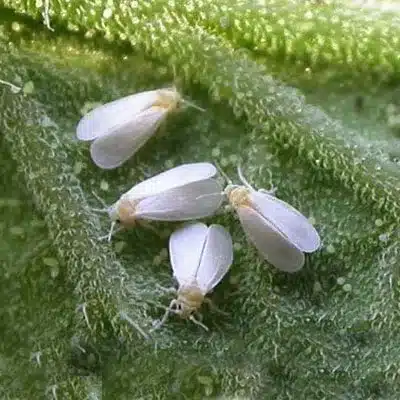
The cotton whitefly is a major sap-sucking pest that affects cotton growth, yield, and fiber quality. Among them, Bemisia tabaci is an economically significant pest that requires priority management in many cotton-producing regions. Not only does it affect cotton growth by feeding on plant sap, but it also secretes large amounts of honeydew, contaminating leaves and open bolls; in severe cases, this can result in sticky cotton, impacting cotton harvesting, ginning, and spinning processes.
Effective cotton whitefly control must not only focus on insecticidal efficacy but also address insecticide resistance and lint quality. If insecticides from the same IRAC group are used repeatedly over the long term, whitefly populations may gradually develop resistance, leading to reduced control efficacy. Furthermore, when whitefly populations continue to increase around the time of boll opening, honeydew may accumulate on the cotton fibers, further compromising the processing properties and commercial value of the final cotton commodity.
Therefore, cotton whitefly control requires the establishment of a comprehensive Integrated Pest Management (IPM) system, including pest identification, field surveys, monitoring of pest life stages, rotation of insecticides with different modes of action, and population management prior to boll opening.
For pesticide importers, distributors, and brand buyers, establishing a portfolio of insecticides that includes different IRAC groups and formulations can help meet the crop protection needs of various cotton-growing regions. SunAgro offers a wide range of insecticides targeting sap-sucking pests and can provide product specifications, technical documentation, and registration support tailored to your target market. You can also combine these with the existing Cotton Crop Protection Solutions to understand the crop protection needs at different stages of cotton growth.
What Is Cotton Whitefly?
Cotton whiteflies are small, sap-sucking pests that feed on plant sap. They primarily congregate on the undersides of cotton leaves, where they use their piercing-sucking mouthparts to extract plant nutrients.
In cotton production, special attention should be given to the Sweetpotato Whitefly / Silverleaf Whitefly, specifically Bemisia tabaci. This pest is characterized by rapid reproduction, a broad host range, and the rapid development of pesticide resistance; under favorable conditions, it can reach high population densities in the field.
Which Whitefly Species Affect Cotton?
Various species of whiteflies may be present in cotton fields, but their economic impact varies.
| Whitefly Species | Scientific Name | Main Characteristics |
|---|---|---|
| Sweetpotato Whitefly / Silverleaf Whitefly | Bemisia tabaci | A major economic pest of cotton; produces large amounts of honeydew |
| Greenhouse Whitefly | Trialeurodes vaporariorum | Characterized by distinct wing markings; may occur in some cotton-growing regions |
| Banded-winged Whitefly | Trialeurodes abutiloneus | Adult wings bear brown stripes |
Among these, Bemisia tabaci is the primary focus of this article.
It is important to note that Bemisia tabaci actually constitutes a complex population complex, and different genetic populations may exhibit varying host preferences, reproductive capacities, and pesticide sensitivities.
For example, MEAM1 and MED are population names frequently used in research. The genetic type of whiteflies cannot be accurately determined based solely on field appearance; professional molecular identification is required when necessary.
For pesticide distributors, understanding the market’s major whitefly species and population resistance profiles is more important than simply selecting insecticides based on the pest’s common name.
What Does the Whitefly Life Cycle Look Like?
Whiteflies primarily undergo three developmental stages: Egg, Nymph, and Adult.
| Development Stage | Main Characteristics | Control Considerations |
|---|---|---|
| Egg | Typically attached to the underside of leaves | Consider the specific mode of action of IGR products |
| First-Instar Nymph | Moves briefly after hatching, then settles to feed | A critical stage for early monitoring |
| Later Nymphal Instars | Attached to the underside of leaves, continuously feeding on sap | A critical stage for certain IGRs |
| Fourth Instar / Pupal Stage | Development nears adult emergence | Population development can be assessed by inspecting mature nymphs |
| Adult | Capable of flight, feeding, and reproduction | Monitoring of adult migration and population changes is required |
Whiteflies exhibit varying sensitivities to insecticides at different developmental stages.
For example, pyriproxyfen and buprofezin are primarily used to disrupt the normal development of specific immature life stages, rather than to rapidly knock down all adults.
This is why whitefly control cannot rely solely on counting adult numbers; it is also essential to inspect the nymph population on the undersides of leaves.
If you need further guidance on planning a product portfolio for sap-sucking pests, refer to the Guide to Planning a Product Line of Insecticides for Sap-Sucking Pests for guidance.
How Does Whitefly Damage Cotton?
The cotton whitefly primarily causes damage by feeding on plant sap and secreting honeydew. Low-density populations may not readily exhibit obvious plant damage, but as pest density increases, the damage will gradually worsen.
Direct Feeding Damage
Whiteflies use their piercing-sucking mouthparts to feed on the sap in cotton leaves.
When population density is high, the following may occur:
- Leaves gradually turn yellow.
- Slowed plant growth.
- Premature leaf senescence.
- Leaf drop in severe cases.
- Impaired boll development and retention.
- Decreased cotton yield and final commercial quality.
The damage caused by whiteflies to cotton is not only related to the number of insects per plant but is also influenced by variety, plant growth status, weather conditions, and the duration of infestation.
Therefore, the decision to apply pesticides should not be based solely on whether leaves have yellowed.
Honeydew Production and Sooty Mold
Honeydew is a sugary secretion excreted by whiteflies after feeding on plant sap.
When adult and nymph populations are high, noticeable honeydew deposits may appear on leaves, petioles, and near cotton bolls.
Honeydew causes the leaf surface to become shiny and sticky, providing suitable growing conditions for sooty mold.
As sooty mold spreads, a black coating may gradually appear on the affected tissues.
The main impacts include:
- Reduced normal photosynthetic capacity of the leaves.
- Adverse effects on plant appearance and growth.
- Increased risk of contamination of cotton bolls and cotton fiber.
- It affects subsequent harvest and processing quality.
It is important to note that honeydew is not produced exclusively by whiteflies; other sap-sucking pests, such as the cotton aphid, also produce it. Therefore, when there is a risk of “sticky cotton” in the field, the specific source of the pests must first be identified; not all honeydew contamination should be attributed to whiteflies.
How Does Whitefly Affect Cotton Lint Quality?
The most significant impact of cotton whiteflies on fiber quality is that honeydew can contaminate already-opened cotton bolls and exposed cotton fibers, leading to “sticky cotton” and increasing the difficulty of equipment cleaning and processing during ginning and spinning.
This is also one of the key differences between whitefly control and the management of typical foliar pests.
What Is Honeydew Contamination?
When cotton enters the boll-opening stage, the bolls gradually split open, exposing the white cotton fibers inside.
If a high whitefly population still persists in the field at this time, the honeydew produced by adults and nymphs may deposit on the open cotton fibers.
Unlike leaf contamination, honeydew on cotton fibers can directly affect the final harvested product.
More notably, the honeydew produced by the silverleaf whitefly has a unique sugar composition, with trehalulose being a representative component.
According to technical data from CottonInfo, the melting point of trehalulose is approximately 48 °C. The frictional heat generated during cotton processing may cause it to soften or melt, thereby increasing adhesion issues with the cotton fibers.
Therefore, even if the surface of the cotton bolls in the field does not appear visibly wet or sticky, honeydew contamination cannot be completely ruled out.
What Is Sticky Cotton?
Sticky cotton refers to a condition in which the surface of cotton fibers is contaminated with sugary substances, causing abnormal stickiness during harvesting, ginning, or spinning.
This can lead to the following problems:
| Processing Stage | Potential Problem | Commercial Impact |
|---|---|---|
| Cotton Picking | Contaminated cotton fibers are harvested | Reduced raw cotton cleanliness |
| Cotton Ginning | Cotton fibers adhere to processing components | Increased equipment cleaning requirements |
| Fiber Processing | Adhesion and buildup during processing | Reduced production efficiency |
| Spinning | Fiber processing stability is affected | May affect yarn quality |
| Cotton Grading | Cotton fiber contamination and processing performance fail to meet requirements | May result in grade discounts or rejection risks |
Sticky Cotton is not only a farm management issue but also a quality concern for cotton processing enterprises, textile companies, and cotton traders.
For export-oriented cotton production, fiber cleanliness and processing performance may directly impact buyers’ quality assessments.
How Does Sooty Mold Affect Cotton Fibers?
When honeydew accumulates on the surface of cotton fibers and suitable humidity conditions are present, sooty mold may gradually develop.
The primary issue is that it causes the fibers to darken or become blackened.
| Contamination Type | Main Characteristic | Possible Consequence |
|---|---|---|
| Honeydew | Sugar-containing residues | Sticky Cotton |
| Trehalulose | Characteristic sugars in Silverleaf Whitefly honeydew | Risk of adhesion during processing |
| Sooty Mold | Black sooty mold | Color contamination of cotton fibers |
| Combined Contamination | Coexistence of honeydew and mold | May affect cotton grade and processing performance |
Therefore, whitefly management requires not only reducing adult and nymph populations on plants but also controlling population growth before boll opening.
How to Monitor Whiteflies in Cotton Fields?
The first step in whitefly control is to establish a consistent field scouting program.
Surveys should focus on adults and nymphs on the undersides of leaves, while also recording changes in field populations, the number of natural enemies, and the growth stage of the cotton plants.
Inspect the Underside of Cotton Leaves
Whiteflies primarily congregate on the undersides of cotton leaves, so leaves must be turned over for inspection during surveys.
It is recommended to focus on observing:
- Adult Whiteflies: Adult population and migration patterns.
- Whitefly Eggs: Eggs on the leaves.
- Nymph Population: Nymph density.
- Large Nymphs: Number of mature nymphs.
- Parasitized Nymphs: Nymphs that have been parasitized.
- Honeydew: The extent of honeydew deposition.
Adults tend to scatter when disturbed, whereas nymphs typically remain attached to the leaf surface.
Therefore, nymph counts are often a better indicator of whether the whitefly population is continuing to grow.
Establish a Consistent Sampling Method
It is recommended to select multiple representative locations within each management area, avoiding inspection limited to field edges or areas with high pest density.
The following survey procedures can be used as a reference:
| Scouting Step | Inspection Method | Purpose |
|---|---|---|
| Step 1 | Randomly select representative cotton plants | Avoid selection bias |
| Step 2 | Identify the location on the main stem | Maintain consistency in the survey |
| Step 3 | Turn leaves over to inspect the underside | Observe adults and nymphs |
| Step 4 | Record the number of mature nymphs | Assess population development |
| Step 5 | Observe parasitoid wasps and predatory natural enemies | Assess natural control capacity |
| Step 6 | Record the cotton growth stage | Assess the risk of subsequent infestation |
| Step 7 | Repeat surveys periodically | Determine population growth trends |
For example, some agricultural extension surveys in Georgia use the fifth main stem leaf counting down from the top of the plant and randomly inspect at least 30 cotton plants.
The survey system used by CottonInfo in Australia, on the other hand, collects lower main stem leaves based on the position within the cotton canopy and the plant’s growth stage.
These methods reflect regional monitoring standards and do not constitute globally uniform sampling regulations.
Understand Whitefly Treatment Thresholds
Treatment thresholds must be determined in conjunction with local agricultural extension agencies and registered product labels.
For example:
| Region / Guideline | Monitoring Reference | Decision Principle |
|---|---|---|
| California UC IPM | Proportion of leaves infested by adults and large nymphs | Refer to the local infestation threshold of approximately 40% of leaves |
| Georgia Extension | Adults and nymphs on specific main stem leaves | Determine based on local survey counts and guideline thresholds |
| Australia CottonInfo | Number of mature nymphs in the lower canopy | Consider cotton development, natural enemies, and the risk to open bolls |
The UC IPM California guidelines use approximately 40% of leaves showing large nymphs, or approximately 40% of leaves reaching the specified adult count, as a reference for applying pesticides under appropriate management conditions.
This is not a globally standardized cotton whitefly threshold.
For different countries and cotton-growing regions, thresholds should be reassessed based on variety, pest density, boll opening status, and local resistance management guidelines.
Why Does Cotton Whitefly Develop Insecticide Resistance?
Cotton whiteflies possess strong reproductive capacity and genetic variability. In environments where the same insecticides are used repeatedly over the long term, susceptible individuals are easily eliminated, while those with resistance traits may survive and continue to reproduce.
As populations undergo the same selective pressure across multiple generations, resistant populations that are increasingly difficult to control may emerge in the field.
Target-Site Resistance
Target-site resistance refers to changes in the insecticide’s target site within the pest’s body, which disrupts the normal interaction between the pesticide and its target.
For example, some pyrethroid resistance is associated with the kdr mutation, which affects voltage-gated sodium channels.
Once the target site has changed, even if the insecticide comes into contact with the pest, it may fail to produce the original control effect.
Metabolic Resistance
Metabolic resistance refers to pests accelerating the metabolism or detoxification of insecticides by increasing the activity of certain metabolic enzymes.
Common enzyme systems involved include:
- Cytochrome P450 monooxygenases.
- Carboxylesterases.
- Glutathione S-transferases.
These enzymes may be involved in the metabolism of different insecticides; therefore, certain whitefly populations may exhibit varying degrees of reduced susceptibility to multiple chemical classes simultaneously.
Cross-resistance
Cross-resistance refers to a situation where a single resistance mechanism may cause pests to exhibit reduced sensitivity to other insecticides as well.
For example, different insecticides may act on the same or related physiological targets, or be affected by the same metabolic enzyme systems.
This means that simply changing the name of the insecticide does not necessarily resolve the original resistance problem.
For markets where imidacloprid, thiamethoxam, or acetamiprid have been in long-term use, it is recommended to first understand the local history of Group 4A use and resistance status before introducing new products.
If you need to further evaluate the market dynamics of flupyradifurone, neonicotinoids, and related modes of action, please refer to Flupyradifurone FAQ: Market Access, Resistance, and Commercial Suitability.
How to Rotate Insecticides for Cotton Whitefly Control?
The core of resistance management is not constantly changing brand names, but rather rationally scheduling the sequence of application for different modes of action based on IRAC Mode of Action Groups, whitefly generations, and local susceptibility.
Major IRAC Groups for Whitefly Management
| Active Ingredient | IRAC Group | Mode of Action | Main Technical Positioning |
|---|---|---|---|
| Acephate | 1B | Acetylcholinesterase Inhibitor | Organophosphate Insecticides |
| Bifenthrin | 3A | Sodium Channel Modulator | Pyrethroid |
| Zeta-Cypermethrin | 3A | Sodium Channel Modulator | Pyrethroid |
| Thiamethoxam | 4A | nAChR Competitive Modulator | Neonicotinoid |
| Sulfoxaflor | 4C | nAChR Competitive Modulator | Sulfoximine |
| Flupyradifurone | 4D | nAChR Competitive Modulator | Butenolide |
| Pyriproxyfen | 7C | Juvenile Hormone Receptor Modulator | IGR |
| Buprofezin | 16 | Inhibitor of Chitin Biosynthesis | IGR |
| Spirotetramat | 23 | Acetyl-CoA Carboxylase Inhibitor | Lipid Biosynthesis Inhibitor |
| Flonicamid | 29 | Chordotonal Organ Nicotinamidase Inhibitor | Feeding Inhibitor |
Different IRAC groups do not necessarily indicate the same level of efficacy against all whitefly populations.
It is particularly important to note that although Groups 4A, 4C, and 4D belong to different subgroups, they all involve nAChR competitive modulation. Potential cross-resistance between subgroups must still be considered; one cannot simply assume that switching subgroups will necessarily achieve completely independent resistance rotation.
Avoid Repeated Applications Within the Same Mode of Action
The following situations require special attention from distributors and local crop protection teams:
| Repeated Use | Resistance Management Concern |
|---|---|
| Thiamethoxam → Acetamiprid | Both belong to Group 4A |
| Bifenthrin → Zeta-Cypermethrin | Both belong to Group 3A |
| Pyriproxyfen → Pyriproxyfen | Repeated use of Group 7C |
| Spirotetramat → Spirotetramat | Repeated use of Group 23 |
| Thiamethoxam 25% SC → Thiamethoxam 50% DF | Different formulations, but still belong to Group 4A |
Therefore, rotation strategies must be designed based on different pest generations and effective modes of action, rather than treating different brands, concentrations, and formulations as new tools for resistance management.
Use IGR Products According to Whitefly Life Stages
IGR (Insect Growth Regulator) products play a crucial role in whitefly management.
Two active ingredients of particular note are:
| Active Ingredient | IRAC Group | Main Mechanism | Main Developmental Focus |
|---|---|---|---|
| Pyriproxyfen | 7C | Juvenile Hormone Receptor Modulation | Interferes with normal developmental and reproductive processes |
| Buprofezin | 16 | Chitin Biosynthesis Inhibition | Interferes with normal molting in nymphs |
Neither is a rapid adult knockdown agent in the traditional sense.
Pyriproxyfen works by interfering with insect developmental regulation, while Buprofezin primarily affects nymph molting and exoskeleton formation.
Importers looking to establish an IGR product line can read more at Pyriproxyfen vs. Buprofezin: Which IGR Fits the Whitefly and Scale Insect Markets?.
It is important to note that the actual applicable life stages, application timing, and registration scope vary among different IGRs; the control efficacy of specific products cannot be inferred solely based on Group 7C or Group 16.
When Should Whiteflies Be Controlled During Cotton Growth?
The timing of whitefly control in cotton should be coordinated with the crop’s growth stages and pest population dynamics.
In particular, monitoring and control plans should be established prior to the “Boll Development” and “First Open Boll” stages.
Squaring to Early Bloom
During the “Squaring to Early Bloom” stage, cotton begins to form more reproductive structures.
At this time, attention should be paid to:
- Whitefly Population.
- Adult Immigration.
- Nymph Development.
- Natural Enemy Activity.
- Crop Vigor.
If whitefly populations continue to increase, assess the need for pesticide application based on local thresholds.
The primary goal of early management is to prevent rapid population growth in subsequent growth stages, rather than conducting fixed, preventive spraying across all cotton fields.
Bloom to Boll Development
Upon entering the Bloom to Boll Development stage, cotton’s reproductive growth and fiber formation gradually become the focus of management.
If the whitefly population continues to increase, inspections of the undersides of leaves and the lower canopy should be intensified.
For control strategies using IGRs, their mode of action must be considered in advance.
For example, the effectiveness of buprofezin and pyriproxyfen cannot be simply assessed using the same criteria as those for fast-acting insecticides.
The effectiveness of IGRs may take some time to fully manifest, so planning should be based on the target life stage and the timing of boll opening.
Before First Open Boll
This is a very important time window in cotton whitefly management.
Before the bolls open, the cotton fibers are not yet fully exposed.
Effective control of the whitefly population at this stage may reduce the risk of subsequent honeydew contamination of the cotton lint.
Key considerations include:
| Evaluation Factor | Management Objective |
|---|---|
| Whitefly Nymph Density | Determine whether the population is continuing to grow |
| Adult Population | Monitor the influx of adult immigrants |
| Honeydew Presence | Assess the risk of existing contamination |
| Natural Enemies | Protect effective natural enemies |
| IGR Timing | Ensure that the target life stage aligns with the application timing |
| Product PHI | Comply with local pre-harvest interval requirements |
It is important to note that IGR products may take several weeks to fully demonstrate their population control effectiveness. Therefore, one should not wait until a large number of cotton bolls have opened before considering the use of such products.
Open Boll to Preharvest
Once the Open Boll to Preharvest stage begins, pest management decisions must place greater emphasis on the risk of cotton fiber contamination.
At this time, the following should be checked simultaneously:
- Whether there is a large-scale influx of adult insects.
- Whether mature nymphs are still present on the undersides of leaves.
- Whether honeydew has appeared on the cotton bolls.
- Whether sooty mold is present in the field.
- How much time remains until harvest.
- Whether the product complies with PHI and MRL requirements.
If the primary issue is a large-scale, short-term influx of adult pests, and no significant nymph population has yet formed in the field, relying solely on IGRs may not meet the need for rapid control.
Conversely, if a large number of mature nymphs are already present in the field, a management plan should be developed based on the target life stages of locally registered products, application timing, and actual control efficacy.
Across different cotton-producing regions, such as West Africa, there may be significant variations in cotton growth stages, pest occurrence timing, and market registration requirements. Distributors can use the West African Cotton Crop Protection Portfolio to further plan region-specific product portfolios.
Which Insecticides Can Distributors Evaluate for Cotton Whitefly Control?
For pesticide importers and distributors, when selecting whitefly insecticides, it is recommended to evaluate the active ingredient, IRAC group, formulation, target life stage, and registration status simultaneously.
SunAgro currently offers insecticide products with different modes of action, allowing for product evaluation based on the target market.
Spirotetramat 22.4% SC – IRAC Group 23
Spirotetramat 22.4% SC is a dual-action systemic insecticide primarily used for the management of sucking pests.
| Product Parameters | Specifications |
|---|---|
| Active Ingredient | Spirotetramat |
| Content | 22.4% |
| Formulation | SC |
| IRAC Group | 23 |
| Mode of Action | Acetyl-CoA Carboxylase Inhibition |
| Main Technical Positioning | Sucking Pest Management |
| Target Pests | Whiteflies, Aphids, Mealybugs, and Scale Insects |
A key feature of Spirotetramat is its bidirectional translocation within plant tissues, which helps ensure coverage of new growth and feeding sites that are difficult to reach directly.
Its technical positioning is geared more toward early population management rather than the rapid knockdown of all adult cotton whiteflies.
For cotton product development, Group 23 offers a mechanism of action distinct from that of Groups 4A and 3A.
Buyers can evaluate the commercial viability of this product for cotton whitefly management based on the registration requirements of their target countries.
Product specifications and supply information: Spirotetramat 22.4% SC Systemic Insecticide.
Thiamethoxam 25% SC – IRAC Group 4A
Thiamethoxam 25% SC belongs to the neonicotinoid class of insecticides and disrupts normal nerve transmission by acting on the nicotinic acetylcholine receptors (nAChRs) of insects.
| Product Parameters | Specifications |
|---|---|
| Active Ingredient | Thiamethoxam |
| Content | 25% |
| Formulation | SC |
| IRAC Group | 4A |
| Chemical Class | Neonicotinoid |
| Technical Positioning | Systemic Insecticide |
This product is suitable for inclusion in a portfolio targeting certain sap-sucking pests; however, for cotton markets that have long relied on Group 4A products, the susceptibility of local whitefly populations requires special evaluation.
If the target market already makes extensive use of imidacloprid, acetamiprid, or other Group 4A products, adding thiamethoxam may not necessarily provide value in terms of resistance rotation.
Therefore, distributors are advised to evaluate this product based on three factors: market demand, product registration, and the existing SKU structure.
Product Specifications: Thiamethoxam 25% SC Systemic Insecticide.
Thiamethoxam 50% DF – High-content Formulation
Thiamethoxam 50% DF and 25% SC use the same active ingredient but differ in concentration and formulation.
| Product Parameter | Specification |
|---|---|
| Active Ingredient | Thiamethoxam |
| Content | 50% |
| Formulation | DF |
| IRAC Group | 4A |
| Chemical Class | Neonicotinoid |
| Product Positioning | High-content Dry Formulation |
This product caters to procurement markets that prefer high-content solid formulations.
However, buyers must be aware that:
Thiamethoxam 50% DF and Thiamethoxam 25% SC are not rotation products with different modes of action.
The primary commercial differences between the two lie in formulation type, concentration, packaging, and local product positioning.
Product Specifications: Thiamethoxam 50% DF Systemic Insecticide.
Flonicamid 50% WDG – IRAC Group 29
Flonicamid 50% WDG belongs to IRAC Group 29 and primarily acts by inhibiting the normal feeding activity of susceptible pests.
| Product Parameters | Specifications |
|---|---|
| Active Ingredient | Flonicamid |
| Content | 50% |
| Formulation | WDG |
| IRAC Group | 29 |
| Main Product Positioning | Aphid and Selected Sucking-pest Management |
Flonicamid’s primary positioning within the SunAgro product portfolio is for aphid control and the management of specific sucking pests.
Some uses against whiteflies require specific product registrations and support from local efficacy data; therefore, it is not recommended to use it directly as the core control product for all cotton whitefly populations.
For distributors handling aphids, whiteflies, and other sucking pests simultaneously, it can be evaluated as a supplemental product option.
Product Specifications: Flonicamid 50% WDG Insecticide.
Comparison of SunAgro Insecticide Product Directions
| Product | IRAC Group | Formulation | Main Commercial Role |
|---|---|---|---|
| Spirotetramat 22.4% SC | 23 | SC | Sucking pests and early population control |
| Thiamethoxam 25% SC | 4A | SC | Systemic product for sap-sucking pests |
| Thiamethoxam 50% DF | 4A | DF | High-concentration solid formulation |
| Flonicamid 50% WDG | 29 | WDG | Supplementary products for aphids and specific sap-sucking pests |
The above information pertains to product availability and technical positioning and does not imply that these specific formulations have been approved for use against cotton whitefly in all countries.
Before actual procurement and application, verify local registration status, target pests, application methods, dosage, PHI, and MRL.
Additional product options can be evaluated via SunAgro Insecticide Products.
How to Reduce the Risk of Sticky Cotton Before Harvest?
Reducing the risk of “sticky cotton” requires a combination of whitefly population management and harvest preparation.
Pest control prior to cotton harvest should not be viewed simply as a final pesticide application.
It is recommended to focus on the following measures:
1. Maintain Early Whitefly Monitoring
Establish a consistent monitoring system before cotton enters the reproductive growth stage to detect population growth as early as possible.
2. Monitor Nymph Development
Focus not only on adult migration but also on recording the numbers and trends of mature nymphs.
3. Select Appropriate Insecticide Application Timing
For IGR products, applications should be scheduled in advance based on their target life stages and duration of action.
4. Protect Natural Enemies
Preserve beneficial organisms such as Encarsia, Eretmocerus, lady beetles, and lacewing larvae, and avoid unnecessary broad-spectrum insecticide applications.
5. Evaluate Open Boll Contamination
After the cotton bolls open, prioritize assessing contamination by honeydew, sooty mold, and cotton lint.
6. Coordinate Defoliation and Harvest
Develop a management plan based on whitefly infestation levels, cotton maturity, product PHI, and harvest schedules.
The ultimate goal is to reduce the likelihood of contamination in open bolls, rather than waiting until the lint has already developed adhesion issues before treating.
What Should Importers Consider When Selecting Cotton Whitefly Insecticides?
For pesticide importers, wholesalers, and brand operators, the selection of cotton whitefly insecticide products should not be based solely on active ingredients and concentrations.
It is recommended to evaluate the following aspects:
| Procurement Factor | What to Evaluate | Commercial Importance |
|---|---|---|
| Target Species | Bemisia tabaci and Local Populations | Ensure Product Intended Use Matches |
| Active Ingredient | Active Ingredients and Concentrations | Determine the product’s technical positioning |
| IRAC Group | Mode of Action | Establish a reasonable product portfolio |
| Formulation | SC, EC, WDG, etc. | Adapt to local market practices |
| Target Life Stage | Adult, Nymph, etc. | Align with the product’s mode of action |
| Resistance Profile | Local Resistance Status | Reduce the Risk of Ineffective Purchases |
| Crop Registration | Cotton Registration | Ensure Legal Sales |
| Pest Registration | Specific registration for whitefly | Ensure compliance with intended uses |
| PHI and MRL | Harvest Interval and Residue Requirements | Meet export market requirements |
| Packaging | Bottles, bags, and specifications | Meet local channel requirements |
| Technical Documents | COA, SDS/MSDS, TDS | Support registration and quality management |
| Supply Capacity | Production and Delivery Capacity | Ensuring Long-Term Supply |
Build a Balanced Cotton Insecticide Portfolio
For distributors, a well-balanced whitefly product portfolio should not be concentrated entirely on a single mode of action.
It is recommended to categorize products into three tiers:
| Portfolio Level | Product Direction | Business Purpose |
|---|---|---|
| Core Products | Insecticides with clear local registrations and stable market demand | Establish core sales volume |
| Resistance-Management Products | Products with different modes of action | Increase technical differentiation |
| Supplementary Products | IGRs, selective insecticides, and other products targeting sucking pests | Expand customer reach |
For example, if a market already has multiple Group 4A products, continuing to add SKUs from the same group may not effectively improve whitefly resistance management.
In such cases, distributors should instead evaluate other modes of action, such as Group 23, Group 7C, Group 16, and other effective modes of action, and confirm their actual control efficacy and registration feasibility in the local market.
For West Africa, Central Asia, and other cotton markets, the product portfolio must also take into account local growing seasons, pest occurrence patterns, registration cycles, and channel pricing structures.
Frequently Asked Questions
What is the main whitefly pest affecting cotton?
Bemisia tabaci, also known as the Sweetpotato Whitefly or Silverleaf Whitefly, is a major economic pest requiring priority management in many cotton-growing regions. It affects cotton growth and fiber quality by feeding on plant sap and secreting honeydew.
How does whitefly damage cotton lint?
The honeydew produced by whiteflies can accumulate on open cotton bolls and cotton fibers. The sugars in the honeydew can cause “sticky cotton,” which increases the difficulty of ginning and spinning processes.
What causes sticky cotton?
Sticky cotton is typically associated with contamination of the cotton fiber surface by sugar-containing honeydew. Both whiteflies and cotton aphids can be sources of this contamination. For the silverleaf whitefly, trehalulose is a characteristic sugar component of particular concern.
Why is the cotton whitefly difficult to control?
The main reasons include their high reproductive capacity, varying sensitivity to insecticides at different developmental stages, and the potential for insecticide resistance resulting from prolonged and repeated use of the same mode of action.
Which IRAC groups are used for cotton whitefly management?
Common approaches include Groups 1B, 3A, 4A, 4C, 7C, 16, and 23. Specific product selection should be based on the sensitivity of local whitefly populations, product registration, and actual control efficacy.
Can Thiamethoxam 25% SC and 50% DF be rotated?
They cannot be considered rotation partners with different modes of action. Both contain thiamethoxam and belong to IRAC Group 4A. Different formulations and concentrations do not alter their mode-of-action classification.
When should cotton whitefly be controlled?
Monitoring should be conducted continuously during the reproductive stage of the cotton crop, and populations should be controlled based on local thresholds. In particular, population growth and the risk of honeydew contamination should be assessed before the “First Open Boll” stage.
Can insecticides completely prevent sticky cotton?
This cannot be guaranteed. Insecticides can help control susceptible whitefly populations, but they cannot guarantee the complete removal of honeydew that has already deposited on cotton fibers. A combination of early monitoring, protection of natural enemies, proper application, and harvest management is also required.
Are insect growth regulators suitable for cotton whitefly control?
Some IGR products can target specific immature life stages of cotton whiteflies, such as pyriproxyfen and buprofezin. Practical application requires consideration of the target life stage, duration of action, local registration status, and resistance management requirements.
Develop Your Cotton Whitefly Insecticide Portfolio with SunAgro
Cotton whitefly management affects not only field pest density but also cotton yield, fiber cleanliness, and ultimate processing value.
In markets with large cotton-growing areas and a high risk of cotton whitefly outbreaks, importers and distributors need to establish a more balanced portfolio of insecticides to avoid long-term reliance on a single IRAC group and to plan ahead for population control before boll opening.
SunAgro serves international pesticide importers, distributors, registration companies, and agricultural input brand partners by providing a wide range of insecticide product solutions and related supply services.
Our partnership support includes:
- Multiple Insecticide Formulations
- Different IRAC Group Product Options
- Customized Packaging Specifications
- Product Technical Documents
- COA, SDS/MSDS, and TDS
- Registration Cooperation
- Stable Manufacturing and Export Supply
If you are developing a Cotton Whitefly Control product line, please provide the target countries, major cotton-growing regions, target pests, existing product portfolio, and registration requirements.
Based on this information, SunAgro can assist in evaluating suitable product options and collaboration plans.
 Wheat Stripe Rust Control: Early Detection and Fungicide Timing
Table Of Contents
- What Is Cotton Whitefly?
- How Does Whitefly Damage Cotton?
- How Does Whitefly Affect Cotton Lint Quality?
- How to Monitor Whiteflies in Cotton Fields?
- Why Does Cotton Whitefly Develop Insecticide Resistance?
- How to Rotate Insecticides for Cotton Whitefly Control?
- When Should Whiteflies Be Controlled During Cotton Growth?
- Which Insecticides Can Distributors Evaluate for Cotton Whitefly Control?
- How to Reduce the Risk of Sticky Cotton Before Harvest?
- What Should Importers Consider When Selecting Cotton Whitefly Insecticides?
- Frequently Asked Questions
- Develop Your Cotton Whitefly Insecticide Portfolio with SunAgro