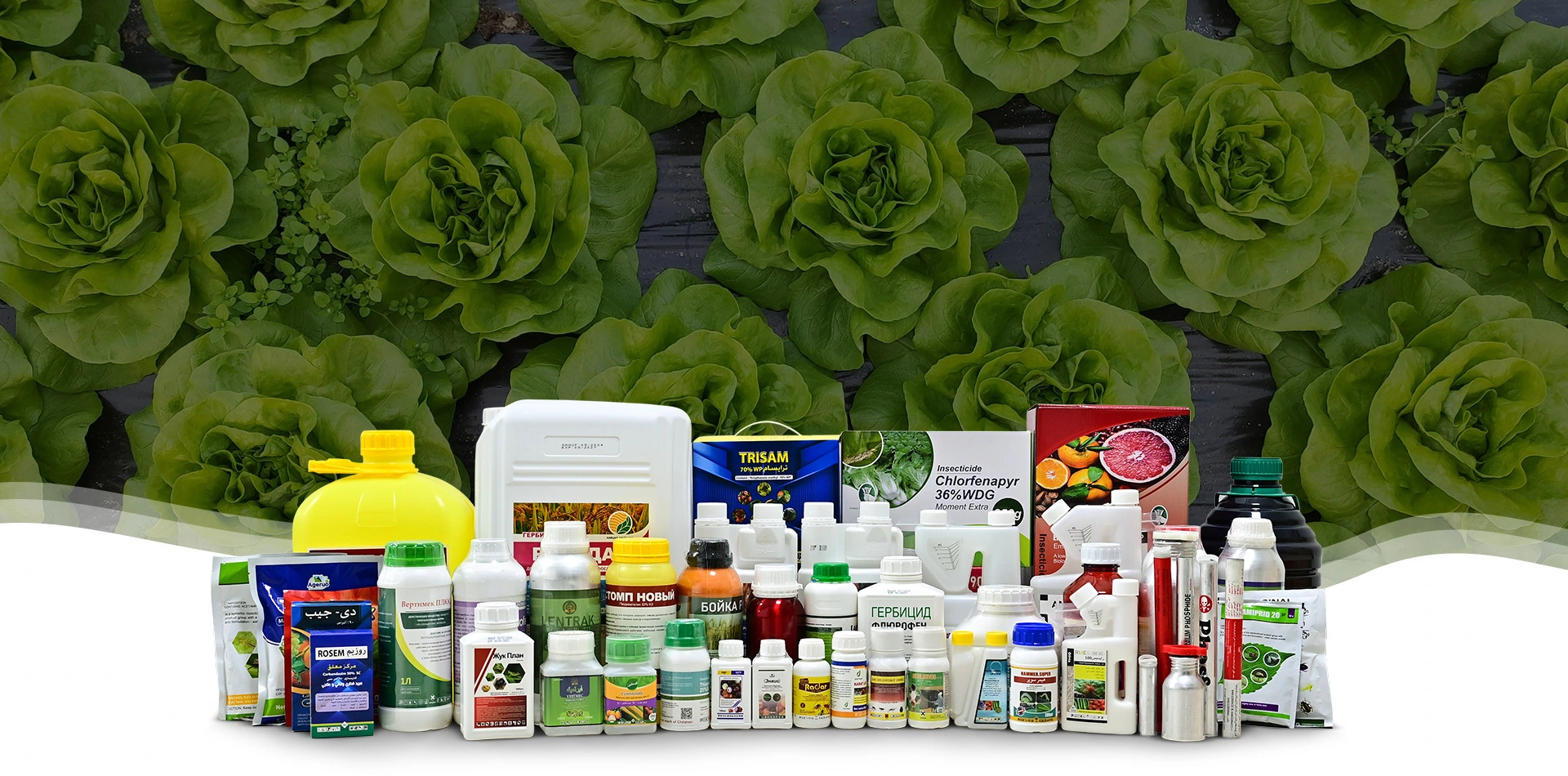
Export-oriented vegetable production places different demands on the selection of pesticide products than conventional agricultural production. When sourcing products, pesticide importers and distributors must not only consider the active ingredients, formulation, price, and control efficacy, but also take into account the final sales market for the vegetables, local pesticide registrations, the Maximum Residue Limits (MRLs), the Pre-Harvest Interval (PHI), and the growers’ actual production cycles.
For example, even for the same crop—such as tomatoes—growers targeting local wholesale markets may use a different combination of pesticide products than commercial growers exporting to the European Union. Even if a particular insecticide effectively controls target pests, it cannot be assumed to be suitable for all export programs.
This places higher demands on pesticide distributors when selecting products: they must understand the major pests and diseases in local vegetable cultivation, comprehend the pesticide residue requirements of different export markets, and ensure that the products they source form a portfolio with practical commercial value.
At SunAgro, we focus on helping importers, distributors, and registration companies build well-balanced crop protection portfolios tailored to their target markets, rather than simply increasing the number of products.
Why Export-Oriented Vegetable Growers Need a Different Crop Protection Portfolio
Export-oriented vegetable growers purchase pesticides not only to control pests and diseases but also to ensure that the final harvest can enter their target sales channels.
In conventional agricultural production, growers may primarily consider efficacy, cost, crop safety, and local registration status. However, in export-oriented production systems, additional factors must be considered, such as importing country regulations, buyer procurement standards, residue testing, farm management records, and product traceability.
Domestic Vegetable Markets and Export Markets Have Different Requirements
Different sales channels have varying requirements for pesticide products.
| Evaluation Dimensions | General Domestic Vegetable Markets | Export-Oriented Vegetable Markets |
|---|---|---|
| Product Registration | Local Registration in the Country of Origin | Registration in the Country of Origin and Requirements Applicable to Export Markets |
| Pest Control | Pest and Disease Control Effectiveness | Control Effectiveness and Agricultural Product Quality Requirements |
| MRL | Domestic Applicable Maximum Residue Limits | MRLs Applicable to Export Destinations |
| PHI | Harvest Interval Specified on Label | Alignment of PHI with Actual Export Harvest Schedule |
| Application Records | Routine Application Records | Traceable Application Records and Batch Management |
| Product Selection | Price, Efficacy, and Availability | Registration, Residues, Technical Suitability, and Supply Stability |
| Buyer Requirements | Local Customer Procurement Standards | Importers, Retailers, and Food Supply Chain Standards |
Distributors need to recognize that the export vegetable market does not simply require the use of higher-priced pesticides, but rather demands that products be adaptable to more complex production and sales conditions.
Identify the Destination Market Before Selecting Products
Product selection should begin with the export destination.
For example, the same vegetable may be sold to the European Union, the United Kingdom, the United States, Japan, or the Gulf Countries. These markets may differ in terms of pesticide residue regulations, commodity classifications, and maximum residue limits (MRLs) for specific active ingredients.
Distributors need to focus on confirming the following:
- The country where the vegetables will ultimately be sold.
- The specific commodity to which the exported product corresponds.
- Whether there are applicable MRLs for the target active ingredients.
- Whether there are import tolerances or other applicable regulations.
- Whether the importer maintains an additional list of restricted pesticides.
- Whether target customers require GLOBALG.A.P. or other farm management standards.
It is important to note that pesticide registration in the country of production and pesticide residue requirements at the export destination are two separate review processes. The fact that a product is registered in the country of cultivation does not mean that the harvested vegetables automatically comply with the MRLs of the export destination.
Therefore, before establishing an export-oriented vegetable product line, distributors should first understand their customers’ primary export markets, rather than simply purchasing based on best-selling products in the local pesticide market.
What Should Distributors Check Before Selecting Crop Protection Products?
Once the target market has been identified, the next step is to assess whether specific products are suitable for the customer’s cultivation needs.
I recommend that distributors screen products based on several interrelated criteria, rather than judging them solely by the name of the active ingredient.
Crop Registration and Target Pest
First, confirm whether the product is registered in the country where the crops are grown and whether it is approved for use on the target vegetables and against the target pests and diseases.
For example, a fungicide may be technically indicated for controlling Botrytis cinerea, but whether a specific formulation can be used on tomatoes, peppers, or cucumbers still requires checking the product registration and approved label in the relevant country.
Product screening requires verifying:
- Active Ingredient.
- Content and Formulation.
- Registered Crops.
- Registered Target Pests and Diseases.
- Application Method.
- Application Rate.
- Maximum Number of Applications.
- Application Interval.
- PHI and REI.
Just because the same active ingredient is approved for use on tomatoes in one country does not mean that formulations with the same concentration, the same formulation type, or from a different manufacturer will have the same registered uses in other countries.
MRL Requirements and Residue Risk
The Maximum Residue Limit (MRL) is a critical factor to consider when sourcing vegetables for export.
MRL refers to the maximum allowable level of pesticide residues in food or feed, typically expressed in mg/kg.
Distributors must verify the regulatory requirements of the target market based on the specific active ingredient and commodity.
For example, even though tomatoes, lettuce, cucumbers, and peppers are all vegetables, they do not automatically share the same MRL.
During the product screening phase, it is recommended to create the following checklist:
| Verification Items | Information to Be Confirmed |
|---|---|
| Active Ingredient | Accurate Name of the Active Ingredient |
| Commodity | Specific Vegetable and Its Regulatory Commodity Classification |
| Destination Market | Final export destination |
| MRL | Applicable maximum residue limits |
| Regulatory Status | Regulatory status of the active ingredient and related uses |
| Residue Data | Availability of residue test data applicable to relevant GAP |
| Buyer Requirements | Whether the buyer has additional residue limits |
MRLs cannot be used directly to determine field application rates, nor can they serve as predictive values for actual residue levels in the product.
Actual residue levels are influenced by application rate, number of applications, application intervals, time since the last application, crop growth conditions, weather, and other factors.
Therefore, distributors cannot determine that a product is suitable for export vegetable production solely based on a high MRL for a particular active ingredient.
PHI and REI Must Match the Production Schedule
PHI and REI are two metrics that distributors often need to consider simultaneously when screening products.
PHI (Pre-Harvest Interval) is the minimum interval that must be observed between the last application and harvest.
REI (Restricted-Entry Interval) is the minimum time that must elapse after application before workers are permitted to re-enter the treated area.
These two metrics address different issues.
PHI is particularly important for vegetables harvested in successive batches.
For example:
- Tomatoes may require multiple harvests in batches.
- Cucumbers typically have a high harvest frequency.
- Peppers may be harvested in batches at different stages of maturity.
- Lettuce and spinach have relatively concentrated harvest cycles, so the timing of pesticide application requires greater caution.
If a product’s PHI does not align with a grower’s harvest schedule, it may not be suitable for that production program, even if it provides good pest control.
However, it is incorrect to simply assume that a shorter PHI makes a product more suitable for export.
The PHI must comply with the approved label, and actual residue levels must also meet the MRLs of the target market. Residue requirements in different markets cannot be addressed by arbitrarily shortening the harvest interval.
How Should Product Selection Differ Between Vegetable Crops?
Distributors should not establish exactly the same product portfolio for all vegetable customers.
Different vegetables exhibit significant differences in marketable parts, growth cycles, harvest frequency, and major pests and diseases.
Product portfolios should be tailored to the actual cropping patterns.
Fruiting Vegetables: Tomato, Pepper, and Cucumber
Fruiting vegetables typically include:
- Tomato
- Sweet Pepper
- Chili Pepper
- Cucumber
- Eggplant
- Zucchini
For these crops, the health of the leaves, flowers, fruits, and roots must all be considered simultaneously.
| Crop | Major Pest and Disease Concerns | Key Product Selection Criteria |
|---|---|---|
| Tomato | Tuta absoluta, Whiteflies, Thrips, Botrytis, Late Blight | Leaf and fruit protection, harvest intervals, residue management |
| Pepper | Thrips, Aphids, Whiteflies, Anthracnose, Botrytis | Pest management, fruit quality, and continuous harvesting |
| Cucumber | Powdery Mildew, Downy Mildew, Aphids, Whiteflies, Mites | Foliar Protection, Greenhouse Environment, and Harvest Cycle |
| Eggplant | Whiteflies, Spider Mites, Thrips, Fruit Borers | Pest Identification, Fruit Protection, and Product Rotation |
In the tomato market, distributors also need to pay special attention to Tuta absoluta. Pesticide resistance management for this pest, control requirements at different growth stages, and product modes of action all influence pesticide combinations.
Refer to SunAgro’s Tomato Leafminer Product Selection and Control Analysis to learn how distributors plan their product portfolios based on target markets, pest pressure, and IRAC groups.
Leafy Vegetables: Lettuce, Spinach, and Other Leafy Greens
Leafy vegetables include:
- Lettuce
- Spinach
- Kale
- Celery
- Other Leafy Vegetables
Unlike fruiting vegetables, the marketable part of leafy vegetables is typically the leaves themselves; therefore, special attention must be paid to application sites, residue risks, and harvest timing.
When screening products, distributors should focus on verifying:
- The MRLs for the specific leafy vegetable commodity.
- Whether the product is registered for use on that vegetable.
- Whether the PHI is appropriate for the actual harvest cycle.
- Whether there are any active ingredients restricted by the buyer.
- Whether there is residue data that meets relevant GAP requirements.
- Whether additional quality and residue testing is required prior to harvest.
Pesticide application practices for tomatoes or peppers cannot be directly applied here.
Even if an insecticide has established applications in the fruit and vegetable market, its registration and residue requirements for leafy vegetables such as lettuce and spinach must be re-verified.
Cruciferous Vegetables: Cabbage, Broccoli, and Cauliflower
Cruciferous vegetables include crops such as cabbage, broccoli, and cauliflower.
Major pest and disease concerns include:
- Diamondback Moth.
- Cabbage Caterpillars.
- Aphids.
- Thrips.
- Flea Beetles.
- Alternaria Leaf Spot.
- Downy Mildew.
- Bacterial Diseases.
Different marketable parts of the crop influence the focus of product screening. For example, cabbage is primarily sold as heads, while broccoli is primarily sold as florets; therefore, not all cruciferous vegetables can be managed using exactly the same residue management approach.
Distributors can refer to Cruciferous Vegetable Crop Protection Solutions for further information on the growth cycles, pests and diseases, and pre-harvest management of these vegetables.
Greenhouse and Open-field Vegetable Production
The growing environment also influences product selection.
| Production Conditions | Key Management Characteristics | Product Selection Criteria |
|---|---|---|
| Greenhouse | Temperature, humidity, and production cycles are relatively controllable | REI, compatibility with natural enemies, repeat applications, and resistance management |
| Open-field | Significant variations in rainfall, temperature, and external pest sources | Spray coverage, weather conditions, and field pest and disease pressure |
| Nursery | The seedling stage is relatively sensitive | Seedling safety, root protection, and early disease management |
| Continuous Cropping | Continuous cultivation in the same facility or on the same land | Soil-borne diseases, root health, and crop rotation |
Particularly in greenhouse production, biological and chemical control methods often need to be used in coordination.
When recommending products, distributors should determine whether customers use beneficial insects or biological control agents, and whether existing products might interfere with these management practices.
Which Crop Protection Product Categories Should Distributors Prioritize?
When building a product portfolio, it is recommended to first identify the customer’s most critical pest and disease control needs before deciding which product categories to include.
For the export vegetable market, the following product categories offer high portfolio value.
Fungicides for Vegetable Disease Management
Fungicides are primarily selected based on target pathogens, crop registrations, FRAC groups, application timing, and product residue requirements.
Common disease targets include:
- Botrytis cinerea.
- Powdery Mildew.
- Downy Mildew.
- Early Blight.
- Late Blight.
- Anthracnose.
- Alternaria Leaf Spot.
Distributors should avoid purchasing products based solely on a fungicide’s broad-spectrum activity.
Different fungicides vary in their modes of action, protection mechanisms, and target diseases.
For example, trifloxystrobin belongs to FRAC Group 11 and exhibits the characteristics of a QoI-class fungicide. It can serve as one evaluation criterion within a fungicide portfolio, but specific applications on vegetables still require verification of local registrations.SunAgro offers Trifloxystrobin 50% WDG for distributors to evaluate its product specifications, formulation, and suitability for target markets.
Insecticides for Sucking and Chewing Pests
Pests in the vegetable market can be classified based on their feeding habits and biological characteristics.
Sucking Pests primarily include:
- Whiteflies.
- Aphids.
- Thrips.
- Leafhoppers.
Chewing pests primarily include:
- Caterpillars.
- Diamondback moth.
- Tuta absoluta larvae.
- Armyworms.
- Fruit borers.
These two categories of pests require different product combinations.
For example, Flonicamid belongs to IRAC Group 29 and is primarily used for managing sucking pests in accordance with registration requirements; Chlorantraniliprole belongs to IRAC Group 28 and is primarily targeted at feeding pests such as Lepidoptera larvae.
Distributors should not treat these two as direct substitutes.SunAgro’s Insecticide Product Portfolio includes products with different modes of action and formulations, which can be used to create a shortlist of insecticides for the local market.
Acaricides for Mite Management
Spider mites and other phytophagous mites can interfere with the normal growth of greenhouse and field vegetables.
Distributors should first identify the specific mite species, life stage, and local resistance patterns before selecting an appropriate acaricide.
For example:
- Etoxazole primarily targets mite eggs and nymphal stages within its approved registration scope.
- Fenpyroximate belongs to IRAC Group 21A and can be evaluated for the management of specific mite species.
- Propargite belongs to IRAC Group 12C and can be used for mite control programs with the appropriate registration.
Suitability cannot be determined based solely on the product name; it must also be evaluated in conjunction with the target mite species, crop registration, and label instructions.
Biological Crop Protection Products
Biological products offer an alternative to conventional chemical pesticides for the production of export-grade vegetables.SunAgro’s relevant product lines include:
- Bacillus subtilis.
- Trichoderma harzianum.
- Bacillus thuringiensis.
- Metarhizium anisopliae.
- Paecilomyces lilacinus.
These products are not intended for the same use.
For example, Bacillus subtilis and Trichoderma harzianum are primarily evaluated as microbial biocontrol products; Bt primarily targets susceptible insect larvae within the scope of registration; and Metarhizium anisopliae falls under the category of entomopathogenic fungi.
Distributors should make purchasing decisions based on the microbial species, strain, active live bacteria or spore counts, formulation, storage stability, and intended use.
For further reading, see “Applications of Bacillus subtilis in Agriculture and Its Limitations” to understand the practical positioning of microbial products.
It is important to note that “Biological Products” does not equate to “zero residues” nor does it imply that local registration is unnecessary. Product claims and scope of use must still comply with applicable regulations.
How Can Distributors Build a Balanced Product Portfolio?
What distributors truly need is not the most extensive product catalog, but a product portfolio that covers key local crop needs, has a clear commercial positioning, and can be sold consistently.
Build the Portfolio Around Crop and Pest Demand
It is recommended to first investigate the most important vegetable categories in the target market.
For example:
| Target Customers | Major Crops | Product Categories for Priority Evaluation |
|---|---|---|
| Greenhouse Growers | Tomato, Cucumber, Pepper | Fungicides, Insecticides, Acaricides, Biologicals |
| Leafy Vegetable Growers | Lettuce, Spinach, Kale | Fungicides and Insecticides with appropriate registrations for leafy vegetables |
| Commercial Brassica Growers | Cabbage, Broccoli, Cauliflower | Products for Lepidopteran Pests and Major Diseases |
| Vegetable Nurseries | Vegetable Seedlings | Seed Treatment, Biofungicides, Root-zone Products |
| Large Vegetable Farms | Various Vegetables | Comprehensive portfolio of crop protection products and stable supply |
This classification helps distributors prioritize their purchasing decisions.
For example, a distributor primarily serving greenhouse tomato growers may have a greater need for products targeting Tuta absoluta, whiteflies, Botrytis, and mites, rather than purchasing large quantities of products at once that are unrelated to their customers’ cropping patterns.
Avoid Unnecessary SKU Overlap
There may be multiple active ingredients available to manage the same pest category, but not every product is worth stocking simultaneously.
For example, if a distributor already carries multiple insecticides from the same IRAC group, they need to assess whether the new product offers a truly distinct mode of action or merely adds to inventory.
Product portfolio evaluations should consider:
| Evaluation Criteria | Business Rationale |
|---|---|
| Active Ingredient | Determine whether there is duplication of active ingredients |
| IRAC / FRAC Group | Determine whether the modes of action are truly different |
| Formulation | Determine whether it meets customers’ usage and purchasing habits |
| Crop Registration | Determine whether the product is actually applicable to the target crop |
| Target Pest | Determine whether the product addresses new pest control needs |
| Price Position | Assess market price competitiveness |
| Sales Potential | Assess actual sales potential |
| Supply Stability | Assess whether continuous supply is possible |
The presence of the same active ingredient or mode of action among products does not necessarily mean that one must be discontinued, but there must be a clear market rationale.You can refer to SunAgro’s analysis on Sucking Pest Insecticide Product Range and SKU Duplication Issues to further establish a more rational product portfolio.
Consider Product Formulation and Local Application Conditions
Formulation is also a factor that distributors often overlook when purchasing.
Different formulations can affect product storage, transportation, mixing, spraying, and customer application practices.
For example:
| Formulation | Product Features | Key Selection Criteria |
|---|---|---|
| SC | Suspension Concentrate | Suspension stability, dispersibility, and storage stability |
| EC | Emulsifiable Concentrate | Emulsion stability, solvent system, and crop safety |
| WG / WDG | Water-Dispersible Granule | Dispersibility, disintegration, and dust control |
| WP | Wettable Powder | Wettability, suspension, and moisture protection in packaging |
| SL | Soluble Concentrate | Solubility, pH, and low-temperature stability |
| OD | Oil Dispersion | Oil-phase systems, dispersion stability, and storage conditions |
In markets with hot, humid climates or long transit times, formulation quality and packaging integrity are particularly important.
Distributors should select products based on local climate, storage conditions, and spray equipment, rather than simply comparing active ingredient concentrations.
What Technical Documents Should Distributors Request from Suppliers?
For customers in the export vegetable sector, the technical documentation provided by suppliers directly impacts product evaluation and registration preparation.
Distributors should verify the completeness of the documentation before purchasing, rather than discovering that key documents are missing only when the product is ready for market.
Product Quality and Technical Documents
| Documents | Primary Uses |
|---|---|
| COA | Verify quality test results for specific batches |
| SDS / MSDS | Understand product hazards, storage, transportation, and safe handling requirements |
| TDS | Understand product technical parameters and basic performance |
| Product Specification | Verify content, formulation, and quality standards |
| Stability Data | Evaluate product storage stability |
| Packaging Specification | Verify packaging specifications and suitability for transport |
| Residue Trial Data | Evaluate residue study results when relevant data is available |
| Registration Documents | Support for local registration and regulatory review |
Note that a Certificate of Analysis (COA) cannot substitute for Residue Trial Data, nor can a product stability report demonstrate that pesticide residues on specific vegetables meet export requirements.
Different documents serve distinct technical and regulatory purposes.
Evaluate Supplier’s Quality Control and Supply Capacity
In addition to product documentation, distributors should also assess the supplier’s production and quality management capabilities.
Key areas include:
- Raw Material Inspection.
- Formulation Process Control.
- Active Ingredient Content Testing.
- Physical and Chemical Stability.
- Packaging Inspection.
- Batch Traceability.
- Finished Product Testing.
- Export Documentation.
- Delivery Coordination.
For products that have already completed local registration and established sales channels, the consistency of future supply is critical.
Changing the manufacturing source, technical source, or key formulation may require additional registration and regulatory evaluations. Therefore, procurement decisions should not be based solely on the price of the initial order but should also consider the stability of future supply.
Distributors can learn about our brand partnership strategies, product quality management, and long-term market collaboration models through the SunAgro Company Profile.
How Should Distributors Organize Procurement for Export Vegetable Markets?
After completing technical screening, the product portfolio must move into the actual procurement and inventory management phase.
Prioritize Products According to Market Demand
Distributors can categorize products into three tiers:
| Product Tier | Positioning | Procurement Strategy |
|---|---|---|
| Core Products | High-frequency demand from major vegetable customers | Prioritize assessing sales demand and evaluating feasibility |
| Complementary Products | Address specific pest and disease control needs | Determine procurement based on the existing product portfolio |
| Specialized Products | Meet the needs of specialized cultivation systems or niche markets | Evaluate based on customer needs and project orders |
This helps avoid purchasing excessive quantities of products that cannot be sold in the short term.
Align Procurement with the Growing Season
Vegetable production is highly seasonal, and planting times, greenhouse production cycles, and the occurrence periods of major pests and diseases vary by country.
Procurement plans should take into account:
- Planting Season.
- Growing Cycle.
- Harvesting Period.
- Main Pest and Disease Pressure.
- Product Registration Progress.
- Import Lead Time.
- Existing Inventory.
- Expected Sales Volume.
For new markets, distributors should start with products that have clear demand and a high likelihood of registration, gradually adding other categories rather than building up excessively large inventories all at once.
Evaluate Supplier Cooperation Before Placing Orders
After determining which products to procure, you should also verify whether suppliers can meet the requirements for long-term cooperation.
It is recommended to focus on confirming the following:
- Whether product specifications are clear.
- Whether the supplier can provide the corresponding technical documentation.
- Whether samples can be provided for evaluation.
- Whether packaging and labeling comply with target market requirements.
- Whether the supplier can assist with preparing registration documentation.
- Whether production and delivery cycles align with the procurement plan.
- Whether batch quality is consistent.
For importers needing to establish their own regional distribution networks, SunAgro Branded Products can be evaluated as a product option for local registration, importation, and distribution partnerships.
Frequently Asked Questions
What is the most important factor when selecting pesticides for export vegetables?
No single factor can determine whether a product is suitable for export vegetables. Distributors must simultaneously verify target crop registration, suitability for pests and diseases, destination MRLs, PHI, product labeling, and customer procurement standards.
Does a short PHI guarantee MRL compliance?
No, it does not. The PHI is the minimum interval between application and harvest specified on the label, while the MRL is the maximum residue limit for pesticides set by the target market. Compliance with the PHI does not automatically mean compliance with the export market’s MRL in all cases.
Can the same pesticide be used for tomatoes, peppers, and cucumbers?
This cannot be determined solely based on the crops belonging to the same vegetable category. It is essential to verify the specific formulation’s locally registered crops, target pests and diseases, application methods, and label restrictions.
Should distributors prioritize biological pesticides for export vegetable growers?
Biological products can be part of a plant protection portfolio for export vegetables, but they should not be prioritized for purchase simply because they are biological. Distributors must also evaluate the strain, viable microbe count, product stability, intended use, registration requirements, and local customer needs.
Why are FRAC and IRAC Groups important for distributors?
FRAC and IRAC Groups help distributors identify the modes of action of different fungicides and insecticides, assess whether there is overlap in resistance management among products, and establish more rational product rotation strategies.
What should importers confirm before purchasing a new vegetable pesticide?
At a minimum, they must confirm the target country, target vegetables, pests and diseases, active ingredients, formulation, local registration status, MRLs for export destinations, PHI, technical documentation, and anticipated purchase volume.
Can a single product portfolio serve every export vegetable market?
This approach is not recommended. Vegetable composition, pest and disease pressure, registration requirements, pesticide residue regulations, and customer procurement requirements may vary across different markets. Distributors should tailor their product portfolios to their target markets.
Build Your Export Vegetable Crop Protection Portfolio with SunAgro
The export vegetable market requires more than just additional pesticide products; it needs a product portfolio that meets actual cultivation needs, complies with local regulations, and is tailored to different sales markets.
SunAgro Science provides branded crop protection products to the international agricultural market and collaborates with importers, distributors, registration companies, and agricultural wholesalers that possess local distribution channels and registration capabilities.
Our product portfolio includes:
- Insecticides
- Fungicides
- Acaricides
- Herbicides
- Biological Crop Protection Products
- Seed Treatment Products
- Post-harvest Products
We can work with partners to evaluate suitable product specifications based on target markets, vegetable categories, pest and disease control needs, and procurement plans, and provide available COAs, SDS/MSDS, TDS, product specifications, samples, and relevant registration documentation support.
If you are building a crop protection product portfolio for the tomato, pepper, cucumber, leafy vegetable, or other commercial vegetable markets, please provide us with information on your target countries, primary crops, existing product portfolio, and procurement requirements.
We look forward to establishing long-term partnerships with partners who have local market expertise for SunAgro brand registration, importation, and distribution.