Trifloxystrobin 50% WDG
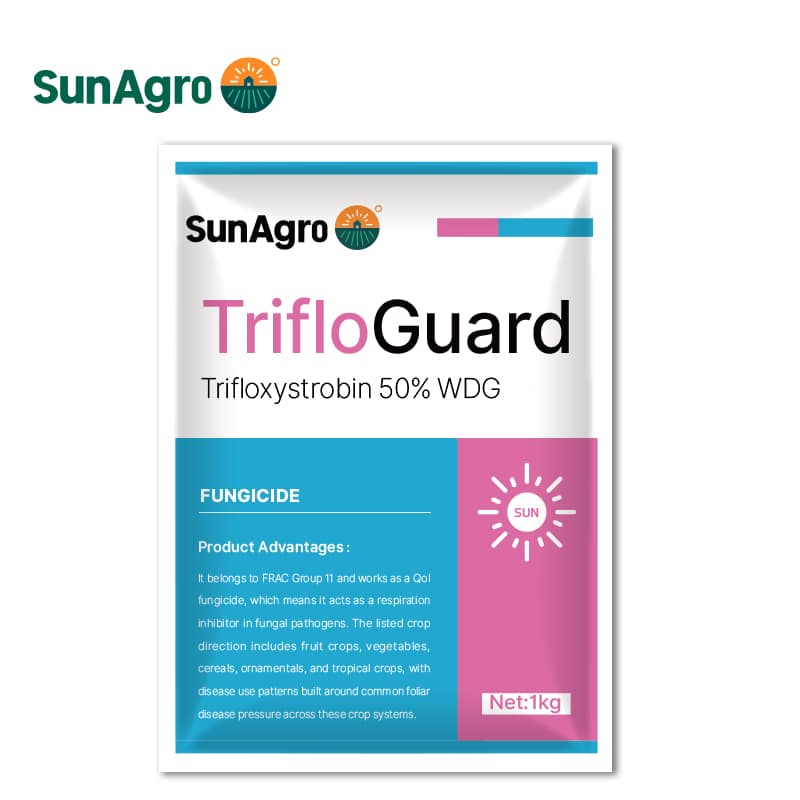
Trifloxystrobin 50% WDG is a FRAC Group 11 QoI fungicide formulated as a water-dispersible granule for registered foliar disease-management programs in fruit crops, vegetables, cereals, ornamentals, tropical crops, and other approved crops.
This product contains trifloxystrobin, a strobilurin fungicide used in preventive and early-stage disease-management programs where powdery mildew, rust, leaf spot, scab, Botrytis-related disease pressure, blossom blight, Alternaria-related foliar disease pressure, and other approved fungal diseases need to be reviewed according to local registration.
SunAgro Science supplies Trifloxystrobin 50% WDG as a branded fungicide product for local registration, import, and distribution cooperation. It is suitable for qualified importers, distributors, registration companies, agricultural retailers, crop protection channels, and local partners who want to develop SunAgro products in their own markets.
For this product direction, SunAgro can support product review, sample communication, technical documents, WDG formulation information, FRAC group information, batch quality confirmation, resistance-management information, registration-related document support, and long-term supply planning according to the target market and cooperation stage.
Stable Formulation Supply
SunAgro Brand Products
Registration Support
Distributor Cooperation
Trifloxystrobin 50% WDG Description
Trifloxystrobin 50% WDG Description
| Item | Details |
|---|---|
| Product Name | Trifloxystrobin 50% WDG |
| Active Ingredient | Trifloxystrobin |
| Content | 50% |
| Formulation Type | WDG, Water-Dispersible Granule |
| Product Type | Fungicide |
| Chemical Group | Strobilurin fungicide |
| FRAC Group | FRAC Group 11 |
| Mode of Action | QoI fungicide; mitochondrial respiration inhibitor |
| Mode of Action Site | Cytochrome b complex III, Qo site |
| Main Use Direction | Preventive and early-stage foliar disease-management programs where locally approved |
| Main Disease Direction | Powdery mildew, rust, leaf spot, scab, Botrytis, blossom blight, Alternaria-related disease pressure, and other approved disease directions |
| Main Crop Direction | Fruit crops, vegetables, cereals, ornamentals, tropical crops, and other registered crops |
| Formulation Position | 50% water-dispersible granule QoI fungicide for registered foliar spray programs |
| Resistance Management | Use in rotation or mixture programs according to local label and FRAC guidance |
| Supply Direction | SunAgro branded Trifloxystrobin 50% WDG for registration, import, and distribution cooperation |
| Document Support | COA, SDS / MSDS, TDS, product specification, sample support, WDG formulation information, FRAC group information, batch quality information, and available registration-related documents |
| Cooperation Direction | Local registration, import cooperation, distributor partnership, crop protection channel cooperation, and long-term market supply |
Main Functions
Trifloxystrobin 50% WDG is mainly used in registered foliar disease-management programs where preventive timing, early disease suppression, and resistance-management planning are important.
It can help:
- Support registered foliar disease-management programs
- Support preventive spray programs before disease pressure becomes severe
- Support early-stage disease management where locally approved
- Provide a FRAC Group 11 QoI fungicide option for rotation programs
- Support disease programs in fruit crops, vegetables, cereals, ornamentals, tropical crops, and other approved crops
- Support powdery mildew, rust, leaf spot, scab, Botrytis, blossom blight, Alternaria-related pressure, and approved foliar disease directions
- Provide a 50% WDG dry granule formulation direction
- Support local registration review and distributor product positioning
This product should be positioned as a Trifloxystrobin 50% WDG fungicide for approved preventive and early-stage foliar disease-management programs. It should not be presented as a universal fungicide for all crops, all fungal diseases, or all disease stages.
For local partners, this product provides a clear SunAgro branded Trifloxystrobin 50% WDG fungicide direction for registration review and market distribution.
Mode of Action
Trifloxystrobin is a strobilurin fungicide classified as FRAC Group 11. It belongs to the QoI fungicide group and inhibits fungal mitochondrial respiration by acting at the Qo site of cytochrome b complex III.
In practical terms, this means sensitive fungi cannot produce the energy needed for normal development. This mode of action is especially relevant during early infection stages and spore germination, which is why Trifloxystrobin 50% WDG is best positioned in preventive and early-stage foliar spray programs.
Because FRAC Group 11 fungicides have high resistance-management importance, Trifloxystrobin 50% WDG should not be used repeatedly as the only fungicide mode of action. It should be rotated or used with effective fungicides from different FRAC groups according to local label directions and resistance-management recommendations.
Trifloxystrobin 50% WDG should be used as part of a structured disease-management program, not as a stand-alone replacement for every fungicide in the spray schedule.
Target Disease Directions
Trifloxystrobin 50% WDG can be reviewed for registered foliar disease-management programs where FRAC Group 11 QoI fungicide activity is needed.
Common disease directions may include:
- Powdery mildew where locally approved
- Rust where locally approved
- Leaf spot where locally approved
- Scab where locally approved
- Botrytis-related disease pressure where approved
- Blossom blight where approved
- Alternaria-related foliar disease pressure where approved
- Downy mildew directions only where local registration supports the claim
- Selected stem, fruit, or foliar disease directions according to approved local label
- Other approved fungal disease directions according to local registration and approved label claims
In practical crop programs, this product is most relevant where disease pressure affects leaf protection, fruit appearance, crop quality, harvest value, and marketable yield.
Final disease claims, crop scope, dosage, spray timing, interval, maximum application number, pre-harvest interval, residue requirement, resistance-management rule, and use restriction must follow local registration and approved label directions in the destination market.
Suitable Crops and Application Areas
Trifloxystrobin 50% WDG can be reviewed for registered crop programs where foliar disease pressure affects crop quality, marketable appearance, and harvest performance.
Fruit Crop Programs
For fruit crop programs, Trifloxystrobin 50% WDG can be reviewed where powdery mildew, scab, leaf spot, Botrytis-related disease pressure, blossom blight, or other approved foliar disease directions affect fruit quality and commercial value.
This direction may be relevant for apples, pears, grapes, strawberries, and other approved fruit crops according to local registration. Product use should always follow approved crop scope, disease claim, timing, residue limit, and pre-harvest interval.
Vegetable Crop Programs
For vegetable crop programs, this product can be reviewed where powdery mildew, leaf spot, Alternaria-related disease pressure, downy mildew directions where approved, and other foliar disease problems affect crop appearance and harvest quality.
It may be relevant for cucurbits, fruiting vegetables, leafy vegetables, and other registered vegetable crops. Final crop claims and spray timing must follow the approved local label.
Cereal Crop Programs
For cereal crop programs, Trifloxystrobin 50% WDG can be reviewed where rust, leaf disease pressure, and approved foliar fungal disease directions need a FRAC Group 11 fungicide option.
Cereal disease programs should focus on preventive timing, crop stage, local disease pressure, spray interval, resistance history, and rotation with other FRAC groups.
Ornamental and Nursery Programs
For ornamental and nursery programs, this product can be reviewed where leaf spot, powdery mildew, and other approved foliar disease directions affect plant appearance and commercial quality.
Nursery and ornamental programs require careful attention to crop safety, variety sensitivity, spray timing, label wording, and local approval.
Tropical Crop Programs
Tropical crop programs often face high humidity, frequent foliar disease pressure, and long disease-risk periods.
Where locally approved, Trifloxystrobin 50% WDG can be reviewed for preventive and early-stage foliar disease-management programs in tropical crop systems. Local registration, disease spectrum, resistance history, and crop safety should be confirmed before market planning.
Application Guidance
Trifloxystrobin 50% WDG should be used according to the approved local label. Because this product belongs to FRAC Group 11, resistance-management planning is especially important.
General use considerations include:
- Use only where trifloxystrobin is locally registered and approved.
- Confirm approved crop scope, disease claims, dosage, spray timing, interval, PHI, MRL, and maximum application number.
- Position the product mainly for preventive and early-stage foliar disease-management programs.
- Do not wait until disease pressure becomes severe before using QoI fungicide programs.
- Avoid repeated exclusive use of FRAC Group 11 fungicides.
- Rotate with fungicides from different FRAC groups.
- Use effective non-cross-resistant mixture partners where local label allows.
- Do not consider mixtures containing only QoI fungicides as proper resistance management.
- Follow local worker safety, environmental, residue, aquatic protection, and crop safety requirements.
- Protect the WDG formulation from moisture, caking, package damage, and improper storage.
Final crop scope, disease claim, dosage, spray timing, interval, safety interval, residue requirement, resistance-management rule, and use restriction must follow the approved local label.
WDG Formulation Features
WDG means water-dispersible granule. Trifloxystrobin 50% WDG is a dry granule formulation designed to disperse in water before foliar spray application according to the approved local label.
Compared with traditional powder formats, WDG formulation can provide a dry granule product direction with lower dust profile, easier handling, and clear spray-preparation identity.
Key features include:
- 50% water-dispersible granule formulation
- Strobilurin / QoI fungicide identity
- FRAC Group 11 mode-of-action profile
- Dry granule formulation for spray preparation
- Preventive foliar disease-management direction
- Suitable for registered fruit, vegetable, cereal, ornamental, and tropical crop programs
- Granule strength, dispersibility, wetting behavior, suspension performance, and moisture control are important quality points
- Lower dust profile compared with many traditional powder formats
- Package sealing and storage stability are important during shipment
- SunAgro branded supply for local distribution
- Available technical document support
Because this is a water-dispersible granule formulation, protection from moisture, caking, granule breakage, dust exposure, package damage, and rough handling is important during storage, transport, and use preparation.
Product Advantages
Trifloxystrobin 50% WDG provides both technical value and cooperation value for local crop protection partners.
Key advantages include:
- 50% WDG dry granule formulation
- Trifloxystrobin strobilurin fungicide identity
- FRAC Group 11 QoI mode-of-action direction
- Respiration-inhibiting fungicide profile
- Strong fit for preventive foliar spray programs
- Relevant for powdery mildew, rust, leaf spot, scab, Botrytis, blossom blight, Alternaria-related pressure, and approved foliar disease directions
- Suitable for fruit crops, vegetables, cereals, ornamentals, and tropical crops where registered
- Useful role in structured resistance-management programs
- Water-dispersible granule formulation with clear product identity
- SunAgro branded product direction for local registration review
- Available document support for import and distribution cooperation
- Stable supply planning for long-term market development
Its main technical value is the combination of trifloxystrobin active ingredient identity, FRAC Group 11 QoI mode of action, preventive foliar disease-management positioning, and 50% WDG dry granule formulation.
Difference Between Trifloxystrobin 50% WDG and Kresoxim-Methyl 50% WDG
Trifloxystrobin 50% WDG and Kresoxim-Methyl 50% WDG both belong to the strobilurin fungicide family and FRAC Group 11. However, they are not the same product. Local registration, crop scope, disease claims, resistance history, and distributor product strategy should guide the final choice.
| Item | Trifloxystrobin 50% WDG | Kresoxim-Methyl 50% WDG |
|---|---|---|
| Chemical Group | Strobilurin fungicide | Strobilurin fungicide |
| FRAC Group | FRAC Group 11 | FRAC Group 11 |
| Mode of Action | QoI respiration inhibitor | QoI respiration inhibitor |
| Formulation Type | WDG, Water-Dispersible Granule | WDG, Water-Dispersible Granule |
| Product Position | FRAC Group 11 WDG fungicide for registered preventive foliar disease programs | FRAC Group 11 WDG fungicide for registered foliar disease programs where approved |
| Main Crop Direction | Fruit crops, vegetables, cereals, ornamentals, tropical crops, and other approved crops | Depends on local registration and market positioning |
| Resistance Management | Requires rotation or effective mixture partners from different FRAC groups | Requires rotation or effective mixture partners from different FRAC groups |
| Final Choice | Depends on local registration, disease spectrum, crop scope, resistance history, and distributor product line | Depends on local registration, disease spectrum, crop scope, resistance history, and distributor product line |
Trifloxystrobin 50% WDG is suitable where the target market needs a clear trifloxystrobin-based WDG product identity. Kresoxim-Methyl 50% WDG may fit markets with different registration history, disease positioning, or distributor portfolio requirements.
The final choice should follow local registration wording, disease spectrum, crop scope, formulation preference, and resistance-management strategy.
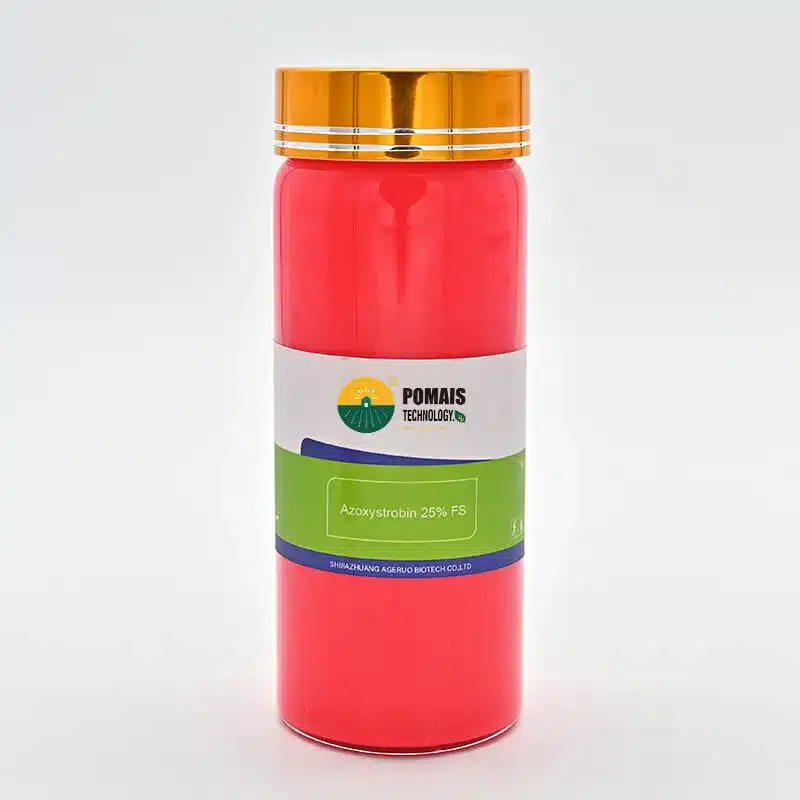
Difference Between Trifloxystrobin 50% WDG and Azoxystrobin Formulations
Trifloxystrobin and azoxystrobin both belong to FRAC Group 11 QoI fungicides, but they often serve different formulation and market-positioning needs.
| Item | Trifloxystrobin 50% WDG | Azoxystrobin Formulations |
|---|---|---|
| Chemical Group | Strobilurin fungicide | Strobilurin fungicide |
| FRAC Group | FRAC Group 11 | FRAC Group 11 |
| Mode of Action | QoI respiration inhibitor | QoI respiration inhibitor |
| Common Formulation Direction | WDG | SC, WDG, WG, FS, and mixture formulations depending on market |
| Product Position | Dry granule QoI fungicide direction for registered foliar disease programs | Broader formulation family across foliar, seed treatment, and mixture markets where registered |
| Best Fit | Markets needing Trifloxystrobin 50% WDG product identity | Markets needing azoxystrobin-based product identity or mixture direction |
| Resistance Management | Requires rotation or effective mixture partners from different FRAC groups | Requires rotation or effective mixture partners from different FRAC groups |
| Final Choice | Depends on registration, disease program, crop use, formulation preference, and resistance-management plan | Depends on registration, disease program, crop use, formulation preference, and resistance-management plan |
Trifloxystrobin 50% WDG is a focused dry granule product direction. Azoxystrobin products may be positioned in wider formulation systems, including single-active products and mixture products, depending on local registration.
The final product choice should be based on approved crop scope, disease claim, formulation preference, resistance-management needs, and local market strategy.
Safety, Resistance Management, and Use Precautions
Trifloxystrobin 50% WDG should be handled carefully during storage, preparation, spray application, and transport. Users must strictly follow approved local label instructions, SDS / MSDS guidance, and standard agricultural safety practices.
Recommended precautions include:
- Wear suitable protective clothing, gloves, eye protection, and a mask during handling and spray preparation.
- Avoid inhaling dust or spray mist.
- Avoid direct contact with skin, eyes, and clothing.
- Do not eat, drink, or smoke during handling or application.
- Do not use outside approved crop, disease, timing, and application directions.
- Follow local resistance-management requirements.
- Avoid repeated exclusive use of FRAC Group 11 fungicides.
- Rotate or mix with fungicides from different FRAC groups according to local label and resistance-management guidance.
- Prevent contamination of food, feed, drinking water, irrigation water, water bodies, and non-target areas.
- Follow local aquatic protection and environmental safety requirements.
- Store away from children, animals, food, feed, heat, moisture, and direct sunlight.
- Keep the WDG formulation sealed when not in use.
- Protect the product from moisture, caking, granule breakage, package damage, and rough handling.
- Dispose of empty packaging and unused product according to local regulations.
- Follow the local pesticide label, SDS / MSDS, and regulatory requirements.
Because trifloxystrobin approval, crop scope, disease claims, dose, interval, pre-harvest interval, residue requirements, resistance-management rules, and safety requirements can differ by country, partners should confirm local registration feasibility before market planning.
Storage and Transport
Store Trifloxystrobin 50% WDG in the original sealed package in a cool, dry, and well-ventilated place.
Keep it away from food, drink, feed, direct sunlight, high temperature, moisture, and incompatible materials. During transport, packages should be protected from moisture, pressure, contamination, breakage, granule damage, and rough handling to maintain product stability and packaging safety.
Because this is a water-dispersible granule formulation, moisture control, caking prevention, granule protection, dust control, and package sealing are important during storage, handling, and shipment.
Registration, Document, and Supply Support from SunAgro
SunAgro provides Trifloxystrobin 50% WDG with available documents and supply support for international registration, import, and distribution cooperation.
We help partners review product specifications, sample information, WDG formulation information, batch quality information, safety information, FRAC group information, resistance-management information, foliar disease program information, and available technical documents according to the target market and cooperation stage.
Available support may include:
- COA
- SDS / MSDS
- TDS
- Product specification
- Sample support
- WDG formulation information
- Batch quality confirmation
- Safety information
- FRAC group information
- Resistance-management information
- Label information
- Packing information
- Export document coordination
- Available registration-related technical files
This support helps local partners evaluate product feasibility before registration planning, import cooperation, crop protection channel cooperation, and distribution development.
Stable Supply Behind SunAgro Branded Products
SunAgro branded products are supported by strong formulation production and quality control capability.
Our production system covers liquid formulations including SC, SL, FS, EC, EW, CS, OF, and ULV, and solid formulations including WDG, WSG, WP, TB, DP, and GR.
Annual production capacity reaches 15,000 kiloliters for liquid formulations and 20,000 tons for solid formulations, supporting long-term supply for registered SunAgro products and local distribution cooperation.
FAQ
What is Trifloxystrobin 50% WDG?
Trifloxystrobin 50% WDG is a FRAC Group 11 QoI fungicide formulated as a water-dispersible granule. It is used for registered preventive and early-stage foliar disease-management programs.
What fungicide group does Trifloxystrobin belong to?
Trifloxystrobin belongs to FRAC Group 11. It is a strobilurin / QoI fungicide.
What does QoI mean?
QoI means quinone outside inhibitor. QoI fungicides inhibit fungal mitochondrial respiration by acting at the Qo site of cytochrome b complex III.
Is Trifloxystrobin mainly preventive or curative?
Trifloxystrobin 50% WDG should mainly be positioned for preventive and early-stage disease-management programs. It should not be presented as a full curative solution for severe disease pressure.
What diseases can Trifloxystrobin 50% WDG be reviewed for?
It can be reviewed for powdery mildew, rust, leaf spot, scab, Botrytis-related disease pressure, blossom blight, Alternaria-related foliar disease pressure, and other approved disease directions according to local registration.
What crops are most relevant?
Fruit crops, vegetables, cereals, ornamentals, tropical crops, and other registered crops are the main directions. Final crop scope must follow the approved local label.
What does WDG mean?
WDG means water-dispersible granule. It is a dry granule formulation designed to disperse in water before spray application according to approved label directions.
Why is resistance management important for Trifloxystrobin?
Resistance management is important because Trifloxystrobin belongs to FRAC Group 11. Repeated exclusive use of Group 11 fungicides can increase resistance risk. Rotation or effective mixture programs with different FRAC groups should follow local label and resistance-management guidance.
Can Trifloxystrobin 50% WDG be mixed with other fungicides?
Only where local label directions allow use. Mixture partners should be effective against the target disease and should come from different FRAC groups for resistance-management purposes.
What is the difference between Trifloxystrobin and Kresoxim-Methyl?
Both are FRAC Group 11 strobilurin fungicides, but they are different active ingredients. The suitable choice depends on local registration, crop scope, disease spectrum, formulation preference, resistance history, and distributor product strategy.
What is the difference between Trifloxystrobin and Azoxystrobin?
Both are FRAC Group 11 QoI fungicides. Trifloxystrobin 50% WDG is a focused WDG product direction, while azoxystrobin products may appear in different formulation types and mixture systems depending on the market.
Is Trifloxystrobin 50% WDG suitable for all markets?
No. Crop scope, disease claims, dosage, spray timing, pre-harvest interval, residue requirements, resistance-management rules, and registration requirements can differ by country. Local registration feasibility must be reviewed before commercial planning.
Do you support OEM or private label Trifloxystrobin 50% WDG orders?
SunAgro Science now focuses on SunAgro branded Trifloxystrobin 50% WDG for local registration, import, and distribution cooperation. Our priority is long-term brand cooperation, not simple OEM or private label production.
Can SunAgro support registration documents for Trifloxystrobin 50% WDG?
Yes. SunAgro can provide available product documents according to product type, cooperation stage, and destination market requirements. Support may include COA, SDS / MSDS, TDS, product specification, sample support, WDG formulation information, FRAC group information, batch quality information, resistance-management information, and other available technical files.
Request Trifloxystrobin 50% WDG Product Details
Looking for a SunAgro branded FRAC Group 11 QoI fungicide in WDG formulation for local registration, import, and distribution?
SunAgro Science supplies Trifloxystrobin 50% WDG for partners who need a water-dispersible granule fungicide direction for preventive foliar disease programs in fruit crops, vegetables, cereals, ornamentals, tropical crops, and other approved crop systems.
Share your target country, crop focus, disease problem, registration plan, formulation preference, resistance-management requirement, and cooperation direction. Our team will help you review product specifications, sample availability, available documents, registration feasibility, formulation suitability, FRAC group information, and supply planning.
Contact SunAgro Science to discuss Trifloxystrobin 50% WDG product cooperation.