Flonicamid 50% WDG Insecticide
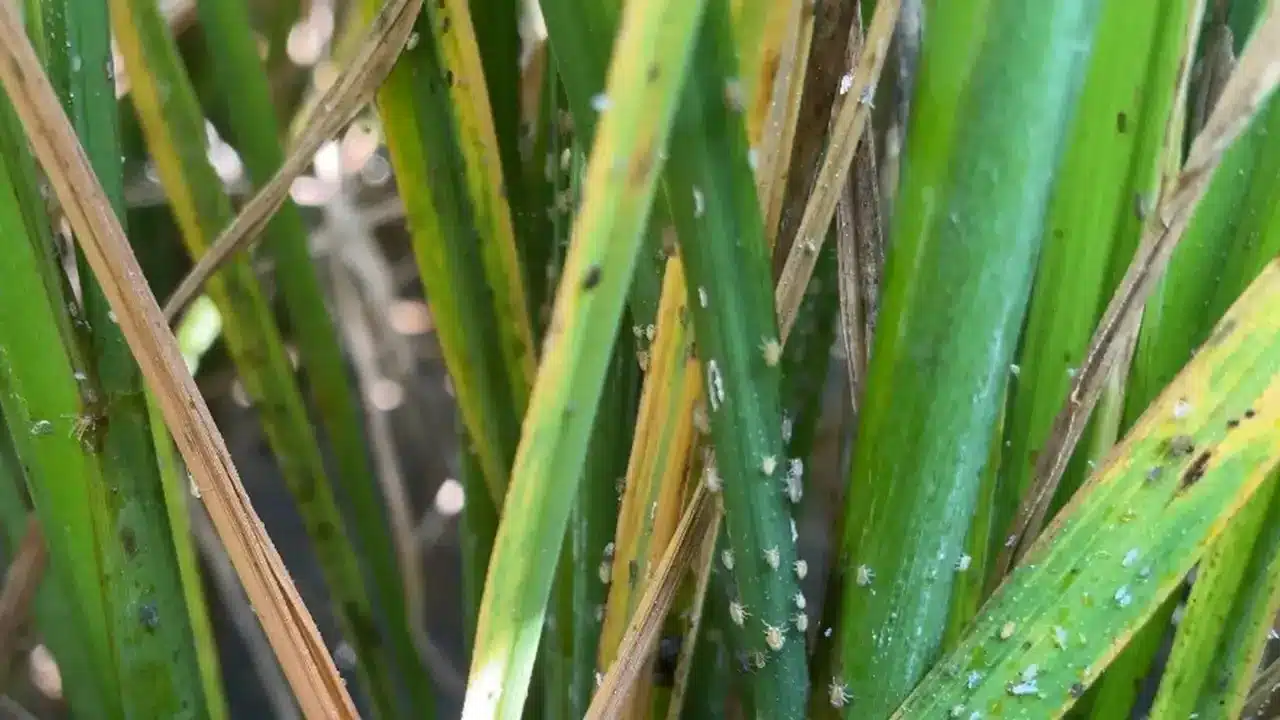
Flonicamid 50% WDG is mainly used for aphid and selected sucking-pest control. It stops susceptible insects from feeding quickly, helping reduce further crop damage before the pest population visibly declines.
Unlike fast-knockdown insecticides, Flonicamid may not make insects fall from the plant immediately. Aphids can remain visible after treatment even though their feeding activity has already stopped.
SunAgro supplies this high-content water-dispersible granule for qualified importers, distributors, registration companies, and local crop protection partners developing professional sucking-pest programs.
Stable Formulation Supply
SunAgro Brand Products
Registration Support
Distributor Cooperation
Flonicamid 50% WDG Insecticide Description
Flonicamid 50% WDG Insecticide Description
| Item | Product Information |
|---|---|
| Product Name | Flonicamid 50% WDG |
| Active Ingredient | Flonicamid |
| Content | 50% / 500 g/kg |
| Formulation | WDG / WG |
| Product Type | Agricultural Insecticide |
| Chemical Class | Pyridinecarboxamide |
| IRAC Group | Group 29 |
| CAS Number | 158062-67-0 |
| Molecular Formula | C9H6F3N3O |
| Core Action | Rapid and irreversible feeding cessation |
| Primary Pest Direction | Aphids |
| Other Pest Directions | Plant bugs, Lygus, selected psyllids and whiteflies where registered |
| Main Crop Direction | Vegetables, cotton, fruit crops, oilseeds, legumes, and specialty crops |
| Application Direction | Foliar or other locally approved application methods |
| Product Positioning | High-content Group 29 sucking-pest insecticide |
| Supply Direction | SunAgro branded product for registration, import, and distribution |
| Document Support | COA, SDS/MSDS, TDS, product specification, batch information, and available registration documents |
Final crop uses, target pests, dosage, application intervals, pre-harvest intervals, and seasonal restrictions must follow the approved label in the destination market.
What Is Flonicamid 50% WDG Used For?
Flonicamid 50% WDG is primarily positioned for aphid management. It is especially relevant where continued sap feeding affects crop growth, leaf condition, fruit quality, or marketable yield.
Depending on local registration, it may also support control of:
- Plant bugs
- Lygus species
- Selected psyllids
- Selected whiteflies
- Other approved sucking pests
Its main role is to stop feeding and reduce continued crop injury. It should not be promoted as a universal insecticide for caterpillars, mites, soil pests, or every sap-feeding species.
How Does Flonicamid Work?
IRAC Group 29 Mode of Action
Flonicamid belongs to IRAC Group 29: Chordotonal Organ Nicotinamidase Inhibitors.
It interferes with sensory functions that insects need for normal movement, balance, and feeding behavior. Susceptible pests quickly lose the ability to continue feeding.
This mode of action is different from common Group 4A neonicotinoid insecticides. It therefore provides a separate option for structured insecticide rotation.
Feeding Stops Before Insects Disappear
Flonicamid works through contact and ingestion. After exposure, susceptible pests stop feeding rapidly and irreversibly.
The basic process is:
- The pest contacts or ingests Flonicamid.
- Normal feeding behavior is disrupted.
- Sap feeding and fresh crop injury decline.
- The pest cannot resume normal feeding.
- It gradually desiccates and dies.
This explains why insects may remain visible on the crop after application.
Visible aphids do not always mean the treatment has failed. Field evaluation should also consider fresh honeydew, new feeding damage, pest activity, and population change over the following days.
Target Pest Directions
| Pest Direction | Product Positioning | Commercial Boundary |
|---|---|---|
| Aphids | Primary product direction | Core use focus |
| Plant Bugs | Important secondary direction | Crop and market dependent |
| Lygus Species | Field-crop and horticultural direction | Follow local registration |
| Psyllids | Selected crop direction | Registration dependent |
| Whiteflies | Approved program direction | Do not position as universal |
| Other Sucking Pests | Evaluation direction | Confirm registration first |
Aphids
Aphids are the clearest target for this product.
Depending on the approved label, relevant species may include cotton aphid, green peach aphid, cabbage aphid, potato aphid, strawberry aphid, and other crop-specific aphids.
Flonicamid is particularly useful where aphids cause:
- Leaf curling and plant stress
- Sticky honeydew
- Reduced crop vigor
- Poor fruit or seed development
- Lower marketable quality
Plant Bugs and Lygus
Plant bugs and Lygus can damage buds, flowers, fruiting structures, seeds, and other valuable crop parts.
Flonicamid can be considered for these pests where the target species and crop are included in the local registration.
Psyllids and Whiteflies
Selected psyllid and whitefly uses may be relevant in vegetable, potato, citrus, or protected-crop markets.
These claims must be reviewed country by country. A registration in one market does not automatically support the same use in another country.
Thrips, leafhoppers, planthoppers, mealybugs, and similar pests should only be included in local marketing materials when supported by the approved product label.
Suitable Crops and Application Areas
Vegetables and Protected Crops
Flonicamid 50% WDG can be reviewed for registered aphid and sucking-pest programs in:
- Tomato
- Pepper
- Cucumber and other cucurbits
- Brassica vegetables
- Leafy vegetables
- Root and tuber vegetables
- Legume vegetables
- Protected greenhouse crops
Coverage is important in dense canopies. Aphid colonies may develop on leaf undersides, stems, growing points, or protected internal foliage.
Cotton and Field Crops
Cotton aphids and plant bugs can affect crop balance, square retention, lint quality, and harvest value.
Flonicamid provides a differentiated Group 29 direction for registered cotton sucking-pest management programs.
It should be applied according to field scouting, crop stage, pest pressure, and local treatment thresholds.
Fruit and Berry Crops
Potential registered uses may include:
- Pome fruit
- Stone fruit
- Citrus
- Tree nuts
- Grapes
- Strawberries
- Other low-growing berries
Fruit-market decisions must also consider residue limits, pre-harvest intervals, export requirements, seasonal restrictions, and local pollinator precautions.
Oilseeds, Legumes, and Specialty Crops
Depending on local registration, the product may be evaluated for canola, sunflower, legumes, hop, alfalfa, clover, and other specialty crops.
The product should only be promoted for crops and pests listed on the approved destination-market label.
Application Guidance
Apply before pest populations become severe. Early intervention is generally more reliable than waiting until colonies are widely established.
Important application points include:
- Confirm the crop and pest are locally registered.
- Base treatment decisions on field scouting.
- Apply at the approved economic threshold.
- Ensure thorough foliage coverage.
- Pay special attention to dense crop canopies.
- Use clean water and calibrated equipment.
- Maintain sufficient tank agitation.
- Follow the approved dose and spray volume.
- Respect application intervals and seasonal limits.
- Conduct a jar test before using an unfamiliar tank mixture.
- Check crop compatibility before large-scale treatment.
- Rotate with effective insecticides from different IRAC groups.
Do not judge performance only by immediate knockdown. Aphids and Lygus may stop feeding rapidly but remain visible for several days.
SunAgro does not recommend using one global dose table. Application requirements differ by crop, pest, climate, registration, and destination market.
WDG Formulation Features
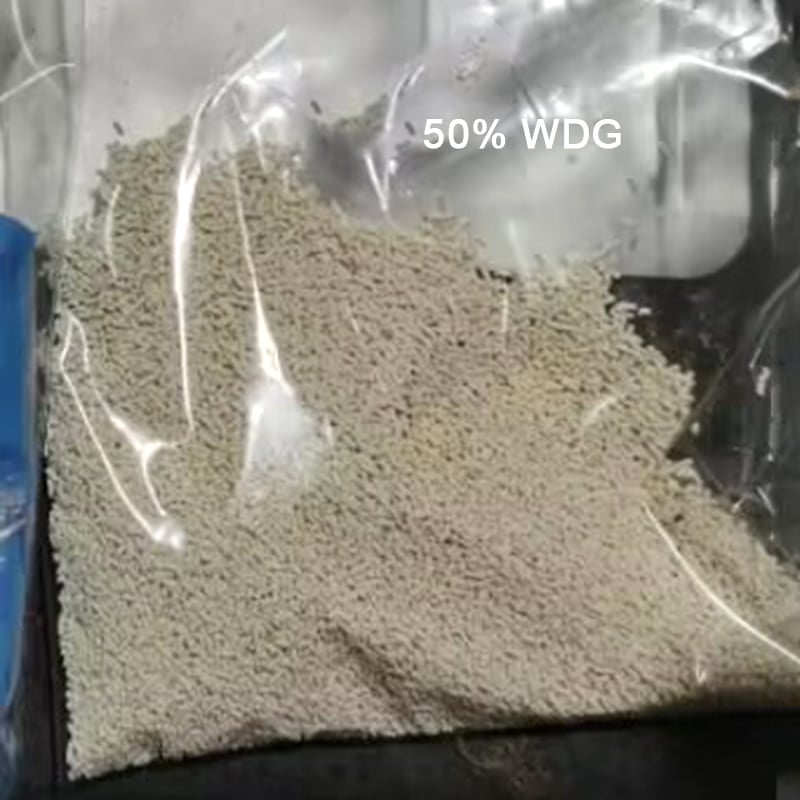
WDG means water-dispersible granule. WG is also commonly used for this formulation type.
Flonicamid 50% WDG is a dry granule designed to break apart and disperse in water before spraying.
Its main formulation features include:
- High 500 g/kg active ingredient content
- Free-flowing dry granules
- Controlled wetting and disintegration
- Uniform dispersion in the spray tank
- Lower fine-dust potential than conventional powder formulations
- Practical measuring and handling
- Efficient packaging and transport
- Moisture-sensitive storage requirements
Importers should evaluate more than active ingredient content. WDG quality also depends on:
| Quality Parameter | Why It Matters |
|---|---|
| Active Ingredient Content | Confirms product concentration |
| Wetting Time | Affects initial mixing |
| Disintegration | Determines how granules break apart |
| Suspensibility | Supports uniform spray distribution |
| Persistent Foam | Affects tank handling |
| Moisture Content | Influences caking and storage |
| Granule Integrity | Supports packing and transport |
| Batch Uniformity | Reduces supply inconsistency |
| Storage Stability | Supports shelf-life evaluation |
A stable WDG should disperse without excessive lumps, caking, or uneven active ingredient distribution.
Product Advantages
Flonicamid 50% WDG gives distributors a clear technical position within a sucking-pest portfolio.
Key advantages include:
- IRAC Group 29 mode of action
- Strong aphid-management positioning
- Rapid feeding cessation
- Different action from Group 4A insecticides
- High-content 500 g/kg formulation
- Practical water-dispersible granules
- Relevance to vegetable, cotton, fruit, and oilseed markets
- Useful position in resistance-rotation programs
- Clear specification for registration evaluation
- SunAgro branded supply and document support
The product is not suitable for every pest or market. Its value depends on correct positioning, approved registration, formulation quality, and responsible use.
Flonicamid 50% WDG vs Thiamethoxam 75% WDG
Flonicamid and thiamethoxam may both appear in sucking-pest portfolios, but they have different technical roles.
| Item | Flonicamid 50% WDG | Thiamethoxam 75% WDG |
|---|---|---|
| IRAC Group | Group 29 | Group 4A |
| Chemical Direction | Pyridinecarboxamide | Neonicotinoid |
| Core Action | Rapid feeding cessation | Nicotinic acetylcholine receptor activity |
| Main Position | Aphids and selected sucking pests | Broader systemic sucking-pest direction |
| Visible Knockdown | Population decline may be delayed | Depends on pest and application |
| Active Content | 500 g/kg | 750 g/kg |
| Portfolio Role | Different-group rotation option | Systemic Group 4A option |
Flonicamid is suitable where the market needs a differentiated Group 29 product with strong aphid positioning.
Thiamethoxam 75% WDG may be more suitable where a high-content systemic Group 4A insecticide is required.
The final choice depends on the target pest, crop, resistance situation, application method, and local registration.
Flonicamid 50% WDG vs Lower-Content Formulations
Higher concentration does not automatically mean better field performance.
| Comparison | Flonicamid 50% WDG | Lower-Content Formulation |
|---|---|---|
| Active Loading | 500 g/kg | Lower active concentration |
| Product Quantity | Less formulation per unit of active ingredient | More formulation material required |
| Packing Efficiency | More concentrated | Depends on specification |
| Measuring | Accurate weighing is important | Usually requires more product weight |
| Registration | Independent registration required | Separate registration required |
| Field Performance | Depends on active dose and formulation quality | Depends on active dose and formulation quality |
Professional buyers should compare:
- Registered active ingredient dose
- Cost per treated hectare
- Formulation quality
- Packaging volume
- Freight efficiency
- Local market acceptance
- Batch consistency
Price per kilogram alone does not show the real application cost.
Safety and Resistance Management
Safe Handling
Flonicamid 50% WDG is a regulated agricultural pesticide.
Users should:
- Read the approved label before use.
- Review the SDS or MSDS.
- Wear the required personal protective equipment.
- Avoid skin, eye, and inhalation exposure.
- Keep the product away from food, feed, seed, and water.
- Prevent unauthorized access.
- Follow local re-entry and residue requirements.
- Dispose of waste and packaging according to local regulations.
Environmental restrictions and pollinator precautions must follow the approved local label.
Group 29 Resistance Management
Flonicamid should not be used repeatedly as the only solution against the same pest population.
Resistance-management measures include:
- Rotate with effective insecticides from different IRAC groups.
- Avoid unnecessary calendar spraying.
- Follow limits on consecutive applications.
- Do not exceed seasonal use restrictions.
- Apply at the approved rate.
- Monitor field performance.
- Combine chemical control with practical IPM measures.
- Avoid repeatedly using the same tank mixture.
Different IRAC groups support rotation, but they do not remove the need for correct timing, coverage, and pest monitoring.
Storage and Transport
Store the product in its original sealed package.
Recommended controls include:
- Keep it in a cool, dry, and ventilated warehouse.
- Protect it from moisture and direct sunlight.
- Keep it away from food, feed, seed, and drinking water.
- Prevent puncture and package damage.
- Maintain the inner moisture barrier.
- Control warehouse humidity.
- Preserve the batch number and traceability information.
- Follow local pesticide transport regulations.
Moisture control is especially important for WDG formulations. Damaged packaging may lead to caking, poor flow, or slower dispersion.
Registration, Document, and Supply Support from SunAgro
SunAgro supplies branded crop protection products for qualified importers, distributors, registration companies, and local market partners.
For Flonicamid 50% WDG projects, available support may include:
- Product specification
- Certificate of Analysis
- SDS or MSDS
- Technical Data Sheet
- Active ingredient information
- Formulation information
- IRAC classification
- Batch quality information
- Packing information
- Samples
- Available registration-related documents
- Export-document coordination
- Long-term supply planning
Document availability depends on the target country, cooperation stage, and registration pathway.
SunAgro does not guarantee regulatory approval. Registration decisions remain subject to the requirements and review of local authorities.
Our priority is to support long-term cooperation around the SunAgro insecticide portfolio for local registration, import, distribution, and market development.
Stable Supply Behind SunAgro Branded Products
Consistent WDG supply requires more than meeting the declared active ingredient content.
Our quality focus includes:
Raw Material Control
Incoming materials are checked against product specifications before production.
Formulation and Granulation
Premixing, milling, granulation, drying, and screening are controlled to support consistent granule performance.
Batch Inspection
Relevant controls may include:
- Active ingredient content
- Moisture
- Wetting time
- Disintegration
- Suspensibility
- Granule condition
- Persistent foam
- Storage stability
Packaging and Shipment
Packaging is checked to reduce moisture exposure, contamination, compression, and transport damage.
Stable supply means repeatable specifications, consistent batch performance, reliable documents, and coordinated export delivery.
Frequently Asked Questions
Request Flonicamid 50% WDG
Flonicamid 50% WDG is suitable for qualified companies building an aphid and sucking-pest product portfolio.
To evaluate this product for your market, please provide:
- Target country
- Company type
- Registration status
- Target crops and pests
- Required pack size
- Expected annual volume
- Required documents
- Planned distribution channel
Request the product specification to review whether SunAgro Flonicamid 50% WDG fits your registration pathway, insecticide portfolio, and long-term distribution plan.