Fosthiazate 30% CS Nematicide
Fosthiazate 30% CS is a soil-applied nematicide for registered root-knot and other plant-parasitic nematode programs. It is positioned for crop systems where underground feeding damages roots, limits nutrient uptake, and reduces crop uniformity.
Fosthiazate belongs to IRAC Group 1B. It disrupts the nervous system of susceptible nematodes, reducing their movement, feeding, and ability to continue damaging crop roots.
SunAgro supplies this capsule suspension formulation for qualified importers, distributors, registration companies, and local partners developing professional root-zone nematode-control portfolios.
Stable Formulation Supply
SunAgro Brand Products
Registration Support
Distributor Cooperation
Fosthiazate 30% CS Nematicide Description
Fosthiazate 30% CS Nematicide Description
| Item | Product Information |
|---|---|
| Product Name | Fosthiazate 30% CS |
| Active Ingredient | Fosthiazate |
| Content | 30% |
| Formulation | CS, Capsule Suspension |
| Product Type | Agricultural Nematicide |
| Chemical Class | Organophosphate |
| IRAC Group | Group 1B |
| Mode of Action | Acetylcholinesterase inhibition |
| Core Use Direction | Soil and crop root-zone nematode management |
| Primary Target | Root-knot nematodes |
| Other Target Directions | Cyst, lesion, and other susceptible plant-parasitic nematodes where registered |
| Main Crop Direction | Vegetables, root crops, protected crops, and other locally approved crops |
| Application Direction | Soil, root-zone, irrigation, or localized treatment where approved |
| Product Positioning | High-content capsule suspension nematicide |
| Supply Direction | SunAgro branded product for registration, import, and distribution |
| Document Support | COA, SDS/MSDS, TDS, specification, batch information, and available registration documents |
The final formulation name, crop scope, target nematodes, dosage, application method, timing, and safety restrictions must match the approved registration documents in the destination market.
What Is Fosthiazate 30% CS Used For?
This product is mainly used to manage plant-parasitic nematodes in the soil and crop root zone.
Nematodes can damage fine roots before clear symptoms appear above the soil. Plants may then struggle to absorb enough water and nutrients, even when irrigation and fertilization appear adequate.
Fosthiazate 30% CS may be reviewed for registered programs involving:
- Root-knot nematodes
- Cyst nematodes
- Lesion nematodes
- Other susceptible plant-parasitic nematodes
It should not be positioned as a standard foliar insecticide. Its strongest product identity is root-zone nematode control.
How Does Fosthiazate Work?
IRAC Group 1B Mode of Action
Fosthiazate is an IRAC Group 1B organophosphate and acts as an acetylcholinesterase inhibitor.
Acetylcholinesterase is needed for normal nerve-signal regulation. When this enzyme is inhibited, acetylcholine accumulates and the nervous system remains overstimulated.
The basic control process is:
- Susceptible nematodes are exposed in treated soil.
- Acetylcholinesterase activity is inhibited.
- Normal nerve and muscle functions are disrupted.
- Nematode movement and feeding decline.
- Susceptible nematodes become immobilized and die.
This mode of action is different from biological nematicides, fumigants, and newer non-organophosphate chemistries.
Why Root-Zone Placement Matters
Fosthiazate must reach the area where active nematodes and crop roots are present.
Poor placement can leave untreated soil zones where nematodes continue feeding. Excessive concentration near young roots may also increase crop-safety risk.
Application depth, soil moisture, irrigation, transplant timing, and root distribution must therefore follow the approved local label.
Target Nematode Directions
| Nematode Direction | Typical Crop Risk | Commercial Boundary |
|---|---|---|
| Root-Knot Nematodes | Root galls, poor uptake, uneven growth | Primary page focus |
| Cyst Nematodes | Persistent soil populations and root damage | Crop and market dependent |
| Lesion Nematodes | Root lesions and reduced root function | Local registration required |
| Other Plant-Parasitic Nematodes | Crop-specific underground damage | Confirm approved label |
| General Soil Pests | Not the main product position | Only claim where registered |
Root-Knot Nematodes
Root-knot nematodes are the clearest target direction for this product.
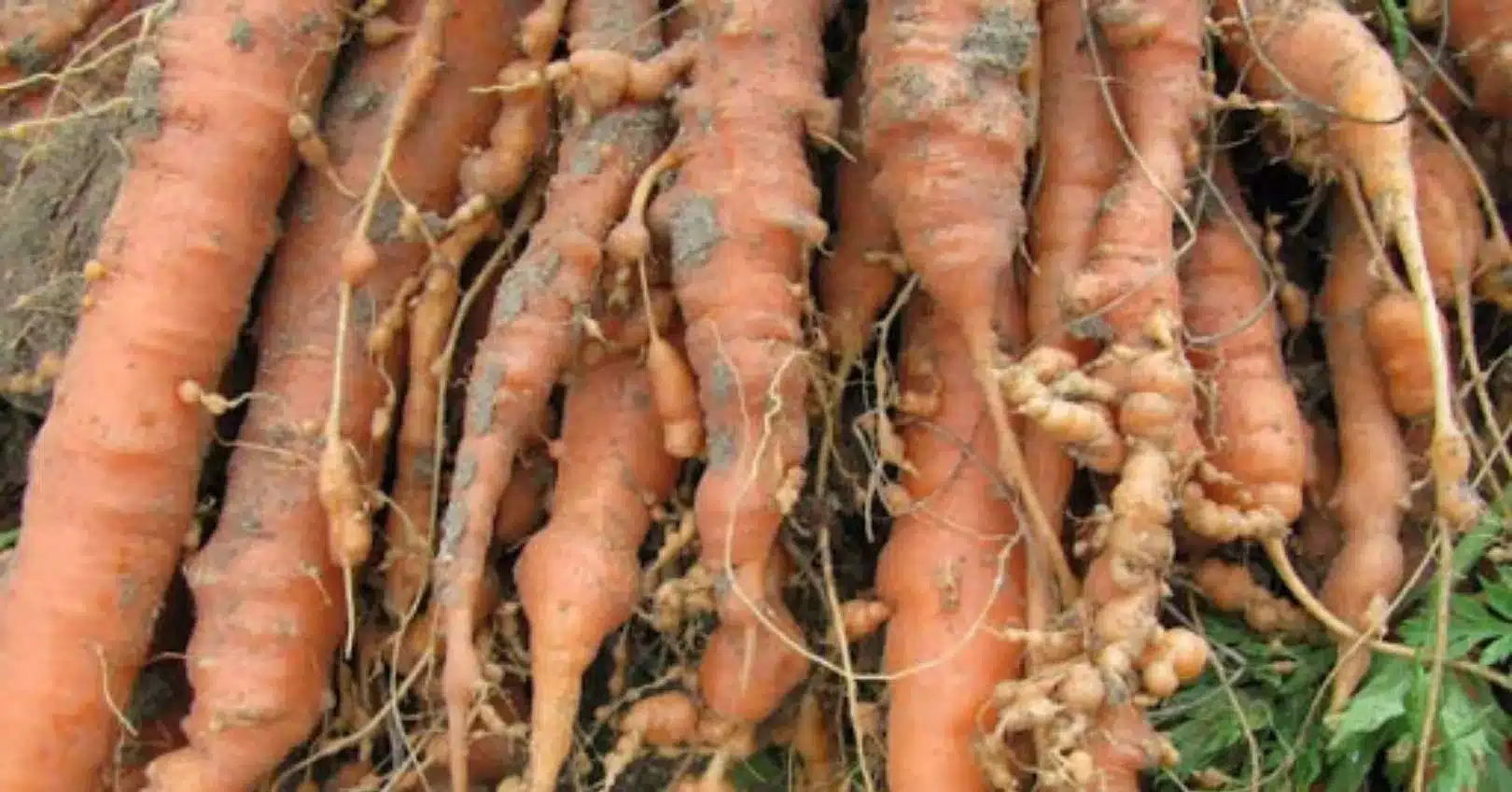
They enter crop roots and cause characteristic swellings or galls. Severe infestations reduce the plant’s ability to absorb water and nutrients.
Common field effects may include:
- Weak or stunted plants
- Yellowing
- Midday wilting
- Uneven crop development
- Reduced root growth
- Lower yield potential
- Poor response to normal fertilization
Root-knot pressure is especially important in intensive vegetable production and fields with repeated susceptible crops.
Cyst Nematodes
Cyst nematodes can survive in soil for extended periods and affect registered crops such as potatoes or other suitable hosts.
Their management normally requires more than one treatment decision. Crop rotation, clean planting material, soil testing, and registered chemical control may all be required.
Lesion Nematodes
Lesion nematodes move through root tissue and cause damaged or discolored areas.
This injury can reduce root efficiency and increase stress under difficult soil or weather conditions. Claims must remain limited to registered crop and nematode combinations.
Common Signs of Nematode Damage
Nematode damage is often confused with nutrient deficiency, poor irrigation, or root disease.
Above-ground symptoms may include:
- Uneven patches in the field
- Slow growth
- Yellow or pale foliage
- Wilting during warm periods
- Weak response to fertilizer
- Reduced flowering or fruit development
Root inspection may reveal:
- Root galls
- Short or damaged roots
- Brown lesions
- Reduced fine-root development
- Poorly developed root systems
These symptoms do not confirm nematodes on their own. Soil and root sampling should be used where professional diagnosis is available.
Correct identification should come before product selection.
Suitable Crops and Root-Zone Programs
Protected Vegetables
Protected cultivation can create favorable conditions for continuous root-knot nematode pressure.
Fosthiazate 30% CS may be evaluated for registered programs in:
- Cucumber
- Tomato
- Pepper
- Eggplant
- Other approved greenhouse vegetables
The product may fit transplant-stage, root-zone, localized soil, or irrigation-based programs where supported by the label.
Greenhouse use requires careful dose control because root systems, irrigation zones, and treated soil volumes can be concentrated.
Field Vegetables
Potential registered directions may include open-field tomatoes, cucurbits, peppers, eggplants, and other vegetable crops.
Application planning should consider:
- Previous nematode history
- Soil type
- Planting method
- Irrigation system
- Root-zone depth
- Crop sensitivity
- Local nematode population
The presence of a crop in one national registration does not authorize the same use in another market.
Root and Tuber Crops
Fosthiazate active ingredient products are used in some markets for nematode programs in potatoes and other root-zone crops.
For these markets, buyers should confirm:
- Registered nematode species
- Pre-plant or in-season timing
- Soil incorporation requirements
- Residue restrictions
- Application equipment
- Seasonal application limits
Banana and Specialty Crops
Banana and other high-value crops may be relevant where local registration supports root-zone treatment.
These uses should not be added to local labels or marketing materials without supporting registration data.
Application Guidance
Apply Fosthiazate 30% CS according to the registered root-zone placement method.
Important application points include:
- Confirm the crop and nematode are locally registered.
- Diagnose the nematode problem before treatment.
- Follow the approved dose and treated soil volume.
- Apply at the permitted crop stage.
- Distribute the product evenly within the target root zone.
- Follow label instructions for irrigation before or after treatment.
- Avoid unapproved concentrated contact with seeds or young roots.
- Do not increase the rate to compensate for severe infestations.
- Confirm compatibility before mixing with fertilizers or other pesticides.
- Use calibrated soil, irrigation, or root-zone application equipment.
- Follow re-entry, harvest, and seasonal use restrictions.
- Combine treatment with crop rotation and field sanitation where practical.
SunAgro does not recommend one global application-rate table. Dose and placement depend on the crop, soil, nematode species, irrigation method, formulation registration, and destination market.
CS Formulation Features
What Does CS Mean?
CS means capsule suspension.
In this formulation type, the active ingredient is contained or dispersed within small capsule structures suspended in a liquid phase. The product is diluted before use according to label directions.
The formulation should remain uniform during storage, measuring, dilution, and application.
Controlled-Release Formulation Direction
A capsule suspension can be designed to regulate active ingredient release compared with a conventional non-encapsulated liquid formulation.
This may support:
- More controlled delivery in the treated zone
- Reduced rapid concentration peaks
- Practical liquid root-zone application
- Improved handling compared with some conventional formulations
- A differentiated product position from EC, EW, and GR products
However, actual release rate and residual performance depend on the specific formulation.
The page should not claim season-long control, a fixed number of protection days, or complete crop safety without supporting test data.
Key CS Quality Parameters
| Quality Parameter | Procurement Value |
|---|---|
| Active Ingredient Content | Confirms formulation strength |
| Capsule Size Distribution | Affects release and batch consistency |
| Suspension Stability | Reduces uneven active ingredient distribution |
| Release Profile | Supports controlled-delivery evaluation |
| Viscosity | Affects pouring and application |
| Persistent Foam | Influences tank handling |
| Low-Temperature Stability | Supports storage and transport |
| Accelerated Storage Stability | Helps assess formulation shelf life |
| Phase Separation | Indicates physical stability |
| Packaging Compatibility | Reduces leakage and material interaction |
Importers should evaluate the full CS specification rather than relying only on the 30% concentration.
Product Advantages
Fosthiazate 30% CS has a clear position in chemical nematicide portfolios.
Key advantages include:
- IRAC Group 1B mode of action
- Strong root-knot nematode positioning
- Soil and root-zone application direction
- High 30% active ingredient content
- Non-fumigant nematicide identity
- Liquid capsule suspension formulation
- Clear difference from granular products
- Fit for intensive vegetable and root-zone crop markets
- Specification and document support for registration review
- SunAgro branded supply direction
Its value depends on correct diagnosis, precise placement, formulation quality, and strict label compliance.
Fosthiazate 30% CS vs Fosthiazate 10% GR
Both products contain the same active ingredient, but their handling and application systems are different.
| Item | Fosthiazate 30% CS | Fosthiazate 10% GR |
|---|---|---|
| Formulation | Capsule Suspension | Granules |
| Product Form | Concentrated liquid | Ready-to-apply solid granules |
| Active Content | 30% | 10% |
| Typical Placement | Diluted root-zone or soil application | Soil placement or incorporation |
| Equipment | Liquid or irrigation-compatible equipment | Granule applicator or manual placement |
| Distribution | Depends on water and application uniformity | Depends on granule placement |
| Storage Focus | Suspension and capsule stability | Moisture and granule integrity |
| Best Market Fit | Liquid root-zone programs | Established granular soil programs |
A higher concentration does not automatically make the CS product more effective.
The correct choice depends on registration, application equipment, soil conditions, irrigation, labor, packing requirements, and local grower preference.
Fosthiazate 30% CS vs Fosthiazate Combination EW
Fosthiazate 30% CS is a single-active nematicide, while Oligosaccharins 0.5% + Fosthiazate 19.5% EW combines Fosthiazate with a plant-response component.
| Item | Fosthiazate 30% CS | Oligosaccharins + Fosthiazate EW |
|---|---|---|
| Active Structure | Single active ingredient | Dual-component formulation |
| Fosthiazate Content | 30% | 19.5% |
| Formulation | CS | EW |
| Main Position | Direct chemical nematode control | Nematode management with plant-response support |
| Release Direction | Capsule-based formulation | Oil-in-water emulsion |
| Portfolio Fit | High-content single-active product | Differentiated combination product |
The CS product is more suitable where the market needs a high-content single-active nematicide.
The combination EW is more suitable where distributors want both Fosthiazate activity and an additional plant-response position.
Crop Safety and Phytotoxicity Risk
Correct dose and placement are essential for crop safety.
Fosthiazate should not be described as harmless to all roots, seedlings, or crops. Excessive concentration or unapproved direct exposure can increase phytotoxicity risk.
Risk-management points include:
- Follow the approved application rate.
- Respect planting and transplant timing.
- Avoid unapproved direct contact with seeds.
- Do not concentrate the product around young roots.
- Follow irrigation and incorporation instructions.
- Confirm crop compatibility.
- Do not use on unregistered crops.
- Avoid repeated treatment beyond label limits.
Capsule suspension technology may help regulate release, but it does not remove the need for correct application.
Safety and Group 1B Stewardship
Safe Handling
Fosthiazate is an organophosphate acetylcholinesterase inhibitor and requires strict handling controls.
Users should:
- Read the approved label and SDS/MSDS.
- Wear all required personal protective equipment.
- Avoid skin, eye, and inhalation exposure.
- Prevent accidental ingestion.
- Keep the product away from food, feed, and drinking water.
- Prevent access by unauthorized personnel.
- Follow spill-control and first-aid instructions.
- Wash contaminated clothing separately.
- Dispose of packaging according to local regulations.
Suspected exposure requires immediate professional medical attention according to the product label and SDS.
Resistance and Responsible Use
Do not depend on one nematicide for every crop cycle.
Responsible management may include:
- Crop rotation
- Resistant or tolerant varieties
- Clean planting materials
- Soil and root sampling
- Organic matter and soil-health management
- Biological nematicides
- Different registered chemical modes of action
- Field sanitation
A biological root-zone nematicide may occupy a different role within an integrated program, depending on local registration and field conditions.
Environmental Precautions
Prevent the product from entering surface water, drainage channels, ponds, or irrigation sources.
Important precautions include:
- Avoid runoff from treated soil.
- Do not clean equipment near waterways.
- Control spills immediately.
- Follow buffer-zone requirements.
- Do not dispose of product or rinsate into drains.
- Keep animals away where required by the label.
- Follow local disposal and environmental regulations.
Environmental risk requirements vary by formulation, dose, soil, and market registration.
Storage and Transport
Store Fosthiazate 30% CS in its original sealed container.
Recommended controls include:
- Keep it in a cool, dry, and ventilated warehouse.
- Protect it from direct sunlight.
- Avoid freezing and excessive heat.
- Store containers upright.
- Prevent leakage and seal damage.
- Keep it away from food, feed, seed, and water.
- Maintain batch identification and traceability.
- Inspect containers and cartons before shipment.
- Follow local dangerous-goods and pesticide transport rules.
CS products require stable suspension, suitable packaging materials, and reliable seals during long-distance transport.
Registration, Document, and Supply Support from SunAgro
SunAgro supplies branded crop protection products for qualified importers, distributors, registration companies, and local market partners.
For Fosthiazate 30% CS projects, available support may include:
- Product specification
- Certificate of Analysis
- SDS or MSDS
- Technical Data Sheet
- Active ingredient information
- CS formulation information
- IRAC classification
- Batch quality information
- Packaging information
- Samples
- Available registration-related documents
- Export-document coordination
- Long-term supply planning
Document availability depends on the target country, cooperation stage, and registration pathway.
SunAgro does not guarantee regulatory approval. Final decisions remain subject to local authority requirements and dossier review.
Stable Supply Behind SunAgro Branded Products
Reliable CS supply requires control of the active ingredient, capsule system, physical stability, and packaging.
Raw Material Control
Incoming active ingredients, capsule materials, dispersants, and other formulation components are checked against established specifications.
CS Formulation Production
Production controls focus on capsule formation, particle distribution, viscosity, suspension stability, and batch uniformity.
Batch Quality Inspection
Relevant tests may include:
- Active ingredient content
- Appearance
- Capsule size
- Suspension stability
- Release characteristics
- Viscosity
- Persistent foam
- Low-temperature stability
- Accelerated storage stability
- Packaging compatibility
Packaging and Export Coordination
Containers are checked for seal integrity, leakage, batch coding, carton strength, and transport suitability.
Stable supply means repeatable specifications, consistent formulation performance, reliable documentation, and coordinated shipment planning.
Frequently Asked Questions
Request Fosthiazate 30% CS
Fosthiazate 30% CS is suitable for qualified companies developing chemical nematicide portfolios for intensive crop and root-zone markets.
To evaluate the product, please provide:
- Target country
- Company type
- Registration status
- Target crops
- Target nematodes
- Planned application method
- Required pack size
- Expected annual volume
- Required technical documents
- Distribution channel
Request the product specification to review whether SunAgro Fosthiazate 30% CS fits your local registration pathway, nematicide portfolio, and long-term distribution plan.