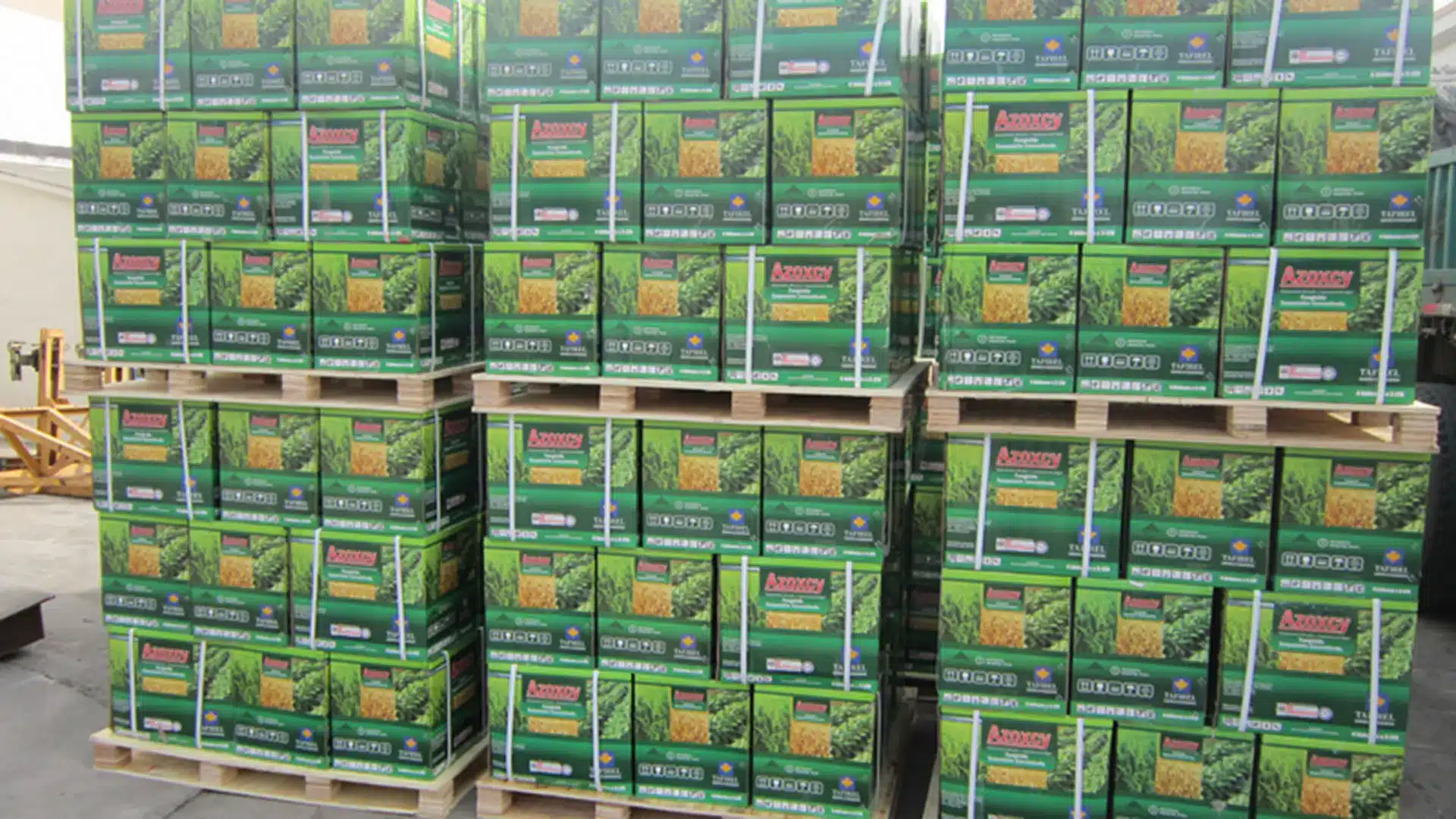
In hot climate markets, formulation stability is not only a technical requirement. It directly affects storage safety, dealer confidence, user experience, and repeat orders.
For agrochemical importers in the Middle East, Africa, Central Asia, and other high-temperature regions, products may face long-distance transport, hot warehouses, seasonal stock pressure, and uneven storage conditions. If a formulation is not stable, problems may appear after shipment, during storage, or when local users dilute the product.
A stable formulation helps reduce market complaints and supports long-term distribution.
Quick Answer: Why Does Formulation Stability Matter in Hot Markets?
Stable formulations help crop protection products remain usable, uniform, and reliable after transport and storage in high-temperature conditions.
For importers and distributors, stable formulation can help reduce:
- Phase separation
- Sedimentation
- Caking
- Crystallization
- Poor redispersion
- Strong odor changes
- Packaging deformation
- Leakage risk
- Dealer complaints
- Repeat order uncertainty
In hot climate markets, a product must perform well not only when it leaves the factory, but also after sea freight, inland transport, warehouse storage, and dealer-level distribution.
What Happens to Agrochemical Formulations Under High Temperature?
High temperature can increase formulation risk.
Some products may still look good during sample review, but problems may appear after long storage or transport under heat. This is why importers should not only check active ingredient content. They should also review formulation behavior and storage stability.
Common high-temperature risks include:
- Liquid separation
- Sedimentation in suspension products
- Viscosity change
- Solvent odor increase
- Bottle swelling
- Cap leakage
- Caking in dry formulations
- Slow disintegration in water
- Crystallization in soluble products
- Label or carton damage
- Poor dilution experience
These problems may not always mean the active ingredient has failed. But they can still damage market confidence.
In local distribution, appearance and handling experience matter. If dealers see separation, swelling, caking, or leakage, they may question the product before field use even begins.
Why Hot Climate Markets Create Higher Distribution Pressure
Hot climate markets usually create more pressure on agrochemical products.
In regions such as the Middle East, Africa, and Central Asia, crop protection products may pass through several stages before reaching the final user:
Factory production
Export warehouse
Sea freight or land transport
Port storage
Importer warehouse
Regional distributor warehouse
Dealer shop
Field application
During this process, the product may face high temperature, long storage time, and repeated handling.
Long Transport and Warehouse Heat
Long-distance transport can expose products to changing temperatures. After arrival, local warehouses may not always have strong temperature control.
For liquid formulations, this may increase the risk of separation, odor change, or packaging stress. For dry formulations, heat and moisture may increase caking risk.
Seasonal Stock Pressure
Agrochemical sales are seasonal.
Importers often need to prepare stock before the main application season. This means products may stay in warehouse storage for weeks or months before sales peak.
If the formulation is not stable, quality issues may appear before the product reaches dealers.
Dealer-Level Storage Conditions
After the product leaves the importer warehouse, storage conditions become harder to control.
Dealers may store products in small shops, mixed warehouses, or hot storage rooms. A stable formulation helps reduce risk across this wider distribution chain.
Formulation Stability by Product Type
Different formulation types have different stability risks in hot climate markets.
| Formulation | Hot Climate Risk | Buyer Checkpoint |
|---|---|---|
| EC | Phase separation, strong odor, solvent expansion | Emulsion stability and packaging compatibility |
| SC | Sedimentation, viscosity change, poor redispersion | Suspension rate and redispersion |
| WDG | Caking, slow disintegration, moisture sensitivity | Dispersibility and moisture control |
| WP | Caking, poor wetting, dust concern | Wetting and suspension performance |
| SL | Crystallization or clarity change | Solubility and storage stability |
| OD | Layering or poor dispersion | Oil dispersion stability and spray behavior |
| FS | Sedimentation or coating instability | Flowability and seed treatment performance |
This table is a practical reference. The right formulation still depends on the active ingredient, crop use, local climate, storage condition, packaging, and registration requirement.
EC, SC, and WDG in Hot Climate Markets
EC, SC, and WDG are common formulation types in many crop protection markets. Each has advantages, but each also needs proper stability review under hot conditions.
EC Formulation in Hot Markets
EC formulation is familiar in many traditional agricultural markets. It is widely used for insecticides, herbicides, and fungicides.
In hot climate markets, importers should pay attention to:
- Emulsion stability
- Solvent odor
- Phase separation
- Bottle and cap compatibility
- Leakage risk
- Transport safety
- Packaging expansion under heat
EC can still be a strong market choice when the formulation is stable and the local channel accepts solvent-based liquid products.
SC Formulation in Hot Markets
SC formulation is often preferred when the market wants a cleaner liquid image and lower solvent load.
In hot regions, buyers should check:
- Suspension rate
- Sedimentation
- Redispersion after storage
- Viscosity change
- Particle size stability
- Foam control
- Bottle compatibility
A good SC product should remain easy to shake, pour, dilute, and spray after storage.
WDG Formulation in Hot Markets
WDG formulation can offer strong value in transport and storage because it is a dry granule.
However, in hot and humid conditions, WDG products may face:
- Caking
- Moisture absorption
- Slow disintegration
- Poor dispersibility
- Granule breakage
- Bag or carton pressure
For WDG products, importers should review dispersibility, granule strength, moisture control, and packaging sealing.
How Stable Formulations Reduce Market Complaints
Stable formulation helps reduce problems before they become market complaints.
For distributors, a complaint is not only a technical issue. It can become a trust issue.
| Stability Problem | Possible Market Complaint |
|---|---|
| Phase separation | Dealers think the product is defective |
| Sedimentation | Users complain about poor mixing |
| Poor redispersion | Spray tank experience becomes worse |
| Caking | Product becomes hard to dilute |
| Crystallization | Buyer questions product quality |
| Bottle swelling | Warehouse risk and brand image damage |
| Leakage | Distributor faces storage and handling complaints |
| Odor change | Dealer confidence becomes weaker |
| Label damage | Product image looks unstable in the channel |
In hot climate markets, stable formulation can protect both technical performance and market reputation.
What Importers Should Check Before Ordering
Before ordering agrochemical products for hot climate markets, importers should review more than price and active ingredient content.
Important checkpoints include:
- Hot storage stability
- Cold storage stability where seasonal temperature changes exist
- Emulsion stability for EC products
- Suspension rate for SC, WP, and WDG products
- Redispersion after storage
- Dispersibility for WDG and WP products
- Moisture control for dry formulations
- Solubility for SL products
- Packaging compatibility
- Cap sealing and leakage prevention
- Label and carton durability
- Sample evaluation
- COA, MSDS, TDS, and product specification
- Batch consistency
- Shelf-life expectation
- Supply planning before peak season
These points should be reviewed before import, especially when the product is planned for registration or long-term distribution.
For a complete supplier review, importers can also evaluate agrochemical suppliers before registration by checking documents, samples, formulation stability, and supply reliability together.
Why Sample Testing Matters Before Hot Market Distribution
Sample testing helps importers find early formulation risks.
A sample does not replace full quality control or local regulatory review. But it gives importers a practical way to observe product behavior before committing to a larger order.
Importers may review:
- Product appearance
- Dilution behavior
- Separation or sedimentation
- Caking risk
- Redispersion
- Dispersibility
- Odor
- Packaging condition
- Label and cap performance
- Initial feedback from technical teams or dealers
For hot climate markets, sample evaluation should focus on stability after storage, not only appearance on arrival.
Packaging Compatibility in Hot Climate Markets
Packaging is part of formulation stability.
A stable formulation still needs suitable packaging. If the bottle, cap, liner, label, carton, or drum cannot handle storage and transport pressure, the product may create complaints before use.
Importers should check:
- Bottle material compatibility
- Cap sealing performance
- Liner suitability
- Label adhesive quality
- Carton strength
- Drum condition
- Sachet or bag sealing
- Pallet stability
- Leakage prevention
- Export packing strength
In high-temperature markets, packaging problems can quickly become channel problems.
For distributors, good packaging consistency supports warehouse safety, dealer confidence, and brand recognition.
Formulation Stability and Registration Planning
For registration products, formulation stability has long-term value.
Once a product enters the local registration plan, the importer needs stable specification, consistent formulation behavior, and repeatable quality across future shipments.
If the formulation changes after registration, local partners may face more communication pressure. If product appearance or storage behavior changes between batches, dealers may question the product even when the active ingredient remains the same.
Stable formulation supports:
- Clear product identity
- Better registration communication
- Consistent label planning
- Repeat order confidence
- Lower complaint risk
- Long-term local market development
This is why formulation stability should be reviewed before registration investment, not only after approval.
Documents Importers Should Review for Hot Climate Products
For hot climate markets, product documents help importers evaluate quality and handling information before import.
Important documents may include:
- COA
- MSDS
- TDS
- Product specification
- Storage information
- Packaging details
- Label reference
- ICAMA-related information where applicable
- Registration-related documents where required
These documents help importers understand whether the product is suitable for transport, storage, registration planning, and local distribution.
For a broader checklist, importers can also review documents agrochemical distributors should request before importing.
How SunAgro Supports Hot Climate Market Partners
SunAgro supplies SunAgro branded crop protection products for local registration and distribution cooperation.
For hot climate markets such as the Middle East, Africa, Central Asia, and other high-temperature regions, formulation stability and storage performance are important parts of product evaluation.
SunAgro supports qualified importers, distributors, registration companies, brand owners, and local crop protection partners with:
- SunAgro branded crop protection product options
- Formulation discussion based on local market conditions
- Sample evaluation before bulk order
- Product specification confirmation
- COA, MSDS, TDS, and related document preparation
- ICAMA-related information where applicable
- Packaging and label adaptation discussion
- Stable supply planning for local distribution
The goal is to help local partners reduce storage risk, improve product confidence, and build more stable crop protection product lines for hot climate markets.
Common Mistakes When Buying Agrochemicals for Hot Markets
Choosing Only by Active Ingredient Content
Active ingredient content is important, but it is not the only factor.
If the formulation separates, cakes, settles, crystallizes, or leaks after storage, the product may still create market complaints.
Ignoring Storage and Transport Conditions
A product may look stable in a short sample review but behave differently after long-distance transport and hot warehouse storage.
Importers should consider the full distribution chain.
Assuming One Formulation Fits Every Market
EC, SC, WDG, WP, SL, and OD can all be suitable in different situations.
The right choice depends on active ingredient properties, crop use, user habits, storage conditions, packaging, and local market acceptance.
Checking Packaging Too Late
Packaging should be reviewed before shipment.
Bottle swelling, cap leakage, weak cartons, or poor label adhesion can damage market confidence even when the formulation itself is acceptable.
FAQ
Why do pesticide formulations become unstable in hot climates?
High temperature can increase the risk of phase separation, sedimentation, caking, crystallization, odor change, viscosity change, and packaging stress. The exact risk depends on formulation type, active ingredient, additives, packaging, and storage conditions.
Which formulation is better for hot climate markets, EC, SC, or WDG?
There is no single best formulation for every hot climate market. EC may fit traditional liquid markets, SC may fit cleaner liquid channels, and WDG may offer storage and transport value. Importers should review formulation stability, packaging compatibility, and local user habits before choosing.
What should importers check before ordering agrochemicals for hot regions?
Importers should check hot storage stability, formulation behavior, packaging compatibility, COA, MSDS, TDS, product specification, sample performance, batch consistency, and supplier supply reliability.
Why does packaging matter in hot climate distribution?
Packaging protects the product during transport, storage, and local distribution. In hot markets, poor packaging may cause leakage, swelling, label damage, carton weakness, or warehouse complaints.
Can stable formulation reduce distributor complaints?
Yes. Stable formulation helps reduce complaints related to separation, sedimentation, caking, poor dilution, packaging issues, and inconsistent user experience. It also helps protect dealer confidence and repeat orders.
Practical Summary
Stable formulation is critical for hot climate markets.
For agrochemical importers and distributors, formulation stability helps protect product appearance, dilution behavior, packaging safety, dealer confidence, and repeat orders. In markets such as the Middle East, Africa, and Central Asia, products may face high temperature, long transport, seasonal stock pressure, and uneven storage conditions.
Before building a local product line, importers should review formulation type, storage stability, packaging compatibility, sample performance, documents, batch consistency, and supplier reliability.
SunAgro works with qualified local partners to support SunAgro branded crop protection products for local registration and distribution cooperation, with product documents, sample evaluation, formulation discussion, and stable supply planning for hot climate markets.