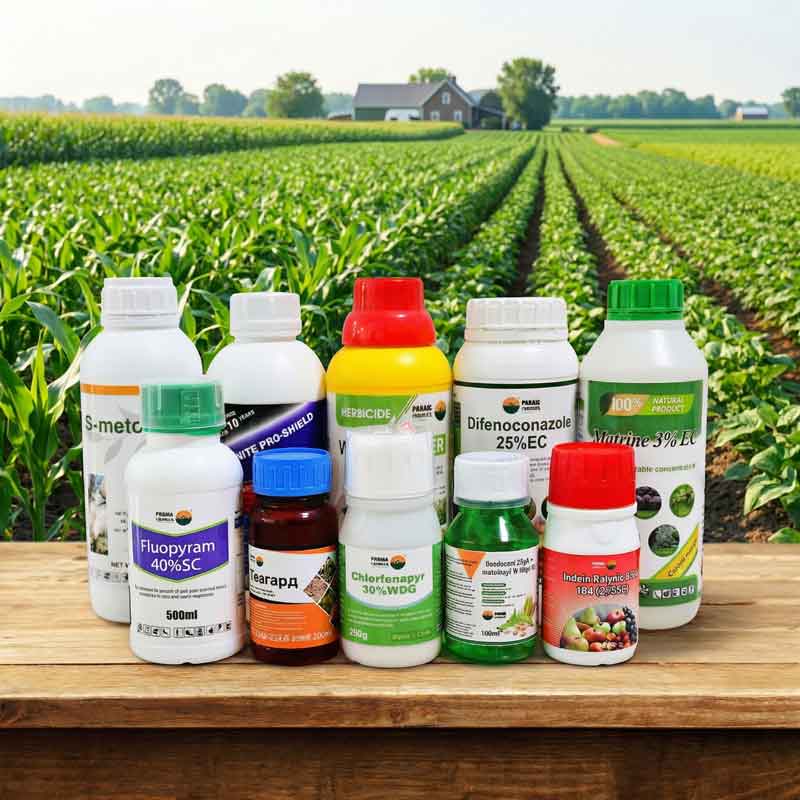
Plant growth regulators can influence rooting, shoot growth, flowering, fruit setting, fruit development, ripening, maturity, and vegetative growth control.
However, a PGR cannot correct every production problem.
It cannot supply missing nutrients, restore damaged roots, replace irrigation, remove diseased branches, control an active pest infestation, or correct an unsuitable growing environment. Its value comes from regulating a defined physiological process within an already functional crop-management program.
For growers, agronomists, importers, and distributors, this distinction is essential. A PGR should be selected to achieve a specific crop response—not as a general treatment for weak or poorly managed crops.
Quick Answer: What Can a Plant Growth Regulator Not Replace?
Plant growth regulators cannot replace:
- Balanced crop nutrition
- Adequate irrigation and drainage
- Healthy soil and active roots
- Insect and disease management
- Pruning and canopy management
- Flower and fruit-load management
- Suitable temperature and light conditions
- Crop monitoring and professional agronomic decisions
A PGR may support one part of a commercial production program, but it cannot correct a fundamentally unsuitable crop environment.
Before choosing a product, first determine whether the production problem is physiological, nutritional, environmental, structural, or related to pests and diseases.
Plant Growth Regulators Are Signals, Not Crop Inputs
Plant growth regulators influence plant hormone signaling and physiological development.
Depending on the active ingredient, crop, stage, concentration, and application conditions, they may promote, suppress, delay, or redirect a plant process.
Typical PGR functions include:
- Root initiation
- Cell division and elongation
- Shoot development
- Flowering regulation
- Fruit setting
- Fruit development
- Ripening management
- Vegetative growth control
- Dormancy regulation
- Stress-response signaling
- Senescence management
They do not perform the same function as fertilizers, irrigation, or crop protection products. SunAgro’s guide to how plant growth regulators work explains how PGRs modify plant signals rather than directly supplying nutrients.
| Agricultural Input | Primary Function |
|---|---|
| Fertilizer | Supplies essential nutrients |
| Irrigation | Supplies and manages water |
| Soil management | Supports root-zone structure, aeration, and nutrient availability |
| Insecticide | Controls registered insect pests |
| Fungicide | Manages registered fungal diseases |
| Plant growth regulator | Modifies a defined physiological process |
The correct question is not, “Will this PGR make the crop grow better?”
The better question is:
Which plant process needs to be adjusted, and are the basic agronomic conditions already suitable?
Plant Growth Regulators Cannot Replace Balanced Nutrition
A nutrient problem requires a nutrient-management response.
Nitrogen, phosphorus, potassium, calcium, magnesium, sulfur, and micronutrients support tissue formation, photosynthesis, root development, flowering, fruit development, and overall plant health.
A PGR does not provide these nutrients.
For example, a regulator intended to support fruit development cannot manufacture calcium that is missing from the crop. A rooting product cannot replace phosphorus, suitable soil conditions, or an active root zone. A vegetative-growth regulator cannot correct a crop that is weak because of severe nitrogen deficiency.
Excessive fertilization can also affect PGR performance.
High nitrogen availability may encourage vigorous vegetative growth, alter canopy density, delay reproductive balance, and change the rate or timing needed for a growth-control program.
Before selecting a PGR, confirm whether the crop is affected by:
- Nutrient deficiency
- Excessive nitrogen
- Nutrient imbalance
- High salinity
- Incorrect soil pH
- Poor nutrient availability
- Root damage that limits uptake
A PGR should not be used to conceal a fertilization problem.
Plant Growth Regulators Cannot Replace Irrigation and Drainage
Water status directly affects plant growth, cell expansion, nutrient movement, stomatal behavior, root activity, and crop response.
A drought-stressed plant may absorb, transport, or metabolize a PGR differently from a healthy, adequately hydrated plant.
Applying a regulator does not replace:
- Irrigation scheduling
- Adequate water supply
- Soil-moisture monitoring
- Drainage
- Root-zone aeration
- Salinity management
Water Deficit Changes Crop Response
When a crop is under water deficit, normal growth and metabolic activity may slow.
Leaves may wilt, stomata may close, cell expansion may decline, and roots may have limited access to nutrients. Under these conditions, the response to a PGR may be weaker, excessive, delayed, or inconsistent.
The correct action is not automatically to increase the PGR rate.
The water problem must be diagnosed and managed first.
Waterlogging Is Also a Root-Zone Problem
Excess water can reduce oxygen availability around the roots.
Poor root aeration may affect respiration, nutrient uptake, root activity, and overall plant balance. A product promoted for rooting or stress response cannot substitute for drainage or suitable soil structure.
Where roots are already seriously damaged, the crop may not respond predictably to physiological regulation.
Plant Growth Regulators Cannot Repair Severely Stressed Crops
Plant growth regulators may influence stress-response pathways, but they should not be presented as products that eliminate environmental stress.
A plant under severe stress may respond differently from a healthy crop because uptake, metabolism, tissue sensitivity, and growth activity have already changed.
| Crop Condition | Why the PGR Response May Be Unreliable |
|---|---|
| Drought stress | Uptake, metabolism, and cell expansion may decline |
| Waterlogging | Root oxygen and nutrient uptake may be restricted |
| Extreme heat | Spray drying and crop sensitivity may change |
| Cold injury | Growth and metabolic activity may slow |
| Salinity | Root water uptake and tissue balance may be disrupted |
| Transplant shock | Root establishment may still be incomplete |
| Severe nutrient deficiency | Basic tissue development is already restricted |
| Root injury | Water and nutrient absorption may be impaired |
| Active disease pressure | Plant vigor and tissue function may be reduced |
| Heavy pest damage | Leaf area, roots, shoots, or reproductive tissues may be lost |
Some registered programs specifically restrict application to stressed crops. Product selection must therefore be based on the crop condition and approved label, not on a general “stress recovery” claim.
Plant Growth Regulators Cannot Replace Pest and Disease Control
A plant growth regulator is not an insecticide or fungicide.
It does not directly control aphids, caterpillars, mites, fungal pathogens, bacterial diseases, or soilborne infections unless the product is separately registered for such a function.
Pests and diseases can change:
- Effective leaf area
- Root function
- Flower retention
- Fruit development
- Photosynthetic capacity
- Nutrient movement
- Plant vigor
- Crop uniformity
These changes may also alter the crop’s response to a PGR.
Before using a regulator on a weak crop, determine whether the actual cause is:
- Insect feeding
- Root damage
- Vascular disease
- Leaf infection
- Fruit disease
- Nematode injury
- Nutrient deficiency
- Water stress
- Chemical injury
A PGR should not be used to hide an uncontrolled crop protection problem.
Plant Growth Regulators Cannot Replace Pruning and Canopy Management
PGRs can influence new shoot growth, internode length, branching, canopy density, and the balance between vegetative and reproductive development.
They cannot physically remove:
- Dead branches
- Diseased tissue
- Crossing branches
- Broken limbs
- Excessively dense shoots
- Poorly positioned growth
- Existing structural defects
A growth-control regulator may reduce or redirect future vegetative growth, but it cannot rebuild an already unsuitable canopy.
Physical Crop Structure Still Matters
Canopy architecture influences:
- Light penetration
- Air movement
- Spray coverage
- Fruit coloration
- Disease pressure
- Harvest access
- Branch strength
- Crop-load distribution
Pruning and training remain essential where physical structure needs to be corrected.
PGRs Support Canopy Decisions
In orchards, vineyards, nurseries, ornamentals, and some field crops, a PGR may support canopy management by influencing future growth.
The product should be integrated with pruning, training, crop monitoring, and nutrition—not used as a replacement for them.
Plant Growth Regulators Cannot Replace Flower and Fruit-Load Management
Some PGRs are used in registered programs involving flowering, fruit setting, thinning, fruit enlargement, crop-load balance, or maturity management.
However, flower and fruit development also depend on:
- Variety
- Tree or plant vigor
- Pollination
- Weather during flowering
- Nutrient balance
- Water availability
- Pruning
- Previous crop load
- Pest and disease pressure
- Number and strength of fruiting sites
A product described as supporting fruit set is not automatically appropriate for a crop that already has excessive reproductive load.
In some programs, the objective may be to reduce excessive flowering or fruit numbers. In others, the objective may be to improve retention or support more uniform development.
Pruning remains one of the main physical tools for managing crop load in fruit production, while PGRs may support a wider integrated strategy.
For a broader discussion of commercial value, review the benefits of plant growth regulators in commercial agriculture.
Timing and Crop Stage Still Determine the Result
Plant growth regulators usually influence an active or upcoming physiological process.
They cannot always reverse a development process that has already occurred.
For example:
- A growth retardant cannot physically shorten an already overgrown plant.
- A rooting regulator cannot reverse severe root decay.
- A flowering treatment cannot recreate a development window that has passed.
- A fruit-setting program cannot correct failed pollination after the critical stage.
- A maturity regulator cannot correct poor fruit quality caused by long-term crop imbalance.
Crop stage should be evaluated by physiological development, not only by calendar date.
The same active ingredient may produce different effects when applied during:
- Seedling establishment
- Vegetative development
- Bud formation
- Flowering
- Early fruit development
- Fruit enlargement
- Maturity
- Post-harvest handling
Research and extension guidance consistently emphasize that PGRs act primarily on new or developing growth, making timing central to performance.
Weather and the Crop Environment Cannot Be Ignored
Weather does not change the intended physiological role of a PGR, but it can change how much product reaches, remains on, and is absorbed by the target tissue.
Important factors include:
- Temperature
- Relative humidity
- Wind
- Rainfall
- Drying speed
- Solar radiation
- Crop water status
- Soil moisture
- Application time
- Plant surface condition
High temperatures may increase crop sensitivity or cause spray droplets to dry quickly. Rain can remove the deposit before adequate absorption. Strong wind can reduce coverage and increase drift. Low metabolic activity under cold conditions may delay the response.
There is no universal rain-free interval, temperature range, or application time for all PGRs.
The correct conditions must come from the registered product label and supporting crop data. Detailed preparation, weather, concentration, and application checks are covered in SunAgro’s guide to using plant growth regulators correctly.
Pre-Application Agronomic Checklist
Before selecting or applying a plant growth regulator, review the complete crop situation.
| Management Check | Key Question |
|---|---|
| Production objective | Which physiological process needs to be regulated? |
| Crop and variety | Is the product suitable for this crop and variety? |
| Growth stage | Is the target process still active and responsive? |
| Nutrition | Is the crop deficient, over-fertilized, or imbalanced? |
| Water status | Is the crop adequately hydrated without waterlogging? |
| Root health | Are the roots active and structurally healthy? |
| Pest pressure | Are insects or mites reducing crop vigor? |
| Disease pressure | Is an infection affecting roots, leaves, flowers, or fruit? |
| Canopy structure | Is pruning, training, or shoot removal also required? |
| Crop load | Is reproductive load suitable for the production objective? |
| Weather | Are temperature, wind, rain, and drying conditions suitable? |
| Formulation | Is the formulation compatible with the intended equipment? |
| Registration | Does the label support the crop, claim, rate, stage, and method? |
| Monitoring plan | How will crop response and possible adverse effects be assessed? |
If the production problem cannot be clearly defined, product selection should not begin with the PGR name.
What Importers and Distributors Should Consider
PGR products require precise technical positioning.
Generic descriptions such as “growth booster,” “yield enhancer,” or “stress product” do not provide enough information for registration, distribution, or professional crop use.
Define the Physiological Objective
A product direction should clearly address one or more specific functions, such as:
- Root initiation
- Transplant establishment
- Branching
- Flowering support
- Fruit setting
- Fruit development
- Vegetative growth suppression
- Canopy balance
- Maturity regulation
- Ripening management
- Post-harvest freshness
Confirm the Agronomic Problem
Before reviewing a specification, buyers should identify:
- Main crop
- Variety
- Production system
- Local climate
- Growth stage
- Target physiological response
- Current production limitation
- Existing crop-management practices
- Registration pathway
Confirm the Product Specification
A professional PGR review should cover:
- Active ingredient
- Content
- Formulation
- Finished product or technical material
- Approved crop
- Target claim
- Application method
- Crop-safety data
- Residue requirements
- Storage stability
- Packaging compatibility
- COA, SDS, TDS, and available registration documents
SunAgro’s plant growth regulator portfolio covers rooting, flowering, fruit development, maturity management, vegetative growth control, stress-response, and selected post-harvest directions for registration and distribution cooperation.
Frequently Asked Questions
Can plant growth regulators replace fertilizer?
No. Fertilizers supply nutrients, while PGRs regulate plant physiological processes. A nutrient deficiency must be managed through an appropriate nutrition program.
Can a PGR restore a drought-stressed crop?
No universal result should be assumed. Severe water stress can change uptake, metabolism, and crop sensitivity. Irrigation and crop health should be assessed before applying a PGR.
Should PGRs be applied to unhealthy plants?
Application to severely stressed, diseased, nutrient-deficient, waterlogged, or root-damaged crops may produce unreliable results. Follow the product label and crop-specific agronomic guidance.
Can plant growth regulators replace pruning?
No. A PGR can influence future growth, but it cannot remove existing branches, diseased tissue, dense shoots, or structural defects.
Why does the same PGR produce different results?
Crop species, variety, concentration, growth stage, weather, water status, nutrition, formulation, application method, and crop health can all change the response.
Can PGRs replace insecticides or fungicides?
No. Plant growth regulators modify plant development. They do not directly control insect pests or plant pathogens unless a specific product has a separate registered function.
What should buyers confirm before importing a PGR?
Buyers should confirm the physiological objective, active ingredient, content, formulation, crop, application stage, label claims, crop safety, residue requirements, registration pathway, technical documents, and local market positioning.
Practical Summary
Plant growth regulators are precise crop-management tools.
They can influence rooting, shoot growth, flowering, fruit setting, fruit development, maturity, ripening, vegetative balance, and stress-response processes.
They cannot replace:
- Nutrition
- Irrigation
- Drainage
- Healthy roots
- Pest and disease control
- Pruning
- Crop-load management
- Suitable growing conditions
- Crop monitoring
The best PGR result comes from integration.
First establish a healthy production foundation. Then define the physiological objective, select a registered active ingredient and formulation, and apply it at the correct crop stage under suitable environmental conditions.
Review Plant Growth Regulator Directions for Your Market
SunAgro Science works with qualified importers, distributors, registration companies, and local crop protection partners to develop SunAgro branded PGR portfolios.
Share your target country, crop segment, physiological objective, preferred formulation, and registration direction.
Our team can help review suitable product directions and available technical-document support for local registration, import, and long-term distribution cooperation.