Leaf miners are insect larvae that feed between the upper and lower surfaces of a leaf. Their feeding produces winding tunnels, blotch-shaped mines, discolored tissue, and, in severe cases, premature leaf drying or drop.
Effective control starts with correct identification. “Leaf miner” describes a feeding habit rather than one insect species. Vegetable leafminers are usually small flies, while tomato leafminer, citrus leafminer, and groundnut leaf miner are moths with different life cycles, crop hosts, and treatment requirements.
A reliable program combines crop monitoring, field sanitation, natural-enemy conservation, treatment of the most exposed pest stage, and rotation of locally registered insecticides with different modes of action.
Quick Answer: How Do You Control Leaf Miners?
Use the following decision process:
- Identify the crop and probable leaf-miner species.
- Check whether the mines still contain living larvae.
- Monitor new leaves, adult activity, and fresh mines.
- Remove heavily infested plant material where practical.
- Manage crop residues, weeds, and nearby host plants.
- Preserve parasitoid wasps and other natural enemies.
- Treat only when active pest pressure justifies intervention.
- Target adults, eggs, or young larvae before mines become extensive.
- Select an insecticide registered for the crop, pest species, and growth stage.
- Rotate different IRAC mode-of-action groups.
Old mines will not disappear after spraying. Before applying an insecticide, confirm that the infestation is active and that the selected product can reach the relevant pest stage.
What Are Leaf Miners?
Leaf miners include larvae from several insect families. Their common feature is that they feed inside leaf tissue.
The main groups include:
| Leaf-Miner Group | Typical Crop Direction | Common Damage Pattern |
|---|---|---|
| Liriomyza species | Vegetables, ornamentals, pulses, and protected crops | Narrow serpentine or irregular mines |
| Tuta absoluta | Tomato and related solanaceous crops | Mines, galleries, rolled leaves, shoot injury, and fruit damage |
| Citrus leafminer | Citrus flush and young leaves | Winding mines and distorted new growth |
| Groundnut leaf miner | Groundnut and selected legumes | Mines followed by folded or webbed leaflets |
| Crop-specific leaf miners | Apple, onion, spinach, soybean, and ornamentals | Species-dependent tunnels or blotches |
This distinction matters because an insecticide suitable for dipteran Liriomyza larvae may not provide the same result against a lepidopteran leaf miner.
Leaf Miner Is a Damage Type, Not One Species
Vegetable leafminers such as Liriomyza sativae and Liriomyza trifolii are small flies. Their maggot-like larvae remain protected between the leaf surfaces while feeding.
By comparison, Tuta absoluta, citrus leafminer, and groundnut leaf miner are moths. Their larvae may begin inside the leaf but later move into shoots, folded leaves, webbed tissue, or fruit.
The pest species must therefore be identified before selecting the control method.
How to Identify Leaf Miner Damage
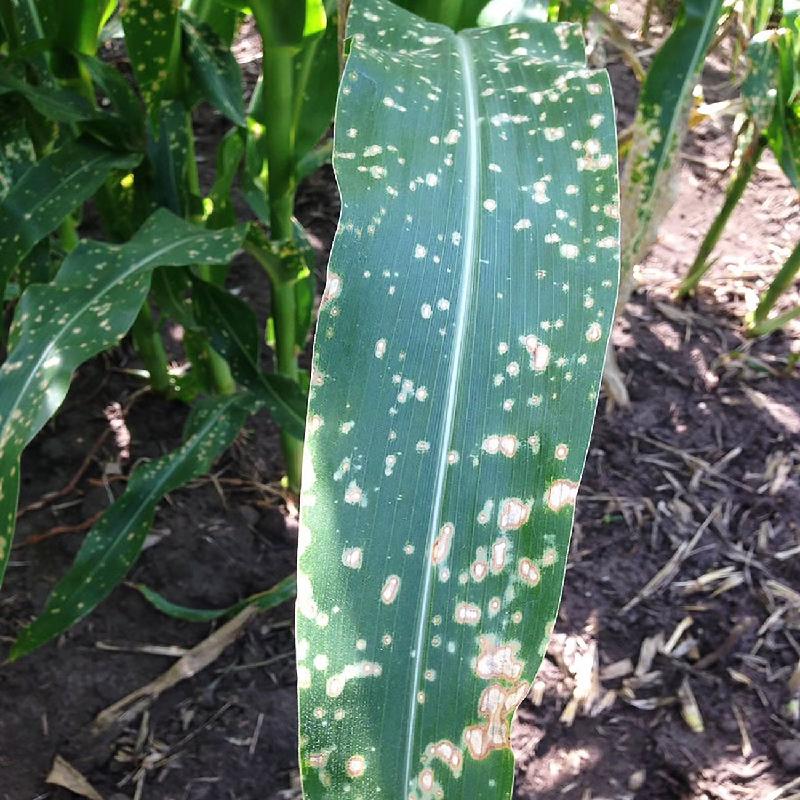
Leaf miner injury is usually easier to recognize than the insect itself.
Early Symptoms
Early signs may include:
- Small pale feeding or egg-laying punctures
- Thin winding tunnels
- Short irregular mines
- Small translucent patches
- Dark frass inside the mine
- Fresh damage on young or expanding leaves
Adult Liriomyza flies can create small punctures while feeding or laying eggs. Larvae later produce mines as they move through the internal leaf tissue.
Advanced Damage
As larvae grow, mines may:
- Become wider
- Develop into large blotches
- Merge with nearby mines
- Turn brown or dry
- Reduce the functional leaf area
- Cause leaf distortion
- Contribute to early leaf drop
Some moth larvae later fold, roll, or web leaves together. Tomato leafminer larvae may also damage shoots and fruit, making it important to distinguish Tuta absoluta from vegetable leafminer flies.
Check Whether Larvae Are Still Active
A visible mine does not always contain a living pest.
The larva may have:
- Left the leaf to pupate
- Been killed by a parasitoid
- Died naturally
- Been controlled by an earlier treatment
- Reached the end of the mine
Inspect the newest end of the mine for movement, fresh pale tissue, dark frass, or an active larva.
Treating old, empty mines adds cost and selection pressure without protecting new growth.
Why Are Leaf Miners Difficult to Control?
Leaf-miner larvae feed inside the leaf rather than on its open surface.
The upper and lower leaf epidermis can protect them from insecticides that remain only on the outside of the plant. This makes conventional contact activity less reliable after the larva has moved deeply into the mine.
Control is also complicated because:
- Eggs may be inserted inside leaf tissue.
- Older larvae are more protected than newly hatched larvae.
- Pupae may occur in soil, plant debris, leaves, or protected spaces.
- Adults and larvae require different control approaches.
- Multiple life stages may occur at the same time.
- Populations can develop resistance quickly.
- Adult flies or moths can reinvade from nearby crops and weeds.
The insecticide must match the pest species, life stage, exposure route, and registered crop use.
Monitor Before Making a Treatment Decision
Leaf miner control should be based on active pest pressure rather than historical leaf damage.
Inspect New Growth and Young Plants
Seedlings, transplants, and young leaves can be more sensitive to loss of functional leaf area.
Inspect:
- Newly expanded leaves
- Lower leaves where some Liriomyza species begin feeding
- Growing points
- Greenhouse edges
- Plants near doors and vents
- Crop areas beside infested fields
- Weeds that can support the same pest
Monitoring should record fresh mines, live larvae, adult activity, crop stage, and the percentage of affected plants.
Use Traps as Monitoring Tools
Different leaf miners require different traps.
Yellow sticky cards can help monitor adult Liriomyza flies in greenhouses and protected crops. Pheromone traps are more appropriate for moth pests such as Tuta absoluta and some crop-specific leaf miners.
Traps provide trend information. They do not replace direct crop inspection because trap catches do not always show how many larvae are actively damaging the crop.
IRAC recommends pheromone monitoring, crop inspection, cultural controls, biological control, and need-based insecticide use as part of sustainable tomato leafminer management.
Check Natural Parasitism
Parasitic wasps can kill leaf-miner larvae inside their mines.
Signs of biological control may include:
- Dead larvae inside mines
- Parasitoid exit holes
- Mines that stop expanding
- Darkened or inactive larvae
- High numbers of parasitoid adults near infested foliage
Natural enemies can suppress leafminer populations effectively in several vegetable, citrus, and ornamental systems. Unnecessary broad-spectrum insecticides may kill these parasitoids and contribute to a secondary leaf-miner outbreak.
Cultural and Physical Control
Cultural controls reduce pest sources and make chemical control more effective.
Remove Infested Material Where Practical
In nurseries, greenhouses, gardens, and high-value specialty crops, heavily mined leaves can sometimes be removed before larvae complete development.
Removed material should be taken out of the production area and managed so that larvae or pupae cannot complete their life cycle.
This approach is less practical in large commercial fields and should not remove so much foliage that crop performance is further reduced.
Manage Crop Residues and Weeds
Leaf miners may survive between crops on residues, volunteer plants, and weeds.
Management may include:
- Removing heavily infested crop residues
- Controlling host weeds
- Cleaning greenhouse production areas
- Managing volunteer plants
- Avoiding new planting beside heavily infested mature crops
- Removing abandoned host crops
- Managing soil or growing media where relevant pupae remain
Sanitation must be continuous. Cleaning only after the population becomes severe may not prevent adult migration.
Use Crop-Specific Rotation
Crop rotation can reduce pressure when the next crop is not a host of the identified pest.
The original groundnut leaf miner guidance recommends avoiding rotation between groundnut and alternative legume hosts because the pest may continue developing on both crops. That principle cannot be applied to all leaf miners.
The correct rule is:
Rotate to a crop that is not a suitable host of the identified leaf-miner species.
Protect Parasitoids and Other Natural Enemies
Natural-enemy conservation is one of the most important parts of leaf-miner management.
Parasitoid wasps can reach larvae inside mines more effectively than many surface-contact insecticides. In some production systems, they prevent minor infestations from becoming economically damaging.
Broad-spectrum insecticides applied for unrelated pests can disrupt this control.
UC IPM specifically identifies natural-enemy conservation as a central element of tomato leafminer management and warns that broad-spectrum treatments can destroy leafminer parasitoids.
Where possible:
- Avoid unnecessary preventive sprays.
- Use selective products when treatment is justified.
- Consider effects on parasitoids when choosing products for other pests.
- Monitor parasitism before applying another insecticide.
- Preserve untreated refuges where suitable.
- Coordinate biological and chemical treatments in protected crops.
An insecticide that suppresses one pest but causes a leaf-miner outbreak may create a larger crop-protection problem later in the season.
When Is Insecticide Treatment Most Effective?
The best treatment window depends on the leaf-miner species and the product’s exposure route.
Target Adults Before Heavy Egg Laying
In some programs, reducing adult activity can limit new egg deposition.
This approach is most useful when:
- Adult migration is being monitored.
- The registered product has suitable adult activity.
- The crop is entering a sensitive growth stage.
- Trap and crop-inspection data indicate rising pressure.
Adult control alone may be insufficient if many larvae are already established inside leaves.
Target Eggs and Young Larvae
Young larvae and newly developing mines generally provide a better treatment opportunity than mature larvae protected inside large mines.
Early intervention may:
- Reduce the amount of damaged tissue
- Limit larval development
- Protect new crop growth
- Reduce the number of pupae
- Slow the next generation
Timing should follow crop monitoring and the approved product label rather than a fixed calendar schedule.
Do Not Treat Only Old Mines
An insecticide cannot repair tissue that has already been mined.
The treatment objective is to stop living pests and protect new growth. If mines are old, empty, or highly parasitized, another spray may provide limited value.
Match the Product to the Exposure Route
Leaf-miner products may rely on different forms of activity:
- Direct contact
- Ingestion
- Translaminar movement
- Systemic movement
- Insect growth regulation
- Feeding suppression
- Adult control
Understanding the activity profile helps explain why one product may perform well against young Liriomyza larvae but poorly against a mature moth larva inside folded foliage.
Insecticide Options for Leaf-Miner Programs
There is no single best insecticide for every leaf miner.
The following active ingredient directions may be evaluated where the pest species, crop, application method, and local registration support their use.
| Active Ingredient Direction | IRAC Group | Potential Program Role |
|---|---|---|
| Abamectin | 6 | Translaminar activity against selected feeding larvae |
| Spinosad or Spinetoram | 5 | Activity against susceptible feeding larvae and selected adult stages |
| Cyromazine | 17 | Development disruption in registered dipteran leafminer programs |
| Cyantraniliprole or Chlorantraniliprole | 28 | Feeding cessation and larval control in approved programs |
| Diflubenzuron | 15 | Chitin-development and molting disruption in susceptible immature stages |
| Azadirachtin | UN | Feeding, molting, and population-development interference in selected IPM programs |
These directions are not interchangeable.
Cyromazine is particularly associated with dipteran larval development and should not be presented as a universal option for every moth leaf miner. Diamides may be relevant to selected lepidopteran and other approved pest programs, but resistance status must be considered. Diflubenzuron acts on developing immature stages and is not positioned as an immediate adult knockdown product.
IRAC’s current classification places spinosyns in Group 5, avermectins such as abamectin in Group 6, diflubenzuron in Group 15, cyromazine in Group 17, and diamides in Group 28.
SunAgro’s insecticide portfolio allows importers and registration partners to review different mode-of-action directions for crop, pest, and formulation planning.
Leaf Miner Resistance Management
Leaf miners can develop insecticide resistance rapidly, especially where generations are short and the same mode of action is used repeatedly.
Resistance is already recognized as a major issue in Liriomyza trifolii. Documented resistance has occurred across several insecticide groups, and IRAC identifies chemical overreliance as a major management challenge.
Tuta absoluta also has a high resistance-development risk because of its reproductive capacity, short generation cycle, and frequent dependence on chemical control.
A resistance-management program should:
- Use insecticides only when monitoring justifies treatment.
- Identify the IRAC group of every active ingredient.
- Avoid treating consecutive pest generations with the same group.
- Rotate effective products from different mode-of-action groups.
- Avoid assuming that changing brands changes the mode of action.
- Limit unnecessary repeat applications.
- Integrate sanitation, exclusion, traps, and biological control.
- Maintain effective spray coverage.
- Investigate reduced performance before increasing treatment frequency.
IRAC recommends a mode-of-action window approach in which consecutive pest generations are not repeatedly exposed to the same group.
Leaf Miner Control by Crop Scenario
The control program should reflect the crop, pest species, production system, and market requirements.
Vegetables and Protected Crops
Vegetable and greenhouse crops may experience rapid Liriomyza population growth because of continuous host availability and favorable temperatures.
Key priorities include:
- Monitoring adults with yellow sticky cards
- Inspecting new mines
- Protecting parasitoids
- Managing weeds and crop residues
- Avoiding unnecessary broad-spectrum sprays
- Rotating selective insecticides
- Observing PHI and residue requirements
Closed production systems also require careful management of doors, vents, seedlings, and incoming plant material.
Tomato
Tomato can be affected by several pests that produce leaf-mining symptoms, including:
- Liriomyza species
- Tuta absoluta
- Tomato pinworm
These pests require different monitoring and product decisions.
Tuta absoluta can move beyond leaves and damage shoots and fruit. A program built only for vegetable leafminer flies may therefore fail to protect the crop.
SunAgro’s tomato crop protection solutions page connects leafminer pressure with other major tomato pests and seasonal crop-protection decisions.
Fruit and Citrus Crops
Citrus leafminer primarily attacks young flush.
Management should focus on:
- Monitoring new leaf growth
- Protecting young trees when damage could affect establishment
- Avoiding disruption of parasitoids
- Timing intervention before mines become extensive
- Avoiding unnecessary treatment of mature hardened leaves
In established citrus trees, visible leaf mining does not always justify chemical intervention, particularly where parasitoids are active.
Groundnut and Legume Crops
Groundnut leaf miner begins by mining leaf tissue. Older larvae may later fold or web leaflets and feed from the protected structure.
Management should include:
- Correct species identification
- Monitoring moth activity and fresh mines
- Use of suitable non-host rotation crops
- Avoidance of rotation with alternative legume hosts
- Field sanitation
- Resistant or tolerant varieties where available
- Early-stage intervention based on local thresholds
The old recommendation to rotate only with non-legumes relates specifically to the groundnut leaf miner and should not be generalized to unrelated leaf-miner species.
Product Directions for Leaf-Miner Portfolio Planning
A professional leaf-miner product portfolio should not depend on one active ingredient or one IRAC group.
Group 28 Larval-Control Direction
Cyantraniliprole acts on insect ryanodine receptors and belongs to IRAC Group 28. It may be evaluated for approved leaf-miner programs where the crop, pest species, formulation, and application method are supported by local registration.
The Cyantraniliprole 10.26% OD insecticide page provides a relevant liquid diamide direction for registration and distribution review.
Group 15 Insect Growth Regulator Direction
Diflubenzuron inhibits chitin development in susceptible immature insects. Its value is linked to larval development and molting disruption rather than immediate adult knockdown.
The Diflubenzuron 480 g/L SC specification can be reviewed where a high-content liquid Group 15 insect growth regulator fits the target market and registered pest program.
These products should not be positioned as universal solutions for every leaf miner. The pest species, stage, crop, resistance profile, and local label determine their commercial relevance.
Why Leaf Miner Treatments Fail
| Failure Cause | Practical Explanation |
|---|---|
| Wrong pest identification | The selected product does not match the fly or moth species |
| Treatment applied too late | Mature larvae are protected inside extensive mines or folded tissue |
| Old mines mistaken for active infestation | Living larvae are no longer present |
| Poor spray coverage | Exposed adults, eggs, or young larvae receive insufficient treatment |
| Incorrect exposure profile | A surface-contact product does not reach larvae inside tissue |
| Natural enemies destroyed | Parasitoid loss leads to a secondary outbreak |
| Repeated IRAC group | Resistance selection reduces control |
| Reinvasion | Adults continue entering from nearby crops, weeds, or greenhouse openings |
| Unsuitable weather | Rain, rapid drying, or other conditions reduce exposure |
| Poor formulation handling | Mixing, suspension, or application is inconsistent |
| Label mismatch | The crop, pest, rate, stage, or method is not approved |
When control declines, do not automatically increase the application rate or shorten the interval.
Review identification, timing, coverage, formulation, environmental conditions, resistance history, and label compliance first.
What Importers and Distributors Should Confirm
Leaf miner is too broad a commercial claim on its own.
Before selecting a product direction, confirm:
- Target leaf-miner species
- Main crop and production system
- Adult, egg, or larval control objective
- Exposed or protected pest stage
- Required contact, translaminar, systemic, or growth-regulator activity
- Current local resistance profile
- IRAC mode-of-action group
- Formulation preference
- Registered crop and pest claim
- PHI and MRL requirements
- Compatibility with beneficial-insect programs
- COA, SDS, TDS, and product specification
- Efficacy and crop-safety data
- Storage stability
- Packaging and label language
- Expected annual market volume
The product specification should reflect the local pest problem rather than relying on a generic “leaf miner insecticide” position.
Frequently Asked Questions
What causes leaf miner trails?
Leaf miner larvae feed between the upper and lower surfaces of a leaf. Their movement creates winding tunnels, irregular mines, or blotch-shaped damaged areas.
Should every leaf miner infestation be sprayed?
No. Confirm that mines contain active larvae and assess crop stage, damage pressure, natural parasitism, and economic risk before treating.
Why are leaf miners difficult to kill?
The larvae are protected inside leaf tissue. Products that remain only on the leaf surface may not deliver adequate exposure once mines are well developed.
What is the best insecticide for leaf miners?
There is no universal best product. Selection depends on the leaf-miner species, life stage, crop, formulation, resistance profile, application method, and local registration.
Can broad-spectrum insecticides make leaf miners worse?
Yes. Broad-spectrum insecticides can kill parasitoid wasps and other natural enemies, allowing surviving leaf miners to increase more rapidly.
Are leaf miners flies or moths?
They can be either. Liriomyza leafminers are flies, while tomato leafminer, citrus leafminer, and groundnut leaf miner are moths.
How should leaf miner insecticides be rotated?
Rotate products with different IRAC mode-of-action groups. Changing brands without changing the IRAC group does not provide an effective resistance-management rotation.
Can damaged leaves recover after treatment?
The mined tissue will not return to its original condition. Successful treatment protects new growth and prevents further pest development.
Practical Summary
Successful leaf miner control begins with identification.
Different leaf-mining flies and moths may produce similar leaf damage, but their biology, crop hosts, exposed stages, and insecticide susceptibility can differ.
A reliable program combines:
- Pest-species identification
- Inspection for live larvae
- Adult and mine monitoring
- Crop sanitation
- Weed and residue management
- Conservation of parasitoid wasps
- Early-stage treatment when justified
- Selection of a registered insecticide
- Rotation of different IRAC groups
- Follow-up monitoring
The objective is not to spray every visible mine. It is to prevent active populations from damaging new crop growth while preserving effective biological control and maintaining the useful life of registered insecticides.
Review Leaf Miner Insecticide Directions for Your Market
SunAgro Science works with qualified importers, distributors, registration companies, and local crop protection partners to develop SunAgro branded insecticide portfolios.
Share your target country, crop, leaf-miner species, current resistance concern, preferred formulation, registration status, and expected market volume.
Our team can help review suitable active ingredient directions, available product specifications, technical documents, and long-term supply planning for local registration, import, and distribution cooperation.