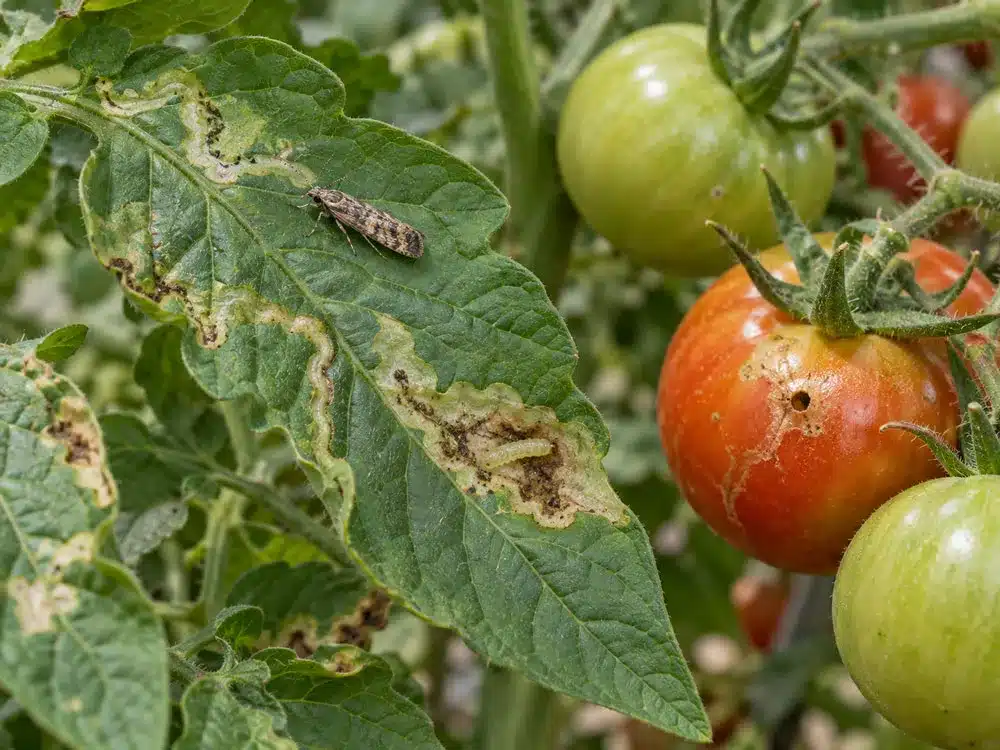
Chlorantraniliprole and Emamectin Benzoate are both important insecticide directions for caterpillars, armyworms, borers, and other Lepidopteran larvae. Their target markets overlap, but they should not be treated as interchangeable products.
The main technical difference is clear: Chlorantraniliprole belongs to IRAC Group 28, while Emamectin Benzoate belongs to IRAC Group 6. They act on different insect target sites and can therefore occupy different positions in a professional resistance-management program.
For importers and distributors, the choice should not be based on a simple “which is stronger?” comparison. Target pest, larval stage, crop, local resistance, required protection period, formulation preference, cost per treated hectare, and existing insecticide portfolio are more useful decision factors.
What Is the Main Difference Between Chlorantraniliprole and Emamectin Benzoate?
Both active ingredients are widely associated with Lepidopteran larval control, but they work differently.
Chlorantraniliprole is an anthranilic diamide insecticide. It acts on insect ryanodine receptors, disrupting calcium regulation in muscle cells. Susceptible larvae stop feeding rapidly, followed by muscle impairment, paralysis, and death.
Emamectin Benzoate belongs to the avermectin family. It acts through glutamate-gated chloride channels, disrupting normal nerve and muscle activity in susceptible insects.
From a distributor’s perspective, this creates two separate portfolio positions:
- Chlorantraniliprole: IRAC Group 28 Lepidoptera larvicide
- Emamectin Benzoate: IRAC Group 6 caterpillar insecticide
SunAgro currently positions Chlorantraniliprole 300 g/L SC for registered caterpillar, armyworm, borer, leaf-folder, and related chewing-pest programs.
Chlorantraniliprole vs Emamectin Benzoate at a Glance
| Selection Factor | Chlorantraniliprole | Emamectin Benzoate |
|---|---|---|
| Main insecticide class | Anthranilic diamide | Avermectin |
| IRAC group | Group 28 | Group 6 |
| Main target site | Ryanodine receptor | Glutamate-gated chloride channel |
| Primary market role | Lepidopteran larvae and borers | Caterpillar-focused larval control |
| Feeding response | Rapid feeding cessation | Feeding suppression followed by paralysis |
| Typical pest direction | Armyworms, borers, leaf folders, bollworms, fruit borers | Armyworms, bollworms, diamondback moth, loopers and other caterpillars |
| Residual positioning | Often important in extended protection programs | Depends strongly on formulation and use program |
| Resistance relationship | Different MoA from Emamectin | Different MoA from Chlorantraniliprole |
| Best selection basis | Pest, crop, timing, resistance and program economics | Pest, crop, timing, resistance and program economics |
Neither product should be declared universally superior.
The correct comparison is between their role inside a Lepidoptera management program.
Which Lepidopteran Pests Can Both Products Target?
The commercial overlap between Chlorantraniliprole and Emamectin Benzoate is one reason distributors often need to compare them.
Both may be relevant to markets affected by important caterpillar and borer pests, subject to local registration.
Fall Armyworm
Fall armyworm is an important insecticide market in corn and other susceptible crops.
Successful control depends heavily on:
- Field scouting
- Egg hatch
- Larval size
- Whorl penetration
- Application coverage
- Local susceptibility
- Treatment timing
Young larvae are generally easier to manage than large larvae hidden deep inside damaged whorls.
Chlorantraniliprole has a clear Group 28 position in fall armyworm programs and is valued for rapid feeding cessation and, in many registered programs, extended residual protection.
Emamectin Benzoate is also an established caterpillar-control direction and may be commercially attractive where Group 6 products already have strong grower recognition.
The better choice therefore depends on the complete program rather than one mortality figure from a single field trial.
Diamondback Moth
Diamondback moth is especially important in cabbage, broccoli, cauliflower, and other brassica markets.
It is also a good example of why mode-of-action diversity matters.
Intensive vegetable production may expose several pest generations to insecticides within one season. Repeated use of one mode of action can increase resistance-selection pressure.
Because Chlorantraniliprole and Emamectin Benzoate belong to different IRAC groups, they can occupy different treatment windows where both remain effective and locally registered.
This is more valuable than simply carrying multiple brands from the same IRAC group.
Bollworms and Fruit Borers
Cotton, tomato, pepper, pulses, and other crops may experience direct economic loss when larvae enter bolls, fruit, pods, or reproductive structures.
Early control is particularly important because larvae can become more difficult to reach after entering protected plant tissue.
SunAgro’s Cotton Crop Protection Solutions include both Chlorantraniliprole and Emamectin Benzoate among active ingredient directions for bollworm and tobacco budworm pressure.
This is a practical example of the two products serving the same broad pest market while retaining different mode-of-action roles.
Stem Borers and Leaf Folders
Borers create a different treatment challenge from exposed leaf-feeding caterpillars.
Once larvae enter stems, folded leaves, fruit, or other protected sites, spray exposure can decline sharply.
Chlorantraniliprole has a particularly clear commercial position in registered rice and corn programs involving:
- Stem borers
- Leaf folders
- Corn borers
- Shoot borers
- Other internal-feeding Lepidopteran larvae
The important purchasing point is not that one molecule is automatically “stronger.”
It is whether the product’s registered pest spectrum and treatment window match the target market.
When Does Chlorantraniliprole Fit Better?
Chlorantraniliprole can be particularly attractive when a distributor needs a Group 28 product with a strong caterpillar-and-borer position.
Markets Requiring Rapid Feeding Cessation
For destructive larvae, crop damage continues as long as feeding continues.
This is especially important with:
- Armyworms removing leaf area
- Borers entering stems
- Fruit borers damaging marketable produce
- Bollworms attacking reproductive structures
Chlorantraniliprole’s commercial value is therefore not limited to visible mortality.
A useful technical message is:
Crop protection begins when susceptible larvae stop feeding, even if visible mortality follows later.
This helps distributors explain the product more accurately than simply promising a fast visual kill.
Borer-Focused Markets
Rice, corn, vegetables, and other borer-sensitive crops can give Chlorantraniliprole a clear product-line role.
The treatment strategy should focus on egg hatch and early larvae before pests move into protected feeding sites.
This makes Chlorantraniliprole especially relevant where local distributors already have strong scouting programs and need a premium larval insecticide direction.
Programs That Value Residual Protection
In some registered crop programs, Chlorantraniliprole is valued for extended protection against susceptible larvae.
That can be commercially useful where:
- Pest pressure continues over an extended period
- Spray access is difficult
- High-value crops require continued protection
- Growers prioritize fewer corrective treatments
However, residual duration should never be presented as one universal number.
It depends on crop, application rate, formulation, pest, environment, plant growth, and local label.
When Does Emamectin Benzoate Fit Better?
Emamectin Benzoate has a strong and familiar commercial position in caterpillar-focused insecticide markets.
Its value is particularly clear where armyworms, diamondback moth, bollworms, loopers, fruit borers, or related Lepidopteran larvae create recurring seasonal demand.
Markets with Established Caterpillar Demand
In many vegetable and field-crop channels, growers already understand Emamectin Benzoate as a caterpillar insecticide.
That market familiarity can matter.
A distributor may prefer an active ingredient that fits:
- Existing grower practices
- Familiar application programs
- Established packaging sizes
- Current registration categories
- Known price segments
Technical performance is important, but commercial adoption is also influenced by what the local channel already understands and buys.
A Group 6 Alternative to Group 28 Products
For distributors already carrying Chlorantraniliprole or another Group 28 diamide, Emamectin Benzoate can provide something that another diamide cannot:
a different IRAC mode of action.
This makes Emamectin Benzoate strategically different from adding another Group 28 active ingredient such as Cyantraniliprole.
SunAgro’s earlier guide on Abamectin vs Emamectin Benzoate explains why Emamectin Benzoate has a particularly clear commercial position in caterpillar and Lepidoptera markets.
Why Larval Stage and Application Timing Matter
Neither Chlorantraniliprole nor Emamectin Benzoate should be evaluated independently of pest stage.
In practical Lepidoptera management, treatment is generally more reliable when susceptible larvae are:
- Small
- Actively feeding
- Recently hatched
- Still exposed on plant surfaces
- Not yet protected inside stems, fruit, bolls, pods, or folded leaves
Late rescue applications can be less reliable even when the active ingredient itself is appropriate.
Large larvae may:
- Consume more crop tissue
- Move deeper into protected sites
- Require greater exposure
- Have already caused economic damage
For distributors, this means product training should explain when to spray, not only what the active ingredient controls.
Why Feeding Cessation Matters More Than Immediate Mortality
Growers often evaluate insecticide performance by looking for dead larvae shortly after spraying.
That can be misleading.
With Lepidopteran pests, the real economic objective is to stop additional crop feeding.
Chlorantraniliprole can cause susceptible larvae to stop feeding rapidly before visible death is complete. Emamectin Benzoate also affects neuromuscular function and feeding activity before final mortality.
Therefore, field evaluation may need to consider:
- Reduction in fresh feeding damage
- Larval activity
- Population decline
- New infestation
- Crop recovery
- Protection of new growth or reproductive structures
A product should not be judged only by how many dead caterpillars are visible several hours after application.
Do Chlorantraniliprole and Emamectin Benzoate Have the Same Mode of Action?
No.
This is one of the most important reasons the comparison has real value.
Chlorantraniliprole = IRAC Group 28
Emamectin Benzoate = IRAC Group 6
They act on different insect target sites.
For a distributor developing a Lepidoptera portfolio, this provides genuine mode-of-action diversity rather than simply two products with different brand names.
This is different from comparing two active ingredients that belong to the same IRAC group.
Can Chlorantraniliprole and Emamectin Benzoate Be Rotated?
They can occupy different mode-of-action windows within a resistance-management program because they belong to different IRAC groups.
However, correct resistance management is more sophisticated than simply alternating two products repeatedly.
A professional program should consider:
- Target pest generation
- Local susceptibility
- Previous insecticide exposure
- Number of applications per crop
- Spray windows
- Seasonal limits
- Other effective IRAC groups
- Biological control
- Crop and pest monitoring
A common principle is to avoid exposing consecutive pest generations repeatedly to the same effective mode of action.
For distributors, the commercial advantage of carrying both Group 28 and Group 6 products is that the portfolio can support more rational program design where local registrations and susceptibility allow.
Which Product Fits Different Crop Markets?
The value of each active ingredient changes with the crop system.
Rice Markets
Rice insecticide demand may include:
- Stem borers
- Leaf folders
- Armyworms
- Other locally important caterpillars
Chlorantraniliprole has a clear commercial position in registered borer and leaf-folder programs because early treatment can help prevent larvae from moving into protected plant tissue.
Where Group 6 products are also registered and effective, Emamectin Benzoate may provide an additional mode-of-action direction.
Corn Markets
Corn markets frequently evaluate products for:
- Fall armyworm
- Corn borers
- Other whorl-feeding larvae
Important decision factors include:
- Egg hatch
- Larval size
- Whorl coverage
- Residual requirement
- Resistance status
- Seasonal spray program
A market with strong fall armyworm pressure may justify carrying both active ingredients rather than forcing one product to cover every treatment window.
Cotton Markets
In cotton, bollworms and budworms directly threaten reproductive structures.
Products must fit the crop stage and seasonal insecticide program rather than simply provide general caterpillar activity.
Because SunAgro’s cotton program includes both Group 28 and Group 6 directions, distributors can evaluate whether their market needs one or both based on resistance pressure, grower practice, registration, and product positioning.
Vegetable Markets
Vegetable channels may face several Lepidopteran pests within one season, including:
- Diamondback moth
- Armyworms
- Fruit borers
- Loopers
- Pod borers
- Other crop-specific caterpillars
High pest generations and intensive spray programs make mode-of-action planning particularly important.
For these markets, a diversified portfolio can be more useful than relying on one active ingredient throughout the season.
Should Your Product Line Include One or Both?
The answer depends on what is already in the portfolio.
Choose Chlorantraniliprole When
The market needs:
- A Group 28 Lepidoptera insecticide
- Strong caterpillar and borer positioning
- Rapid feeding cessation
- A premium larval-control direction
- An SC product such as SunAgro Chlorantraniliprole 300 g/L SC
- Rice, corn, cotton, vegetable, or similar registered crop opportunities
Choose Emamectin Benzoate When
The market needs:
- A Group 6 caterpillar insecticide
- Strong armyworm or Lepidoptera market recognition
- An alternative MoA to existing diamide products
- A formulation and price segment familiar to local distributors and growers
Consider Both When
The market has:
- High Lepidoptera pressure
- Multiple pest generations
- Intensive corn, cotton, rice, or vegetable production
- Significant resistance-management requirements
- Enough market size to support two differentiated SKUs
In this case, the two products do not merely duplicate one another.
They can provide different IRAC positions within the same caterpillar-control portfolio.
What About Chlorantraniliprole + Emamectin Benzoate Combination Formulations?
Combination formulations may be commercially relevant in some registered markets.
However, combining two effective active ingredients should not automatically be described as synergistic or as a complete resistance-management solution.
A combination project should evaluate:
- Active ingredient ratio
- Target pest
- Crop safety
- Formulation compatibility
- Field efficacy
- Resistance rationale
- Cost per hectare
- Local registration requirements
The mixture should solve a defined market problem.
Adding two active ingredients simply to create a more complex label is not sufficient product-development logic.
What Should Buyers Compare Before Registration?
For professional buyers, the most useful comparison is not price per liter or kilogram alone.
It is cost and value per treated hectare within the intended pest program.
| Buyer Check | Why It Matters |
|---|---|
| Dominant Lepidoptera pests | Determines product-market fit |
| Main crops | Defines registration and sales potential |
| IRAC group | Group 28 vs Group 6 provides real MoA diversity |
| Local resistance status | Determines expected field value |
| Larval stage | Strongly influences treatment performance |
| Borer vs exposed caterpillar pressure | Changes application requirements |
| Residual requirement | Influences program positioning |
| Formulation | Affects handling, packaging and market familiarity |
| Cost per treated hectare | More useful than package price alone |
| Existing insecticide portfolio | Prevents unnecessary SKU duplication |
| Seasonal spray program | Determines resistance-management needs |
| Registration documents | Supports regulatory review |
| Batch consistency | Important for long-term distribution |
SunAgro’s broader insecticide portfolio includes multiple mode-of-action and formulation directions that can be evaluated alongside Group 28 and Group 6 products when building a local insecticide range.
Frequently Asked Questions
Is Chlorantraniliprole better than Emamectin Benzoate?
Neither is universally better.
Both can be important Lepidoptera insecticides, but they belong to different IRAC groups and may occupy different treatment and market positions. Pest species, larval stage, crop, resistance, formulation, registration, and economics should determine the choice.
Which is better for fall armyworm?
Both may be relevant where locally registered and the pest population remains susceptible.
Treatment timing, larval size, whorl coverage, resistance status, residual requirements, and seasonal insecticide strategy are usually more useful decision factors than declaring one active ingredient universally superior.
Which product is better for stem borers?
Chlorantraniliprole has a particularly clear commercial position in registered stem-borer programs.
The important factor is applying before larvae become protected inside plant tissue. Final crop, pest, rate, and timing claims must follow the local label.
Does Chlorantraniliprole have longer residual control?
Chlorantraniliprole is often positioned in programs that value extended larval protection, but there is no single global residual period.
Actual duration depends on active dose, crop, pest, formulation, plant growth, weather, and registration.
Are Chlorantraniliprole and Emamectin Benzoate in the same IRAC group?
No.
Chlorantraniliprole belongs to IRAC Group 28, while Emamectin Benzoate belongs to IRAC Group 6.
Can Chlorantraniliprole and Emamectin Benzoate be rotated?
Yes, they represent different IRAC modes of action and may occupy different treatment windows in a properly designed resistance-management program.
Local susceptibility, pest generations, seasonal limits, labels, and other effective modes of action should still be considered.
Lepidopteran Insecticides for Registration and Distribution
For distributors, Chlorantraniliprole and Emamectin Benzoate should not be viewed as two versions of the same caterpillar insecticide.
They represent different modes of action, different product-positioning opportunities, and potentially complementary roles in a Lepidoptera management portfolio.
The correct procurement process starts with the market:
Which caterpillars cause the greatest losses? Which crops drive insecticide demand? Are borers or exposed larvae the main problem? Which IRAC groups are already heavily used? Is extended residual protection important? What is the realistic cost per treated hectare?
SunAgro works with qualified importers, distributors, and registration partners to develop market-oriented insecticide portfolios based on target pests, crop systems, formulation requirements, resistance strategy, and registration direction.
A strong Lepidoptera portfolio is not built by choosing the insecticide with the strongest reputation.
It is built by giving each mode of action a clear technical role and a clear commercial reason to exist in the local market.