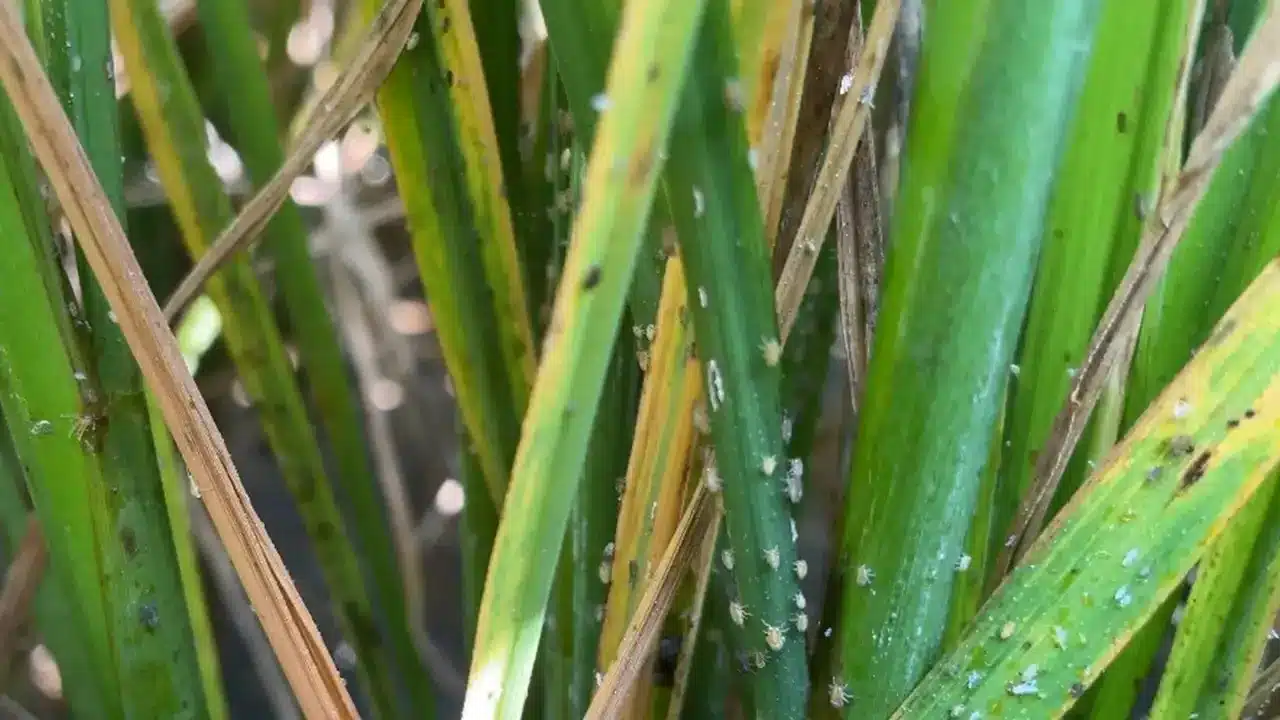
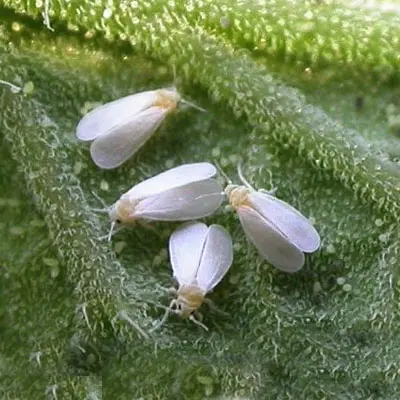
Whiteflies are common sucking pests in vegetable cultivation and are particularly prone to persistent reproduction in greenhouses and other protected cultivation environments. They weaken plant growth by feeding on plant sap; the honeydew they excrete may promote the occurrence of sooty mould, and some whitefly species can also transmit plant viruses.
For pesticide importers and distributors, the challenges posed by whiteflies extend beyond the difficulty of field control; they also concern the rationality of the product portfolio, potential overlap between different active ingredients, and whether existing products can meet the registration and procurement requirements of the target market.
If a product line comprises only one insecticide with a single mode of action, it may struggle to address different whitefly populations, various life stages and the ongoing risk of resistance, even if it currently meets the needs of some customers. Conversely, simply adding more products with similar active ingredients may lead to duplicate stock, rising marketing costs and increased complexity in SKU management.
Therefore, when planning a whitefly control product line, one should not begin by asking ‘which insecticides are available on the market’, but rather by first identifying the primary pests in the target vegetable market, the modes of action of existing products, and the specific practical problems that each new SKU can address.
This article will outline how vegetable pesticide distributors can establish a more targeted whitefly control product portfolio, covering aspects such as crop requirements, whitefly life stages, active ingredients, IRAC groups, product differentiation and procurement evaluation.
Why does whitefly control require a specialised product portfolio?
Whiteflies do not constitute a single, homogeneous pest population. Different species, crop environments and life stages all influence control strategies and product selection.
Control requirements vary between different whitefly species
Whiteflies of particular concern in vegetable production include:
- Bemisia tabaci species complex: the tobacco whitefly complex.
- Trialeurodes vaporariorum: greenhouse whitefly.
Both may cause damage in certain crops and growing environments, but their population characteristics, host range and sensitivity to insecticides are not entirely the same.
Therefore, distributors cannot simply rely on customer feedback that ‘whiteflies are difficult to control’ to directly determine which insecticide to recommend. First, they should ascertain the target crop, the predominant whitefly species in the local area, the stage of infestation, and which active ingredients have been used previously.
The damage caused by whiteflies to vegetables extends beyond leaf chlorosis
Whiteflies cause direct damage primarily by piercing and sucking plant sap. As populations increase, plants may exhibit symptoms such as leaf yellowing, stunted growth and reduced marketable quality.
Excessive honeydew may also lead to sooty mould on the surface of leaves or fruit, affecting the marketable appearance of vegetables. For certain crops and whitefly species, virus transmission is also a significant risk.
Commercial losses vary between different vegetables. For example, with tomatoes and chillies, attention must be paid to plant growth, fruit quality and associated viral risks; whilst for cucurbits such as cucumbers, control requirements must be assessed in conjunction with local whitefly populations and virus prevalence.
Therefore, product portfolios should be built around target crops and their primary risks, rather than assuming that all vegetables require an identical insecticide formulation.
If distributors need to plan their whitefly product range starting with tomatoes, they can first refer to Tomato Crop Protection Solutions, and then screen specific products based on target pests and local registrations.
Which product roles should a whitefly product range cover?
The key to establishing a product range is not to procure as many active ingredients as possible, but to ensure that different products fulfil distinct technical and commercial roles.
It is recommended to first consider the following four areas.
1. Basic products for the control of sucking pests
This category of products is primarily used to meet the control requirements for whiteflies and other sucking pests within the scope of local registrations.
For example, thiamethoxam belongs to IRAC Group 4A and is a nicotinic acetylcholine receptor competitive modulator. It can serve as a candidate active ingredient for the basic sucking pest control product category in certain markets.
However, ‘basic’ products do not imply that they can be applied unconditionally to all vegetables. Distributors must still verify the target crops, whitefly species, local resistance profiles and specific label requirements.
2. Product strategies targeting immature life stages
Whitefly eggs and nymphs differ from adults in both morphology and behaviour; consequently, the control efficacy of different active ingredients may vary.
For example:
- Pyriproxyfen belongs to IRAC Group 7C and primarily interferes with insect hormone-related processes during the larval stage.
- Buprofezin belongs to IRAC Group 16; it inhibits chitin biosynthesis, affecting the moulting and developmental processes of susceptible insects.
These two active ingredients can serve as candidates for an insect growth regulator (IGR) product line, but they are not identical products.
Their value lies in providing different modes of action for the management of specific life stages, rather than serving as a substitute for all control strategies requiring rapid control of adults.
Specific efficacy should be assessed based on the whitefly species, life stage, product label and field monitoring results.
3. Products for sucking pests with different modes of action
When formulating product portfolios, consideration must be given to differences in mode of action, rather than merely whether the active ingredient names differ.
For example, Spirotetramat belongs to IRAC Group 23 and is a lipid biosynthesis inhibitor. It possesses bidirectional systemic translocation characteristics and can serve as a product option for the management of sucking pests in certain registered vegetable crops.
Flupyradifurone, on the other hand, belongs to IRAC Group 4D and is classified in a different chemical subgroup to Thiamethoxam (Group 4A), although both fall within the broader Group 4 mechanism of action.
Consequently, they should not be regarded as entirely independent resistance rotation mechanisms merely because they belong to different subgroups within Group 4A and Group 4D. Product rotation should be based on local resistance data, label requirements and the latest management recommendations from IRAC.
4. Complementary Products and Integrated Pest Management (IPM) Solutions
For the greenhouse and high-value vegetable markets, distributors may also evaluate natural enemies, biological control products, mineral oil or other low-risk control tools suitable for local use.
These solutions may not all fall within SunAgro’s current product range and should therefore be assessed individually based on actual supply capacity and local registration status.
Their commercial value lies in helping distributors meet the management needs of different customers, rather than limiting the entire product line to traditional chemical insecticides.
Which active ingredients are worth including in the whitefly product portfolio?
The table below serves to establish a pool of candidate products; it does not imply that all active ingredients must be procured, nor does it mean that specific product specifications for each ingredient have been confirmed in SunAgro’s public catalogue.
| Active Ingredient | IRAC Group | Primary Mode of Action | Candidate role within the product portfolio |
|---|---|---|---|
| Thiamethoxam | 4A | Competitive modulation of nicotinic acetylcholine receptors | Basic systemic product for sucking pests |
| Flupyradifurone | 4D | Competitive modulation of nicotinic acetylcholine receptors | Products for sucking pests across different chemical subgroups |
| Spirotetramat | 23 | Inhibition of lipid biosynthesis | Systemic management of sucking pests |
| Pyriproxyfen | 7C | Modulation of juvenile hormone receptors | Insect growth regulators |
| Buprofezin | 16 | Inhibition of chitin biosynthesis | Management of specific immature life stages |
| Cyantraniliprole | 28 | Regulation of the cyanoquinoline receptor | To be used as a supplementary approach only where approved for target whiteflies and vegetable crops |
When selecting products in practice, one should first determine whether there is a clear demand in the target market, and then assess whether each active ingredient offers control capabilities not yet covered by existing products.
For example, if the existing product portfolio already includes multiple Group 4 products, adding another Group 4 active ingredient may not necessarily resolve the issue of excessive concentration of modes of action. Conversely, if the market genuinely requires management of a specific life stage and existing products lack a corresponding IGR option, introducing a product with a different mode of action may be more valuable.
How can SunAgro’s existing products be utilised to establish a whitefly product line?
Before procuring, distributors should first take stock of their existing product catalogue rather than planning from scratch.
SunAgro currently has several insecticides that can serve as case studies for portfolio evaluation, but the positioning and scope of application for each product must be assessed individually.
Spirotetramat 22.4% SC: Systemic insecticide for sucking pests
Spirotetramat 22.4% SC belongs to IRAC Group 23 and is primarily positioned as a systemic insecticide for sucking pests.
Its bidirectional systemic translocation enables it to serve as a candidate product for the management of sucking pests, such as whiteflies, in certain vegetable markets.
It is best suited for use based on target pests, life stages and product labelling, and should not be simply described as a fast-acting knockdown insecticide for severe infestations.
Distributors may wish to consult the product specifications, formulation and technical data for Spirotetramat 22.4% SC in more detail, and assess its suitability in conjunction with the target market.
Thiamethoxam 25% SC: A basic systemic product option
Thiamethoxam 25% SC belongs to IRAC Group 4A and may serve as a candidate for systemic products targeting sucking pests in certain markets.
Its commercial value depends on local registration status, target whitefly populations, existing product coverage and resistance profiles. If multiple products from the same group are already present in the market, further assessment is required to determine whether a new formulation offers independent channel value.
Cyantraniliprole 10.26% OD: Complementary Product Strategy
Cyantraniliprole belongs to IRAC Group 28. SunAgro’s product data lists whiteflies as a candidate target pest under certain application scenarios.
However, it should not be automatically regarded as a universal solution for all whitefly populations. It is only suitable for inclusion in a whitefly product range when specific crops, pests and application methods are supported by local registration.
Its value should also be assessed in conjunction with whether distributors simultaneously handle other vegetable pest products authorised to use this active ingredient.
How to avoid SKU overlap in a whitefly product range?
A common issue with distributors’ product portfolios is not a lack of active ingredients, but rather the procurement of multiple products with similar positioning, similar modes of action and overlapping target customer bases.
Before adding a new SKU, it is advisable to first draw up an internal assessment table.
| Assessment criteria | Questions to be addressed | Significance for procurement decisions |
|---|---|---|
| Target crops | Does it cover vegetable crops not yet covered by existing products? | Assess whether market coverage is expanded |
| Target pests | Does it target whitefly species actually present in the local area? | Avoid products being out of step with market demand |
| Target pest life stages | Does it offer applicable pest life stages or management value not found in existing products? | Assess technical differentiation |
| IRAC Group | Does it provide meaningful differences in mode of action? | Supports resistance management planning |
| Formulation and Specifications | Is it suited to the target customers’ application methods and packaging requirements? | Assess channel suitability |
| Registration Feasibility | Is there a reasonable registration pathway for the target market? | Assess market access costs |
| Commercial Performance | Does it have a distinct customer base, price range or sales scenario? | Assessing the return on investment for new SKUs |
For example, if a distributor is already selling Thiamethoxam and is considering adding Dinotefuran or Acetamiprid, they cannot judge the differences based solely on the product names or prices.
All three belong to IRAC Group 4A; whether it is worthwhile to market them simultaneously should be assessed in light of registration, customer demand, formulation, supply and price positioning, rather than treating them simply as rotation products with different modes of action.
If you need to compare these types of products further, please refer to the existing article Acetamiprid vs Dinotefuran.
How should vegetable distributors build their product portfolios based on the market?
A whitefly product portfolio should not be planned in isolation from the target market. Requirements regarding product specifications, registrations and usage restrictions may vary across different countries, vegetable cropping patterns and sales channels.
Greenhouse vegetable market
Greenhouse crops such as tomatoes, cucumbers and peppers may face sustained whitefly population pressure. Product planning must focus on monitoring insect life stages, coverage of the undersides of leaves, protection of natural enemies and resistance management.
For greenhouse customers, simply increasing the number of insecticides does not guarantee better control results. Products need to be used in conjunction with monitoring, timing of application and other management measures.
Open-field vegetable market
For open-field vegetables, product requirements must be assessed in light of local whitefly populations, climate, surrounding host crops and growing seasons.
If local whitefly outbreaks exhibit distinct seasonality, the product range should take into account procurement timing, sales cycles and actual usage requirements to avoid accumulating excessive stock during periods of low demand.
Markets for vegetables with short harvest cycles
For leafy vegetables and other crops with short harvest cycles, product selection must pay closer attention to the pre-harvest interval (PHI), maximum residue limits (MRLs) and residue requirements of the target market.
Even if an active ingredient demonstrates good control performance on other vegetables, it cannot be directly assumed that it is suitable for all leafy vegetables or vegetables intended for export.
What should importers verify before purchasing whitefly control products?
For pesticide importers and distributors, product selection is not merely a technical issue; it also involves registration, documentation, supply and market entry.
It is recommended that at least the following details be confirmed prior to procurement.
| Audit items | Key inspection points |
|---|---|
| Product specifications | Active ingredient, concentration, formulation and quality indicators |
| Intended use | Target whitefly species, crops and registered uses |
| Technical documentation | COA, SDS/MSDS, TDS and any available registration support documentation |
| Formulation quality | Suspension stability, storage conditions and batch consistency |
| Residue requirements | PHI, MRL and export restrictions for target markets |
| Resistance management | IRAC Group, local susceptibility information and usage restrictions |
| Supply conditions | Estimated purchase volume, packaging, delivery arrangements and long-term supply capacity |
It is particularly important to note that the listing of ‘whitefly’ as a candidate target pest on a product page does not imply that the product has been registered for use on all vegetables in all countries.
During the market access assessment phase, the specific requirements of the target country regarding the active ingredient, formulation, crops, pests and application methods should be verified. Where registration dossiers, data rights or residue compliance are concerned, further confirmation should be sought in accordance with local regulations.
If you need to assess the mode of action and market access issues relating to flupyradifurone, please refer to the Flupyradifurone FAQ.
Frequently Asked Questions on the Whitefly Control Product Range
How many whitefly insecticides does a distributor need to establish a comprehensive product range?
There is no fixed number applicable to all markets. A reasonable number of products depends on the target vegetable crops, local whitefly species, registration coverage, modes of action and customer needs. The product range should prioritise filling actual gaps rather than simply increasing the number of SKUs.
Should pyriproxyfen and buprofezin be procured simultaneously?
This depends on the target market’s insect life-stage management requirements, existing product portfolio and commercial viability. Whilst both belong to different IRAC Groups and have distinct modes of action, this does not necessarily mean that all markets require simultaneous procurement. Distributors should first verify specific product availability, regulatory approvals and target customer requirements.
Can Group 4A and Group 4D be used as completely independent products for resistance rotation?
Such a judgement cannot be made solely on the basis of different subgroups. Both belong to the broader Group 4 mode of action system; resistance management should refer to the latest IRAC classification, local resistance information and product labels, and different subgroups should not be simply regarded as completely independent rotation mechanisms.
Can a single insecticide control whiteflies on all vegetables?
This cannot be assumed. Whitefly species, crop type, life stage, sensitivity to active ingredients and local registration status will all affect a product’s suitability. Purchasers should verify each aspect for their target market rather than treating a single product as a universal solution.
Why is whitefly control in greenhouses often unsatisfactory?
Possible causes include rapid population growth, the coexistence of different life stages, insufficient coverage of the undersides of leaves, resistance and disruption of natural enemies. The situation should be analysed by combining field monitoring, correct identification, appropriate application and integrated pest management measures, rather than simply increasing the frequency of applications.
What is most important for importers when sourcing whitefly insecticides?
Firstly, confirm the feasibility of registration in the target country, for the target crop and for the intended use against whiteflies; secondly, evaluate the active ingredient, formulation, technical documentation, residue requirements, quality consistency and supply conditions. Only when both technical and commercial conditions are met is a product worthy of proceeding to the procurement or registration process.
Planning a vegetable whitefly control product line with SunAgro
Establishing a competitive whitefly product range hinges not on having the greatest number of active ingredients, but on ensuring that each product addresses a specific market need.
For pesticide importers, distributors and registration partners, we recommend starting with the target vegetable crops, major whitefly species, existing SKUs, IRAC groups and local registration requirements, before determining which products need to be added to the range.
SunAgro provides insecticide products and related technical documentation support to B2B clients. For different markets, we can further assess product specifications, formulations, registration support and long-term supply arrangements.
If you are planning a whitefly product range, we recommend preparing the following information:
- Target countries and primary sales markets;
- Key vegetable crops and whitefly species;
- Active ingredients and IRAC Groups currently on the market;
- Product specifications and formulations to be added;
- Local registration status and required technical documentation;
- Estimated purchase volumes and packaging requirements.
SunAgro’s standard minimum order quantity is typically 1,000 L/kg, although specific terms are subject to confirmation based on the product, specifications and order details.
To further evaluate product portfolios, technical documentation or supply solutions, please contact us via Contact SunAgro.
A whitefly product line worthy of long-term development should be based on clear market demand, supported technically by a rational combination of active ingredients and modes of action, and achieve commercial competitiveness through regulatory compliance, consistent quality and a reliable supply chain.