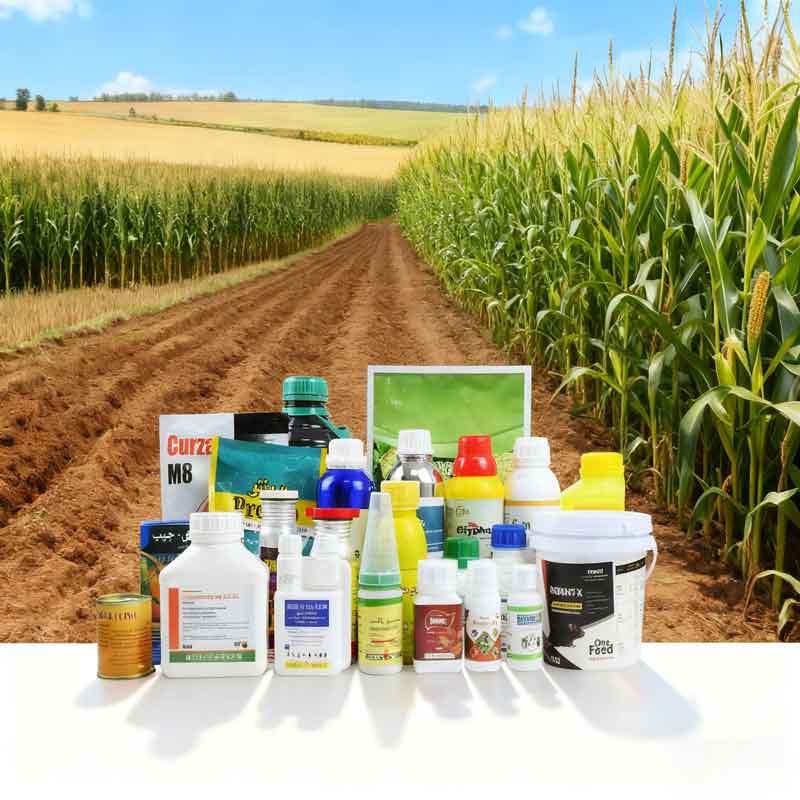
Definition, Types, Uses, and How It Works
An insecticide is a pesticide used to kill, harm, repel, or otherwise mitigate insects. That sounds simple, but the term covers a wide range of products with very different chemistry, modes of action, and use patterns. Some insecticides act on the insect nervous system, some disrupt growth and reproduction, and others work through contact, ingestion, or plant uptake. In agriculture, insecticides are part of a larger pest-management toolbox used to protect crops from insect pressure that can reduce yield and quality.
Just as important, insecticide is not the same as pesticide. “Pesticide” is the broader category. It includes insecticides, but also herbicides, fungicides, rodenticides, and other products used to control different kinds of pests.
A Quick Terminology Table
| Term | What it controls | What it means in practice |
|---|---|---|
| Insecticide | Insects | Used for insect pests in crops, storage, structures, public health, and other settings |
| Herbicide | Weeds | Used to control unwanted plants |
| Fungicide | Fungi and some plant diseases | Used to manage fungal disease pressure |
| Pesticide | General pest category | Umbrella term that includes insecticides, herbicides, fungicides, and more |
This distinction follows EPA and NPIC terminology and is the clearest place to start when building a knowledge page around the keyword “what is insecticide.”
What Is an Insecticide?
At the most practical level, an insecticide is a product designed to manage insect pests. NPIC defines insecticides as pesticides formulated to kill, harm, repel, or mitigate one or more species of insect. EPA adds that insecticides may control insects either by killing them or by preventing them from engaging in undesirable or destructive behavior. That broader framing is useful because it explains why not every insecticide is a fast knockdown material and why some products are designed more for suppression, disruption, or prevention than for immediate visible kill.
Most insecticide products are not just a single pure substance in a bottle. EPA notes that pesticide products contain active ingredients, which control the pest, plus other ingredients that help with formulation, handling, stability, or delivery. For readers trying to understand labels, that is a key point: the “insecticide” most people talk about is often the full product, while the technical discussion usually centers on the active ingredient and its mode of action.
Insecticide vs. Pesticide: Why the Difference Matters
Many readers search “what is insecticide” when what they really need is a clearer mental model of pesticide categories. EPA explicitly notes that people often use the word “pesticide” as if it means insecticide only, but that is not how the term is defined. A pesticide can target weeds, fungi, rodents, insects, or other pests, depending on the active ingredient and the labeled use.
That distinction also matters for content structure. If your page only says “an insecticide kills insects,” it is technically correct but strategically thin. A stronger page explains where insecticides sit inside the broader pesticide category and then shows how insecticides differ from herbicides and fungicides in target, use pattern, and mode of action. That gives the reader a framework instead of a one-line definition.
How Do Insecticides Work?
Different insecticides use different mechanisms
NPIC states that insecticides work in different ways. Some disrupt the nervous system, others damage the exoskeleton, some repel insects, and others control them by different biological or chemical means. EPA likewise notes that insecticides are commonly classified by structure and mode of action, which is why the same pest problem can be approached with very different insecticide groups.
This is the reason one insecticide may act quickly on exposed insects while another works more gradually or is better suited to a specific life stage. It is also why “best insecticide” is never a universal answer. The right fit depends on the pest, crop, life stage, pressure level, and whether the treatment goal is fast suppression, residual protection, growth disruption, or resistance management.
Growth regulators work differently from fast-kill products
Not all insecticides are designed to kill adult insects immediately. NPIC explains that insect growth regulators, or IGRs, mimic hormones in immature insects and disrupt growth and reproduction. They can prevent molting, egg hatch, or successful development, and they are often mixed with other insecticides that control adults. That makes IGRs a useful example of why “insecticide” is a broader and more flexible category than many readers assume.
Contact, ingestion, and systemic pathways
A practical way to explain insecticide performance is to look at how the pest is exposed. University Extension sources note that contact insecticides kill where the product touches the pest or a site the pest frequents, so coverage is critical. Systemic insecticides, by contrast, are absorbed and moved within plant tissues, allowing the pest to be controlled when it feeds on the plant. These are not competing definitions of insecticide; they are different delivery pathways inside the same broader category.
Main Types of Insecticides
Conventional chemical insecticides
EPA states that the most commonly used insecticides include organophosphates, pyrethroids, and carbamates. EPA also groups related active ingredients together for review because many insecticides share chemical structure and toxicological profile. That matters for both content clarity and practical use: readers often search for “insecticide” at the category level, but field decisions are usually made at the active-ingredient or mode-of-action level.
Pyrethrins and pyrethroids are a good example. EPA explains that pyrethroids are synthetic versions of naturally occurring pyrethrins and were designed to be more stable in the environment than the natural compounds. EPA also notes that neonicotinoids are insecticides that affect the central nervous system of insects. These examples help readers understand why “chemical insecticide” is not one single thing. It is a family of multiple groups with different chemistry and performance characteristics.
Biological insecticides and biopesticides
EPA defines biopesticides as certain types of pesticides derived from natural materials such as animals, plants, bacteria, and certain minerals. EPA further divides biopesticides into three major classes: microbial pesticides, biochemical pesticides, and plant-incorporated protectants, or PIPs. For a knowledge page, this is essential because many readers now search for insecticide information expecting to see both conventional and biological options represented.
This broader view also reflects how agriculture actually works today. Insect control is no longer explained well by a “chemical versus non-chemical” binary. Modern crop protection often includes conventional insecticides, biological products, monitoring, thresholds, and resistance management in the same program.
A Simple Classification Table
| Insecticide type | Main idea | Typical fit |
|---|---|---|
| Conventional chemical insecticides | Synthetic or long-established chemistry used to suppress or kill pests | Broad agricultural, structural, public-health, and commercial use |
| Biological insecticides / biopesticides | Derived from natural materials or microorganisms | Programs focused on targeted use, compatibility, or alternative modes of action |
| Insect growth regulators | Disrupt development and reproduction rather than quick adult kill | Life-cycle management, often paired with adult-control products |
| Contact insecticides | Must contact the insect or treated surface | Fast surface control where coverage is good |
| Systemic insecticides | Move within plant tissues and affect feeding pests | Useful where plant uptake helps reach the target pest |
This table combines EPA, NPIC, and Extension terminology into a structure that is easier for readers to use than a purely chemical textbook classification.
Where Are Insecticides Used in Agriculture?
FDA states that pesticides are used in agriculture to protect crops from insects, fungi, weeds, and other pests, while EPA notes that insecticides are used in agricultural, public-health, industrial, household, and commercial applications. In crop production, that means insecticides may be used to protect field crops, fruits, vegetables, stored products, or other production systems where insect feeding threatens yield, quality, or marketability.
This agricultural role is why insecticides remain an important category even as farming systems become more integrated and more regulated. They are not only about killing visible pests. They are also about protecting crop potential during vulnerable growth stages, reducing pressure when pest populations exceed acceptable levels, and supporting more stable production outcomes when other tools alone are not enough. USDA describes integrated pest management as a science-based decision process that combines tools and strategies to identify and manage pests, and NIFA notes that pesticides are used in combination with other crop-management approaches to minimize pest effects while supporting a profitable system.
Why Insecticides Matter in Crop Production
In agriculture, insect pressure is not just a cosmetic issue. Feeding damage can reduce plant vigor, injure leaves, stems, fruit, roots, or storage quality, and in some systems can also contribute to secondary disease or quality loss. FDA’s pesticide overview and USDA’s IPM framing both support the same core point: pesticides, including insecticides, are one of the tools used to protect crop performance when pest pressure becomes economically or agronomically important.
Some programs rely on insecticides for direct suppression during high-pressure windows. Others use them more selectively inside a broader IPM strategy. That distinction matters because readers are increasingly looking not only for “what is an insecticide,” but also for “how should insecticides fit into real crop protection decisions.”
Benefits and Limitations of Insecticides
The main strength of insecticides is clear: they provide a scalable way to reduce insect pest pressure across many crops and production systems. They can be formulated in different ways, including sprays, dusts, gels, soaps, and baits, and they can work through different biological pathways. This flexibility is one reason insecticides remain such an important part of modern pest management.
At the same time, insecticides are not “set and forget” tools. EPA notes that repeated use of pesticides with the same chemistry and mode of action can foster resistance, which is why resistance management has become a core part of modern label language and stewardship. EPA also evaluates pesticides for human-health and environmental safety, and FDA monitors pesticide residues in food under EPA-established tolerances. In plain terms, insecticides are useful, but they must be selected and used with more discipline than a simple definition page usually suggests.
How to Use Insecticides More Responsibly
The most reliable operating principle is still the label. EPA states that it evaluates pesticides to ensure they are safe for human health and the environment when used according to label directions, and FDA’s pesticide-residue framework depends on those same regulatory controls. A strong knowledge page should therefore make one thing clear: responsible insecticide use begins with matching the product to the target pest and following the label and local regulatory requirements.
The second principle is resistance management. EPA says repeated use of pesticides with the same mode of action on the same pest population is an important factor that fosters resistance, and it recommends using different chemistry and modes of action as part of resistance-management strategy. That is one reason mode-of-action literacy matters even on a basic “what is insecticide” page. Understanding the term helps readers move toward better long-term decisions.
The third principle is IPM fit. USDA defines IPM as a science-based, decision-making process that combines tools and strategies, and NIFA notes that pesticides are used alongside other crop-management approaches rather than as the only answer. That makes insecticides part of a system, not a standalone philosophy.
Common Misunderstandings About Insecticides
One common misunderstanding is that insecticide means any pesticide. EPA’s terminology makes clear that insecticide is only one part of the broader pesticide category. Another misunderstanding is that all insecticides work the same way. NPIC, EPA, and Extension sources all show that insecticides differ in chemistry, mode of action, delivery pathway, and target life stage.
A third misunderstanding is that faster visible kill automatically means better pest control. That is not always true. IGRs, for example, may not act like immediate knockdown products, yet they play a useful role by disrupting development and reproduction. Likewise, systemic products may fit some feeding pests better than surface-contact products, even if the visual response timeline is different.
Frequently Asked Questions About Insecticides
What is an insecticide?
An insecticide is a pesticide formulated to kill, harm, repel, or mitigate insects. It is a specific category inside the broader pesticide group.
Is insecticide the same as pesticide?
No. “Pesticide” is the umbrella term. It includes insecticides, herbicides, fungicides, rodenticides, and other pest-control products.
How do insecticides work?
They work in different ways. Some affect the nervous system, some damage the exoskeleton, some repel insects, and some regulate growth or reproduction. Exposure can occur through contact, feeding, or plant uptake, depending on the product.
What are the main types of insecticides?
A practical breakdown includes conventional chemical insecticides, biological insecticides or biopesticides, insect growth regulators, contact insecticides, and systemic insecticides. EPA also classifies insecticides by chemistry and mode of action.
Why are insecticides important in agriculture?
They help protect crops from insect damage and are part of broader pest-management programs used to support yield, quality, and more reliable production. USDA and NIFA both frame pesticides as one component of integrated pest management rather than the only tool.
Table Of Contents
- Definition, Types, Uses, and How It Works
- A Quick Terminology Table
- What Is an Insecticide?
- Insecticide vs. Pesticide: Why the Difference Matters
- How Do Insecticides Work?
- Main Types of Insecticides
- A Simple Classification Table
- Where Are Insecticides Used in Agriculture?
- Why Insecticides Matter in Crop Production
- Benefits and Limitations of Insecticides
- How to Use Insecticides More Responsibly
- Common Misunderstandings About Insecticides
- Frequently Asked Questions About Insecticides